Mardi Himal Yoga Trek
A Tranquil Mardi Himal Yoga Trek Adventure
A Soulful Journey Through Nepal's Hidden Himalayan Paradise
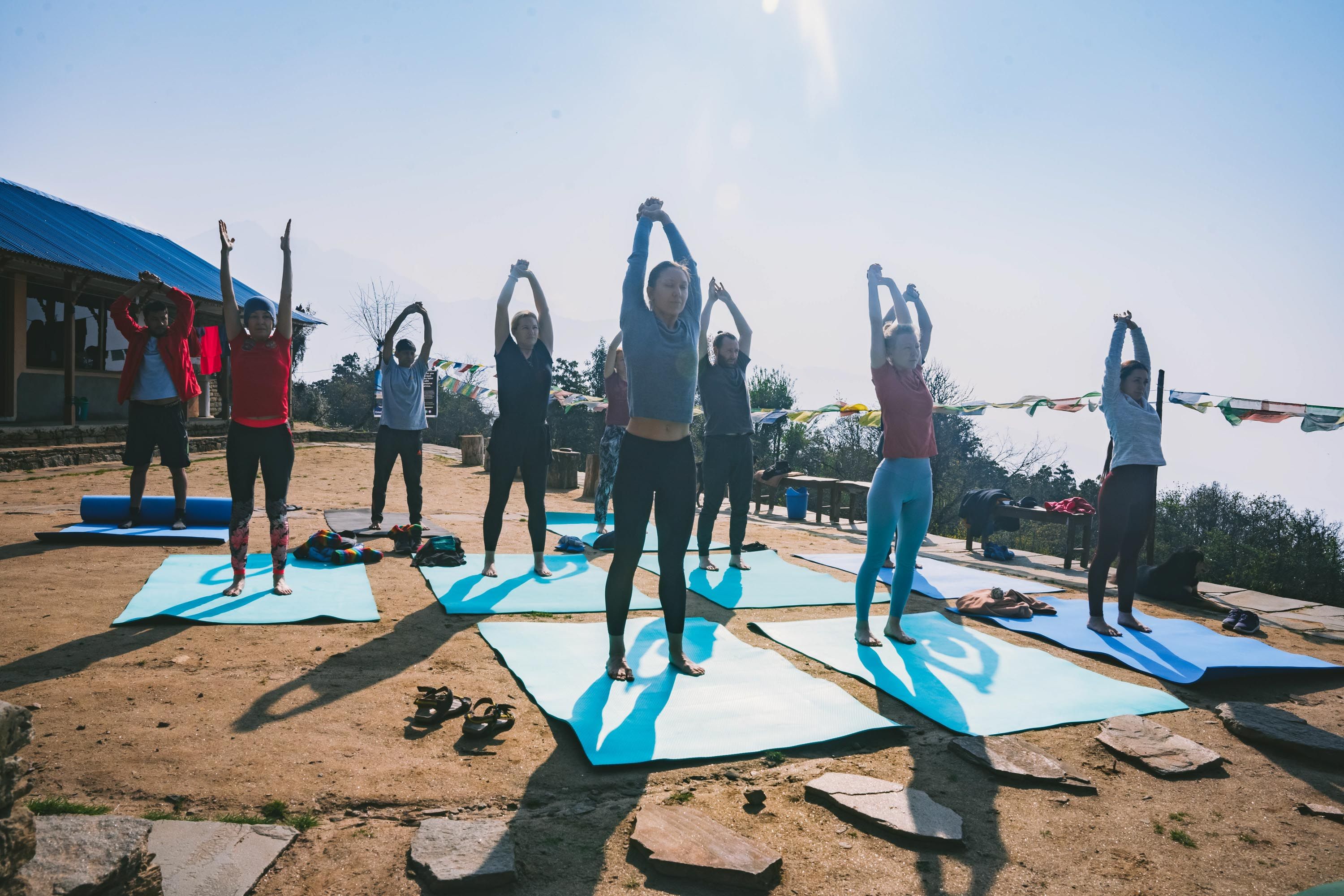
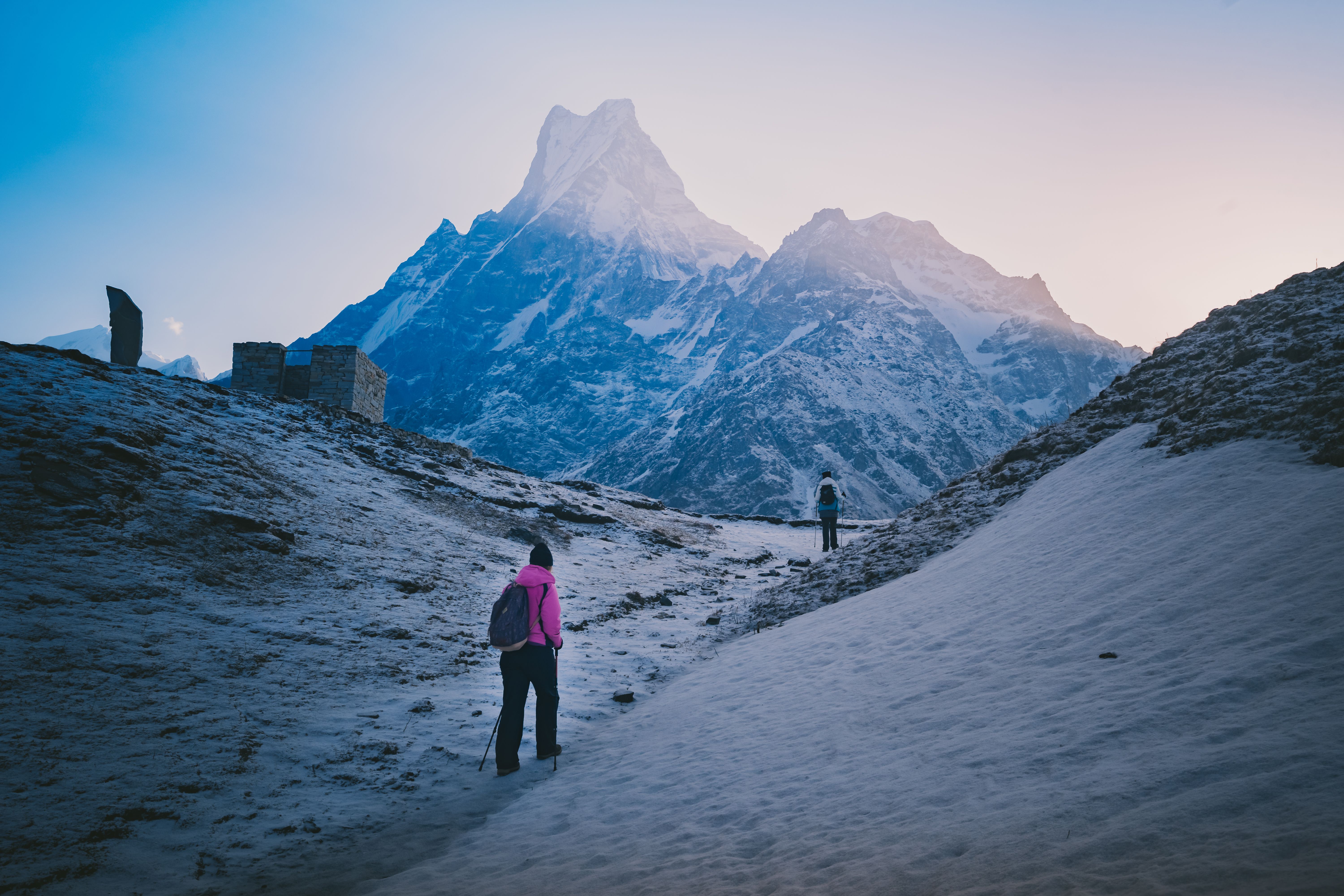
Tucked away on the eastern flank of the Annapurna massif, the Mardi Himal trek is one of Nepal's best-kept secrets and when you layer daily yoga and mindful movement practices into the experience, it becomes something else entirely. This is not simply a trek. It is a deliberate journey inward, guided by the rhythms of the mountains, the stillness of forest camps at dawn, and the quiet strength that builds day by day as altitude rises. The Mardi Himal Yoga Trek combines a well-crafted ten-day trekking route with structured yoga sessions designed for all levels, whether you step onto the mat every day at home or have only recently discovered the practice. Morning pranayama at a tea house perched above the clouds, restorative stretching after a long forest walk, breathwork at High Camp where the thin air itself becomes the teacher , every element is woven together intentionally. The trail winds through dense rhododendron and oak forests, emerald grasslands, and dramatic ridgelines that frame unobstructed views of Machapuchare (Fishtail), Annapurna South, Hiunchuli, and the summit pyramid of Mardi Himal itself. Because this route sees far less foot traffic than the classic Annapurna Circuit or Poon Hill trails, you will find genuine solitude and the kind of silence that mountain landscapes rarely offer anymore. Whether you are recovering from burnout, deepening a personal practice, seeking a meaningful adventure, or simply curious about what happens when movement, breath, and the Himalayas meet — this itinerary was built for you.
Trip Summary
Duration
Difficulty
Max Elevation
Start point
End point
Daily Activity
Group Size
Best Season
Trip Outline
- Day 1Arrival in Kathmandu
- Day 2Drive to Pokhara
- Day 3Drive to Phedi and Trek to Deurali
- Day 4Trek from Deurali to Forest Camp
- Day 5Trek from Forest Camp to Low Camp
- Day 6Trek from Low Camp to High Camp
- Day 7Hike from High Camp to Upper Viewpoint and Return to High Camp
- Day 8Trek from High Camp to Sidhing Village
- Day 9Trek to Lumre, Drive to Pokhara, and Fly to Kathmandu
- Day 10Final Departure
Included
- Trekking transport start from Pokhara
- Trekking conservation permit
- Trekking Register Certificate
- Equipped and insured trekking porter (one porter in between 2 person)
Not Included
- Drinks and Bar Bill (beverage) in the tea house trek
- Helicopter evacuation/rescue in case of emergency
- Personal insurance
- Personal use trekking equipment

Get started on your journey
Detailed itinerary
Arrival in Kathmandu
Your journey begins the moment you land at Tribhuvan International Airport in Kathmandu : Nepal's ancient, chaotic, and deeply enchanting capital. A member of our team will greet you in the arrivals hall and transfer you to your hotel in the heart of the city, where you can drop your bags and exhale after a long flight. Kathmandu sits at roughly 1,400 metres elevation in a broad valley surrounded by terraced hillsides. The city is one of the world's great cultural crossroads: Hindu temples and Buddhist stupas share the same lanes, street vendors sell everything from prayer flags to smartphone accessories, and the smell of incense drifts through narrow alleys that have been walked for centuries. If you arrive with time and energy, the late afternoon is perfect for a gentle exploration on foot. The neighbourhood of Thamel is walkable from most hotels and packed with colour — though the real gems lie slightly beyond it: the butter-lamp shrines of Paknajol, the quiet courtyards of the Kumari Ghar, and small rooftop tea shops where you can watch the city settle into evening. In the early evening we gather as a group for our welcome orientation. Your trek leader will walk you through the full itinerary, answer questions, and cover practical matters , gear checks, insurance, altitude, and what to expect at each stage of the journey. This is also when you will meet your fellow trekkers, many of whom tend to become genuine friends by the time the trail ends. We close the day with a gentle, 45-minute welcome yoga session designed to help your body release travel tension and begin settling into a slower, more intentional rhythm. Restorative postures, light breathwork, and a short guided meditation , nothing demanding, just a quiet opening.
Travel duration
Elevation
Meal
Accommodation
Drive to Pokhara
After breakfast and a morning yoga session on the hotel rooftop , a gentle flow to wake up the spine and open the hips we load into our private vehicle and begin the westward journey to Pokhara. The drive typically takes between six and seven hours depending on road conditions, and it is, in itself, an experience worth paying attention to. The Prithvi Highway hugs the course of the Trishuli River for much of the journey west, threading through gorges, past terraced rice fields, and through small market towns where local life spills freely onto the roadside. You will pass women carrying loads twice their size in wicker baskets (doko), roadside temples decorated with marigold offerings, and roadwork crews hammering at hillsides where the mountains perpetually reclaim what the builders clear. We stop mid-journey at a local restaurant for lunch a good opportunity to try dal bhat, the classic Nepali meal of lentil soup, steamed rice, curried vegetables, and pickle that you will eat many versions of over the coming days and genuinely enjoy every time. Pokhara arrives as something of a contrast to Kathmandu — greener, quieter, cooler, and spread along the shores of Phewa Lake. The Annapurna range is dramatically close here, and on clear afternoons the snow peaks seem to float above the city, enormous and improbable. After checking in and freshening up, the lakeside promenade is a beautiful place to walk and ease into the mountain atmosphere. The evening yoga session in Pokhara is a longer, more grounding practice: floor-based hip openers, forward folds, and a 20-minute yoga nidra (yogic sleep) to replenish the body after the drive. Sleep well the trek begins tomorrow.
Travel duration
Elevation
Meal
Accommodation
Drive to Phedi and Trek to Deurali
The first true day on the trail, and immediately the Mardi Himal trek announces itself as something special. After an early breakfast, we drive approximately 45 minutes from Pokhara to Phedi (also spelled Fedi), a small roadhead village at around 1,130 metres where the trail officially begins. The morning air here already carries the green freshness of the hills, and the sound of traffic gives way to birdsong as soon as you lace your boots. The trail from Phedi climbs steadily through terraced farmland and small farming settlements before entering the lower fringes of the forest zone. The path is well-defined but not crowded you may pass a handful of local porters and a few other trekkers, but long stretches feel entirely private. Stone steps worn smooth by generations of feet alternate with earthen paths softened by previous rains. As you gain elevation, the vegetation thickens noticeably. Banana trees give way to bamboo groves and then to broad-leaved forest, and the air grows noticeably cooler and damper. Small streams cross the path at intervals, and the sound of water rarely leaves you entirely. This is rhododendron country, and in spring (March to May) the forest blazes red, pink, and white — one of the most extraordinary natural displays in the Himalayas. Deurali sits at approximately 1,920 metres and offers a small cluster of tea houses with basic but comfortable facilities. Porters often rest here, and on clear days you can already see the upper ridgelines that will be tomorrow's trail. We settle in, rest, and then find a flat spot for our first proper trekking yoga session. Today's practice focuses on legs, hips, and lower back these muscle groups that bear the load on uphill trekking days. Extended triangle, warrior sequences, pigeon pose, and legs-up-the-wall supported by your backpack. The breathwork component addresses the body's adjustment to moderate elevation: slow nostril breathing, box breathing, and a short body scan. By the time we sit for dinner, the group begins to feel the particular coherence that only shared physical effort and shared stillness can create.
Travel duration
Elevation
Meal
Accommodation
Trek from Deurali to Forest Camp
Today takes you deeper into the living heart of the Mardi Himal forest — a section of the trail that many trekkers describe as the most atmospherically beautiful of the entire route. The path from Deurali enters a dense mosaic of oak, rhododendron, and magnolia, draped in moss and threaded with mist even on sunny mornings. Shafts of light filter through the canopy at angles that seem almost deliberate, illuminating patches of fern and stone and the occasional flash of a Himalayan bird. The trail is moderate in gradient here — enough to require steady breathing and rhythmic movement, but not so steep that conversation is impossible. This is a good day to practise what many yoga traditions call 'walking meditation': keeping attention on the sensation of each footfall, the sound of breath, the smell of the forest floor after rain. When the mind wanders (and it will), the trail itself calls you back. Forest Camp, sometimes called Kokar, sits at approximately 2,550 metres and is a small, friendly collection of lodges built at the edge of a clearing in the forest. The atmosphere here is one of the most distinctive on the trek: at night, the forest sounds take over completely — insects, owls, the occasional creak of old trees — and the darkness, with no light pollution, is spectacular. On clear nights, the Milky Way is extraordinary. The morning yoga session before departure from Deurali is a sun salutation practice timed to the actual sunrise: moving through each vinyasa as the light changes, beginning in stillness and building to a dynamic flow. It is one of those practices that sounds gimmicky until you do it in the mountains, at which point it becomes obvious that this is how sun salutations were always meant to feel. Evening yoga at Forest Camp is an introspective, candle-lit (or headtorch-lit) practice: seated meditation, pranayama, and gentle twists to support digestion and release tension from the walking day. There is something about practising in a small wooden tea house surrounded by forest at 2,500 metres that strips away everything unnecessary and leaves only what matters.
Travel duration
Elevation
Meal
Accommodation
Trek from Forest Camp to Low Camp
The trail between Forest Camp and Low Camp marks a beautiful and gradual transition — from the sheltered intimacy of the forest to the more open, windswept terrain of the upper mountain. The trees thin slowly, rhododendrons giving way to shorter shrubs and eventually to patches of alpine meadow where yaks sometimes graze in the warmer months. Visibility opens up, and with it comes your first real, unobstructed encounter with the Annapurna range. Machapuchare — Fishtail Mountain — dominates the view and earns every superlative given to it. Its double summit, perpetually snow-capped and considered sacred by Hindus (it has never been officially summited, the government having protected it from climbing attempts since 1957), appears from this angle as a near-perfect triangle. It is the kind of view that stops you mid-step and holds you there. Low Camp sits at approximately 3,150 metres and consists of a handful of well-run tea houses with comfortable rooms and excellent dal bhat. At this elevation, acclimatisation becomes a mindful process rather than an afterthought. We encourage the group to drink plenty of water, avoid alcohol, and notice any early symptoms of altitude sickness — headache, loss of appetite, slight dizziness — none of which are cause for alarm at this stage but all of which benefit from attention. The yoga practice at Low Camp introduces altitude-specific breathwork for the first time. Kapalabhati (skull-shining breath) is practised gently and with awareness — stimulating the respiratory system, warming the body from within, and supporting the body's adaptation to reduced oxygen. We also work with nadi shodhana (alternate nostril breathing) as a tool for calming the nervous system, which can become reactive in unfamiliar high-altitude environments. Postures focus on the upper body today — chest openers, shoulder rolls, thread-the-needle, and spinal twists — working the areas that tighten around backpack straps and carrying loads. The session ends with a long, guided savasana as the mountains turn pink in the last light. Dinner is early; sleep comes easily here.
Travel duration
Elevation
Meal
Accommodation
Trek from Low Camp to High Camp
The approach to High Camp is widely regarded as the most visually dramatic section of the entire Mardi Himal trek — and it delivers everything that reputation promises. The trail climbs along the spine of a broadening ridge, and as you ascend, the panorama expands on both sides simultaneously: to the north, the Annapurna Sanctuary and its ring of peaks; to the south and west, the valleys below fall away in rolling green waves. On a clear morning, the air seems to vibrate with light. The walking is more demanding today. The ridge trail exposes you to wind, and the elevation means each uphill stretch requires slower, steadier effort. This is where the breathwork practised over the previous days begins to pay real dividends. Trekkers who have engaged with the pranayama sessions consistently report finding a quieter, more sustainable pace on this section — breathing through the effort rather than fighting it. High Camp at 3,580 metres is a compact cluster of tea houses positioned with extraordinary views in every direction. This is base for the summit hike the following day. Rooms are simple — beds, blankets, windows that frame mountain views — but by this point in the trek, simplicity feels like luxury. There is a particular pleasure in a hot bowl of soup at 3,580 metres after six days of walking. The yoga session at High Camp is the most significant of the trek in terms of altitude and effect. We work indoors or in a sheltered outdoor space, and the practice is specifically curated for high elevation: slow vinyasa with extended holds, deep ujjayi breathing throughout, and a 30-minute pranayama sequence culminating in a bhramari (humming bee breath) meditation. The humming vibration at altitude, in silence, with mountain peaks visible through the window, is an experience that participants frequently describe as unexpectedly moving. Rest well tonight. Tomorrow is the summit day, and an early start is essential.
Travel duration
Elevation
Meal
Accommodation
Hike from High Camp to Upper Viewpoint and Return to High Camp
This is the day the entire trek has been building toward. We wake before sunrise at around 5:00 AM and begin the ascent to the Upper Viewpoint at 4,500 metres in the cold and dark. Headtorches light the way as the trail climbs steeply above High Camp, and within thirty minutes the sky begins to lighten from deep indigo to violet to a thin, extraordinary gold along the eastern horizon. The Upper Viewpoint is reached after approximately two to three hours of sustained climbing, and what greets you there is, without exaggeration, one of the finest panoramic mountain views in the entire Himalayan range. Annapurna I (8,091 m), Annapurna South (7,219 m), Hiunchuli (6,441 m), Machapuchare (6,993 m), and the summit of Mardi Himal itself (5,587 m) form a semicircle of ice and rock that fills the sky from left to right. Below, the clouds that sit above the lower valleys often create a sea-of-cloud effect, with only the peaks visible above it. At the viewpoint, we hold space for a mountaintop yoga and meditation practice that is entirely optional but tends to attract almost everyone. Sitting in Sukhasana (easy cross-legged seat) at 4,500 metres with eyes open to the Himalayas, practising simple breath awareness and gratitude meditation — there are few practices more naturally supported by their environment. The mountain does most of the work. After sufficient time to absorb the views, photograph, and simply be present, we begin the descent back to High Camp. Downhill on this section requires careful footwork, especially if there is any early-morning frost or dampness on the trail. Take your time — the knees and ankles carry significant load on descent, and steady movement protects them. Back at High Camp by late morning, we enjoy a hot breakfast or early lunch and rest. The afternoon yoga session is a full recovery practice: supine hip openers, supported backbends, long holds in yin-style postures, and an extended savasana. By evening the body will have processed a remarkable amount of work and altitude, and an early dinner and early bed are both well-deserved.
Travel duration
Elevation
Meal
Accommodation
Trek from High Camp to Sidhing Village
After the high of summit day, Day 8 offers a different kind of reward a long descent through changing landscapes and a genuine encounter with the human geography of the region. The trail from High Camp drops steeply into the lower Mardi valley, passing back through alpine scrub and then dense forest before emerging into the cultivated terraces and traditional stone-built settlements of the Gurung people. Today's descent is substantial nearly 1,900 metres of elevation loss over the course of the day and the knees and ankles will know it by afternoon. Trekking poles are highly recommended for this section. Despite the physical demand, the route is extraordinarily beautiful: wide valley views, the sound of water returning as streams re-emerge below the treeline, and the visible texture of terraced agriculture that has shaped these hillsides for centuries. Sidhing Village is a small, authentic Gurung settlement at approximately 1,700 metres that sees relatively few tourists and maintains a strong sense of its own identity. The Gurung people are one of Nepal's historically prominent hill communities, many of whom served as Gurkha soldiers in the British and Indian armies. Their stone houses, community chautara (resting platforms under spreading trees), and agricultural traditions have changed surprisingly little over generations. We are welcomed at a local tea house often family-run where the hospitality is genuine and the food is excellent. If time and energy permit, a short walk through the village with a local guide provides remarkable insight into daily life at altitude: the herb gardens, the hand-looms, the care given to animals, and the particular kind of self-sufficiency that mountain communities develop over centuries. Evening yoga in Sidhing is grounding and celebratory a practice of gratitude and integration. We have reached the highest point, descended safely, and encountered extraordinary beauty. The practice reflects that arc: strong standing postures, heart openers, and a closing meditation with an invitation to carry the clarity of the mountain back into ordinary life.
Travel duration
Elevation
Meal
Accommodation
Trek to Lumre, Drive to Pokhara, and Fly to Kathmandu
A shorter walking day to close the trek and a fitting one. The trail from Sidhing to Lumre (sometimes spelled Lamre) descends gradually through terraced farmland and small settlements, taking roughly two hours on easy, wide paths. The body, after eight days of mountain walking, moves with a looseness and ease that it did not have when the trek began. Notice it. Lumre is a roadside village where our vehicle meets us. The transition from trail to tarmac is always slightly surreal after a week in the mountains — the noise, the speed, the smell of diesel but the short drive to Pokhara offers a final opportunity to look back at the Annapurna range from below and trace, roughly, the ridgeline you have been walking. In Pokhara, depending on departure timing, there may be opportunity for a lakeside lunch, a final browse through the market for gifts and souvenirs (hand-woven wool scarves, Tibetan singing bowls, pashmina, local honey), or simply a quiet coffee by Phewa Lake while the mountains watch from above. The flight from Pokhara to Kathmandu takes approximately 25 minutes and offers its own aerial perspective on the landscape you have been walking through on a clear day, the Annapurna and Dhaulagiri ranges are visible from the right side of the aircraft, vast and coherent in a way that is impossible to grasp from below. Back in Kathmandu, we check into our hotel and gather one final time for the closing yoga session of the trek — a practice of integration and completion. What has this journey offered? What do you carry back? The session is reflective, unhurried, and ends with a longer-than-usual savasana followed by a closing circle where participants are invited to share a word, an image, or a reflection from the ten days. These circles are always quietly powerful. The evening's celebration dinner brings the group together around a table of local food, shared laughter, and the particular warmth that forms between people who have walked, breathed, and been mountain-awed together.
Travel duration
Elevation
Meal
Accommodation
Final Departure
The final morning in Nepal. Depending on your flight time, you may have the luxury of a slow breakfast and a few last hours in Kathmandu, or you may be packing bags before dawn and heading straight to the airport. Either way, the journey out carries something different than the journey in a particular quality of fullness that mountain trips tend to leave behind. If time allows before departure, Kathmandu rewards a final morning of exploration. Boudhanath Stupa — one of the largest Buddhist stupas in the world and a UNESCO World Heritage Site is a short drive from most city-centre hotels and completely magical in the early morning, when monks circle the stupa in a slow, repetitive orbit and butter lamps glow in the mist. Pashupatinath Temple, the sacred Hindu cremation site on the banks of the Bagmati River, offers a more confronting but profoundly thought-provoking encounter with the cycle of life and death that Hinduism navigates so openly. Our team will arrange your airport transfer at the appropriate time. At the departure gate, you will likely find yourself already thinking about the next mountain. That is the particular affliction of Himalayan travel is it does not resolve the desire for mountains; it deepens it. Safe travels. And thank you for walking with us.
Travel duration
Elevation
Meal
Accommodation
Ready to start your journey?
Start planning your dream trip today. Enquire now for more information or customize this trip to tailor it to your needs and make it truly unforgettable.