Express Mardi Himal Trek
Embark on the Ultimate Adventure
3 Days Express Mardi Himal trek
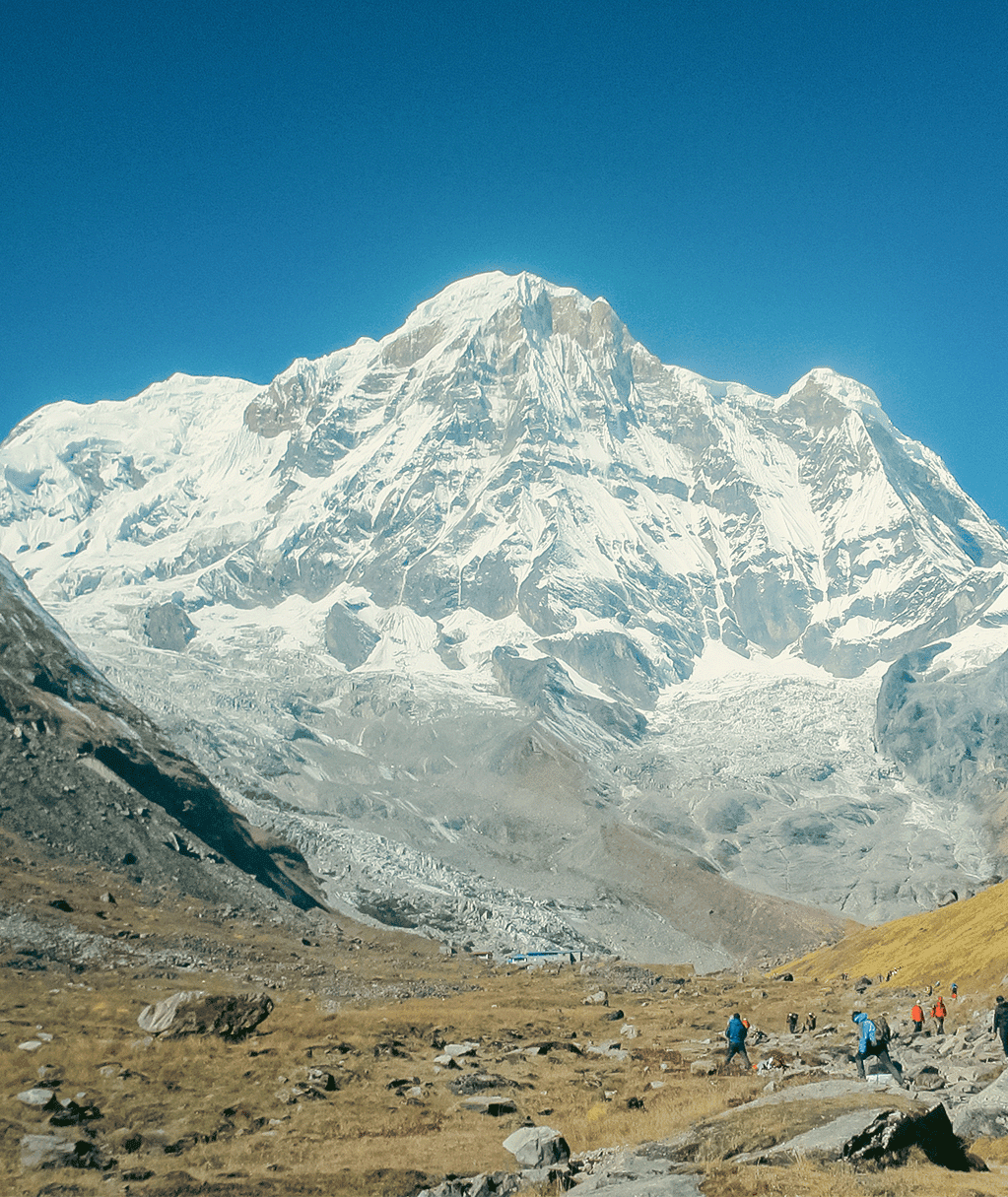
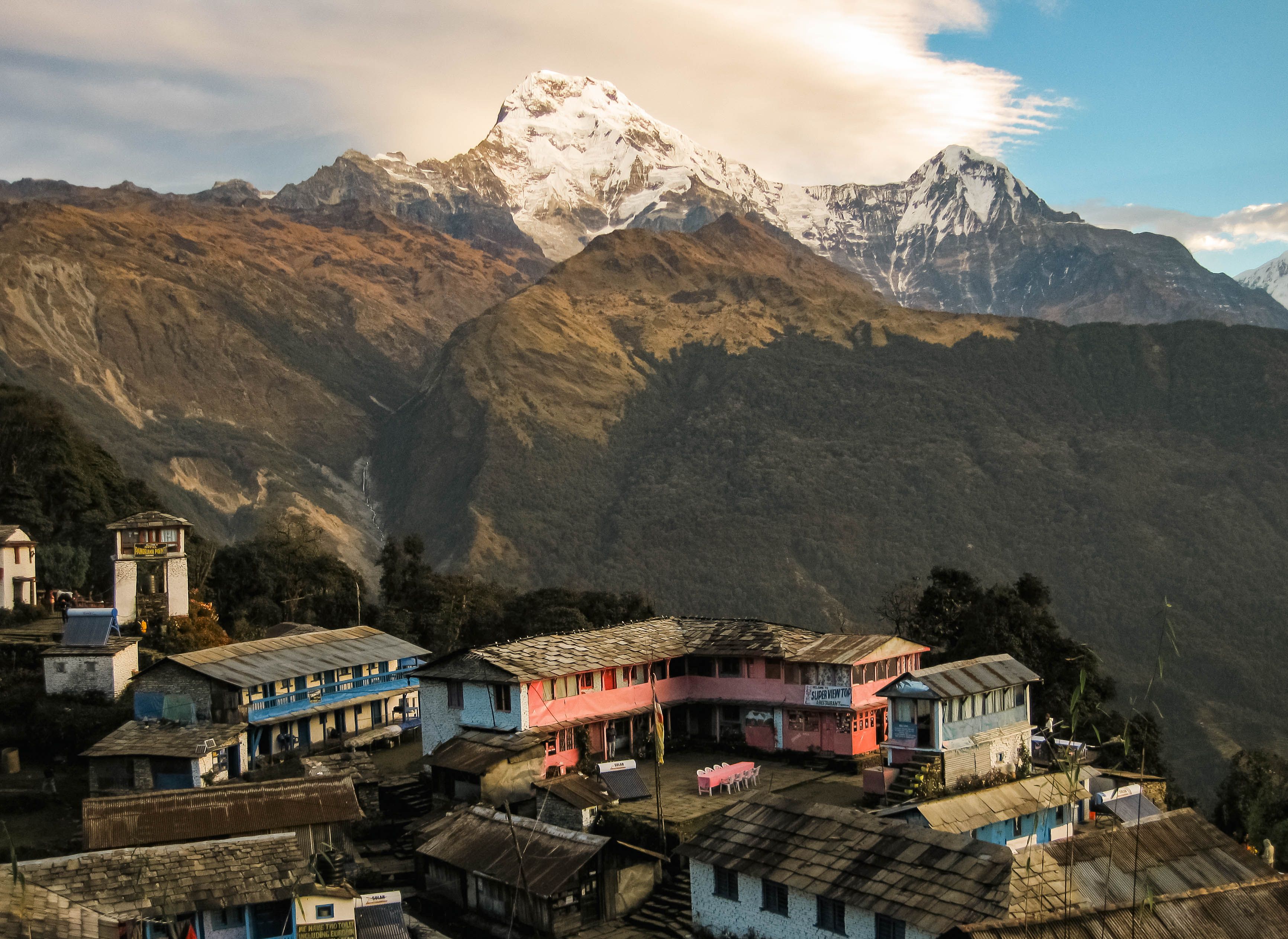
The Express Mardi Himal Trek is a 3-day trek starting and finishing in Pokhara. The high point is 3,540 m. A normal day is 4 to 8 hours of walking. We run it as a private trip on your own dates, or as a small group departure.
Gurung and Magar in the middle hills, Thakali in the Kali Gandaki, Tibetan Buddhist in Manang and Mustang. The Thakali dal bhat set through the Kali Gandaki is genuinely one of the best meals in Nepal. Apple products from Marpha.
Graded moderate. If you walk regularly at home and put in a couple of months of hill training beforehand, you will manage this comfortably. Thorong La at 5,416 m on the Circuit is the serious altitude. The Sanctuary treks top out at 4,130 m and are far more forgiving.
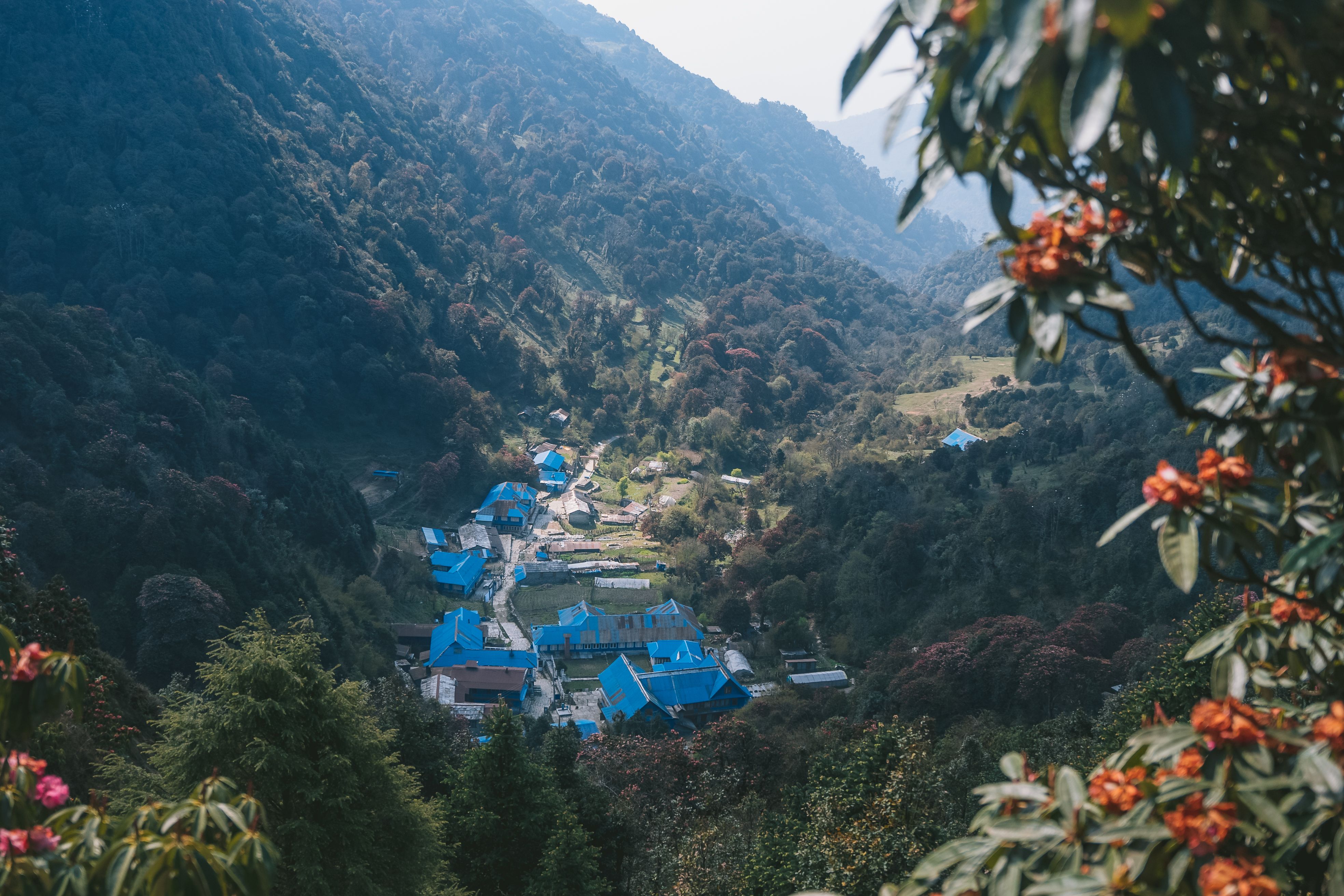
Best time to go. March to May and October to November. Spring is the rhododendron season in the middle hills; autumn gives the sharpest mountain views. The Annapurna region is also the most workable of the big treks in December and January below 3,500 m.
Permits and getting there. Annapurna Conservation Area Project (ACAP) permit and a TIMS card, both included and issued in Kathmandu or Pokhara before you start. Road access from Pokhara. Tourist bus or private vehicle from Kathmandu to Pokhara is 6 to 8 hours, or a 25-minute flight. Note that in autumn 2026 the Prithvi Highway has suffered landslide damage at Krishnabhir, so we check road status before every departure and switch to flights when needed.
Where you sleep. Some of the best teahouses in Nepal. Attached bathrooms and hot showers are common as far as Chhomrong and Manang; above that, twin rooms with shared facilities.
Why book with us. Trekking Team is a family company in Gongabu, Kathmandu, running trips since 1991 under TAAN licence 1106. About ten thousand people have travelled with us and we hold more than 630 TripAdvisor reviews. Every departure runs with a government-licensed guide, permits arranged before you arrive, insured and equipped staff, and a fixed price. If the dates or the route do not suit you, write to us and we will rebuild the itinerary around what you want.
Trip Summary
Duration
Difficulty
Max Elevation
Start point
End point
Daily Activity
Group Size
Best Season
Included
- Airport pick-up and drop-off in a private vehicle
- Kathmandu to Pokhara and back by tourist coach or by air, plus private vehicle between Pokhara and the trailhead
- Annapurna Conservation Area (ACAP) permit and TIMS card
- Government-licensed, first-aid trained trekking guide, paid, insured and equipped by us
- Porter support, one porter between two trekkers, carrying up to 20 kg, insured and issued boots, jacket and shelter
- Teahouse accommodation on trek, twin share, booked ahead in the peak weeks
- Hotel in Kathmandu on a bed and breakfast basis, as listed in the itinerary
- Down jacket, four-season sleeping bag and duffel bag on free loan for the trek
- Route map, trip completion certificate and a farewell dinner in Kathmandu
- Staff wages, insurance, meals, accommodation and equipment
- All government taxes, VAT and company service charges
- Secure storage for the luggage you leave in Kathmandu
Not Included
- International flights and the Nepal visa fee
- Meals on trek. Our packages run on a bed and breakfast basis: add a prepaid meal plan when you book, or pay the teahouses directly as you go
- Lunches and dinners in Kathmandu
- Travel insurance covering medical treatment, helicopter evacuation and repatriation. This is compulsory and we need your policy details before departure
- Personal trekking clothing and equipment
- Drinks of any kind: bottled water, soft drinks, alcohol and hot drinks
- Hot showers, battery charging, wifi and hot water bottles at the lodges
- Supplementary oxygen, which is always an optional extra
- Extra nights in Kathmandu, and any cost arising from an early return, a flight delay or a change of itinerary caused by weather or illness
- Emergency helicopter evacuation, which your insurance must cover
- Tips for your guide, porters and drivers
- Anything not listed under what is included
Dates and availability
All our published dates are guaranteed departures. If the dates don't match with your travel plans, we are more than happy to create one on your desired date. Let us know what kind of trip you are looking for and our travel experts will help to your dream destination
Get started on your journey
Detailed itinerary
Into the Cloud Forest (Drive to Pitam Deurali & Trek to Low Camp)
Travel duration
Elevation
Meal
Accommodation
Above the Tree Line (Low Camp to High Camp & Sunset Hike)
Travel duration
Elevation
Meal
Accommodation
Day 03: The Sanctuary Summit (Base Camp, Siding Descent, and Pokhara Return)
Travel duration
Elevation
Meal
Accommodation
Getting ready
Two to three months of preparation makes the difference between enduring this trip and enjoying it. Walk hills, not treadmills. Build to a five or six hour day with a 7 kg pack, twice a week, and add a back-to-back weekend so your legs learn what consecutive days feel like. Stairs with a loaded pack are the best substitute if you live somewhere flat.
Break in your boots properly. More trips are ruined by new footwear than by altitude.
Altitude and acclimatisation
The high point on this trip is 3,540 m. Thorong La at 5,416 m on the Circuit is the serious altitude. The Sanctuary treks top out at 4,130 m and are far more forgiving.
Rules we work to: gain no more than 400 to 500 m of sleeping altitude a day above 3,000 m, take a rest day roughly every 1,000 m, climb high and sleep low on those days, drink three to four litres daily, and skip alcohol and sleeping tablets above 3,500 m. Your guide carries a pulse oximeter and a first aid kit and records the group morning and evening.
Diamox (acetazolamide) is a legitimate aid, not a shortcut, and works best started 24 hours before you go high. Discuss it with your own doctor before you travel; we do not prescribe.
If anyone deteriorates, the answer is descent, immediately and without debate. Our guides have the authority to turn a client around and they use it.
Permits and paperwork
Annapurna Conservation Area Project (ACAP) permit and a TIMS card, both included and issued in Kathmandu or Pokhara before you start.
Nepal issues visas on arrival at Tribhuvan International Airport: 15, 30 or 90 days, payable in cash in most major currencies or by card. Bring two passport photographs and make sure your passport has at least six months validity.
Money, tipping and costs on the ground
Nepali rupees are the only currency accepted on the trail. Draw cash in Kathmandu or Pokhara before you leave; ATMs have a per-transaction limit of around NPR 35,000 and charge a fee, and above the roadhead there are no machines and no card terminals.
Budget roughly USD 10 to 20 a day for drinks, snacks, hot showers, charging and wifi that are not in the price. Bottled water is best avoided for both cost and plastic reasons.
Tipping is customary and genuinely matters to the crew, but it is not compulsory and never demanded. As a guide to the guide: around USD 8 to 12 per day for your trekking guide and USD 6 to 8 for each porter, pooled by the group and handed over at the end.
Staying in touch
Wi-Fi in most lodges, mobile signal along much of the route, and mains charging at low cost.
Ncell and Nepal Telecom tourist SIM cards are sold at Kathmandu airport and take about ten minutes. Bring your passport.
What to pack
We send a full checklist when you book. The items people most often get wrong:
- Broken-in boots with ankle support, plus trainers or sandals for the evenings
- A four-season down sleeping bag rated to at least minus 10 C, and a down jacket. We lend both at no charge if you would rather not buy them
- Layers rather than bulk: thermal base, fleece, windproof shell, waterproof jacket and trousers
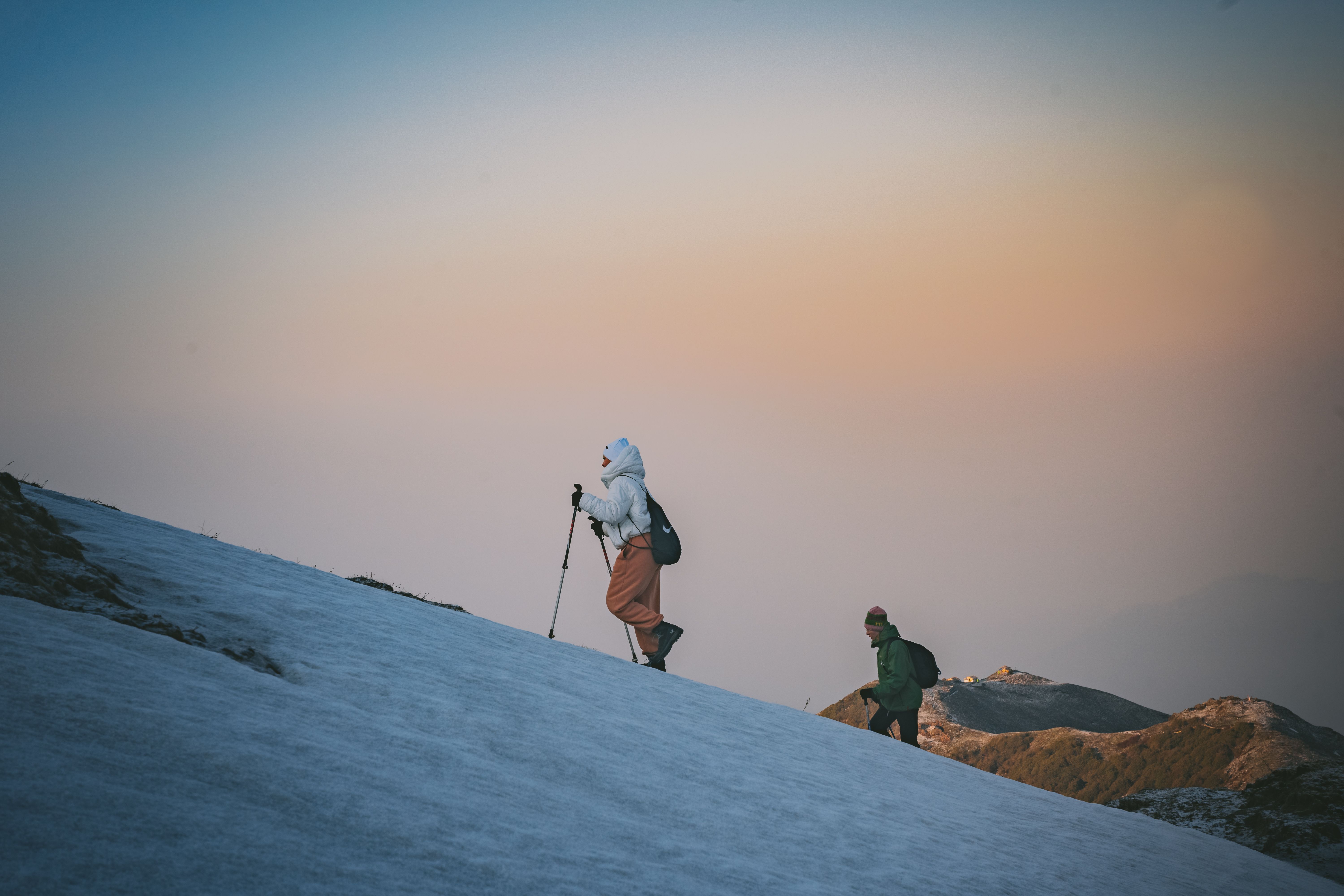
- Sun hat, warm hat, glove liners and warm gloves, and category 4 sunglasses. Snow glare at altitude is brutal
- A one-litre bottle plus a two-litre bladder, and a SteriPen or chlorine tablets so you can refill instead of buying plastic
- Personal first aid: blister plasters, ibuprofen, rehydration salts, antiseptic, any prescriptions in original packaging
- A 20,000 mAh power bank, headtorch with spare batteries, and a two-pin European plug adapter
Health and safety
No vaccinations are legally required for Nepal, but hepatitis A, typhoid and tetanus are sensible and a rabies course is worth discussing if you are travelling for a long time. Check with a travel clinic six to eight weeks before you fly.
Drink treated water rather than bottled where you can, wash hands before every meal, and eat what is freshly cooked. Stomach upsets ruin more trekking days than altitude does.
Our guides carry a comprehensive first aid kit. We hold a 24-hour operations line in Kathmandu throughout your trip, and we run rescue coordination ourselves rather than handing it to a third party.
Responsible trekking
We pay porters above the TAAN minimum, insure every member of staff, cap load weights and provide boots, jackets and shelter at altitude. That is not a marketing line; it is the reason our crew come back season after season and some have been with the family for twenty years.
On the trail: carry your rubbish out, use refill points instead of plastic bottles, ask before photographing people, walk clockwise around mani walls and chortens, and give way to loaded yaks on the mountain side of the path, not the drop side.
Booking and cancellation
A deposit confirms your dates and the balance is due before departure. If your plans change we will move your booking to another date rather than treat it as a cancellation wherever the ground operators allow it.
Written quotes are fixed. We do not add fuel or permit surcharges after you have booked, and if a government fee rises between your booking and your departure we absorb it.
Questions before you commit are welcome and never rushed. Write to us with what you actually want and we will tell you plainly whether this trip is the right one, including when the answer is that a different route would suit you better.
Ready to start your journey?
Start planning your dream trip today. Enquire now for more information or customize this trip to tailor it to your needs and make it truly unforgettable.