Kailash and Mansarovar Lake Yatra
Embark on a Sacred Pilgrimage
Experience the Divine Kailash Mansarovar Yatra
The Kailash and Mansarovar Lake Yatra is a 16-day trek starting and finishing in Kathmandu. The high point is 5,650 m. A normal day is 6 to 7 hours of walking. We run it as a private trip on your own dates, or as a small group departure.
The route runs Nepal, Saga, Mansarovar, Darchen, Dehara Puk, Charansprash and Dolma. Sacred to Hindus, Buddhists, Jains and Bon. The kora is 52 km, walked clockwise by Buddhists and Hindus and anticlockwise by Bon practitioners.
Graded moderate. Nothing on the route is technical, but the altitude is real and it is what decides who finishes. The kora crosses the Dolma La at 5,630 m, the highest point on any of our trips, and you will already have spent days above 4,500 m. Fitness and acclimatisation both matter.
Best time to go. May to September only. The Saga Dawa festival in May or June is the most significant time to walk the kora.
Permits and getting there. Chinese group visa, Tibet Travel Permit, Alien's Travel Permit and the Kailash area permit. Applications take at least 25 days and passports must be scanned early. Overland from Lhasa or via Gyirong and Saga. Long driving days on the Tibetan plateau at over 4,500 m.
Where you sleep. Guesthouses and dormitories at Darchen and on the kora. Facilities are basic and shared.
Why book with us. Trekking Team is a family company in Gongabu, Kathmandu, running trips since 1991 under TAAN licence 1106. About ten thousand people have travelled with us and we hold more than 630 TripAdvisor reviews. Every departure runs with a government-licensed guide, permits arranged before you arrive, insured and equipped staff, and a fixed price. If the dates or the route do not suit you, write to us and we will rebuild the itinerary around what you want.
Trip Summary
Duration
Difficulty
Max Elevation
Start point
End point
Daily Activity
Group Size
Best Season
Trip Outline
- Day 1Arrival in Kathmandu
- Day 2Chinese Visa Processing/Free Day
- Day 3Free Day
- Day 4Pashupatinath Darshan, Boudhnath Stupa, and Patan Visit
- Day 5Kathmandu to Nepal-Tibet Border at Rasuwa Ghadhi
- Day 6Easy Day in Kerung to Acclimatize
- Day 7Drive from Kerung to Saga
- Day 8Drive from Saga to Mansarovar
- Day 9Travel to Darchen - The Gateway to Mount Kailash
- Day 10Start Parikrama to Dehara Puk
- Day 11A Day Hike to Charansprash (Optional)
- Day 12Parikrama to Dolma-La Pass - The Most Challenging Day
- Day 13Finish Parikrama and Return to Saga
- Day 14Return to Kathmandu via Kerung
- Day 15Contingency Day - Preparing for the Unexpected
- Day 16Fly Home
Included
- All internal flights and border transfers between Tibet and Nepal that appear in the itinerary
- Chinese group visa, Tibet Travel Permit, Alien’s Travel Permit and the Kailash area permit
- Licensed Tibetan guide and a Nepali tour leader for the group
- Tourist vehicle with a permitted driver, and a support truck carrying supplies on the plateau
- Hotel and guesthouse accommodation throughout, twin or multi share
- Basic teahouse accommodation at Dirapuk and Zutulpuk during the three-day kora, with bedding and blankets provided
- Breakfast daily at the hotels, outside the kora
- Support vehicle shadowing the group on the first and third days of the kora
- A pulse oximeter and a comprehensive first aid kit carried by the guide
- All government taxes and company service charges
Not Included
- International flights and the Kathmandu to Lhasa air ticket unless listed
- All lunches and dinners. Kailash programmes run on a bed and breakfast basis
- All meals during the three-day kora, including breakfast. You pay the teahouses directly at Dirapuk and Zutulpuk
- Travel insurance covering trekking to 5,700 m and evacuation from western Tibet. Compulsory
- Supplementary oxygen, which is available as an optional extra
- Horse and personal porter for the kora, arranged at Darchen at extra cost. The porter and yak weight limit is 5 kg per person
- Extra nights in Darchen if you do not complete the kora and return early, which are chargeable
- Drinks, laundry and items of a personal nature
- Costs arising from a border closure, permit refusal, illness or an early return
- Emergency evacuation, which your insurance must cover
- Tips for the guide, driver and kitchen crew
- Anything not listed under what is included
Get started on your journey
Detailed itinerary
Arrival in Kathmandu
Arrival day in Lhasa is an altitude day and we treat it as one. The city sits at 3,656 m and you have arrived there by aircraft, which means no acclimatisation at all. Our Tibetan guide meets you at Gonggar airport and it is about an hour into the city.
Check in, then do almost nothing. Drink plenty of water, skip alcohol entirely, eat lightly and go to bed early. Mild headache and broken sleep on the first night are normal and usually gone by the second. Your guide will check on you in the evening and again at breakfast.
If you feel well, a short slow walk in the neighbourhood is better than lying down all afternoon, but keep it flat and keep it brief.
Altitude: 1,350 m | Overnight: 3-5 Stars | Meals: Breakfast
Travel duration
Elevation
Meal
Accommodation
Chinese Visa Processing/Free Day
Visa application for Tibet. Spend your day exploring Kathmandu or resting.
Altitude: 1,350 m | Overnight: 3-5 Stars | Meals: Breakfast
Travel duration
Elevation
Meal
Accommodation
Free Day
Another free day to explore the city or rest in preparation for the journey ahead.
Altitude: 1,350 m | Overnight: 3-5 Stars | Meals: Breakfast
Travel duration
Elevation
Meal
Accommodation
Pashupatinath Darshan, Boudhnath Stupa, and Patan Visit
Visit some of Nepal’s most sacred religious sites, including Pashupatinath Temple, Boudhanath Stupa, and Patan Durbar Square.
Pashupatinath is the most important Hindu temple in Nepal and one of the great Shiva shrines of the subcontinent, a UNESCO site on the banks of the Bagmati. Non-Hindus cannot enter the main temple but the far bank gives an open view across the ghats, where open-air cremations take place through the day. It is confronting the first time and it is also completely ordinary here, a public part of life rather than something hidden. Sadhus in ochre sit along the terraces, and the evening aarti draws a crowd.
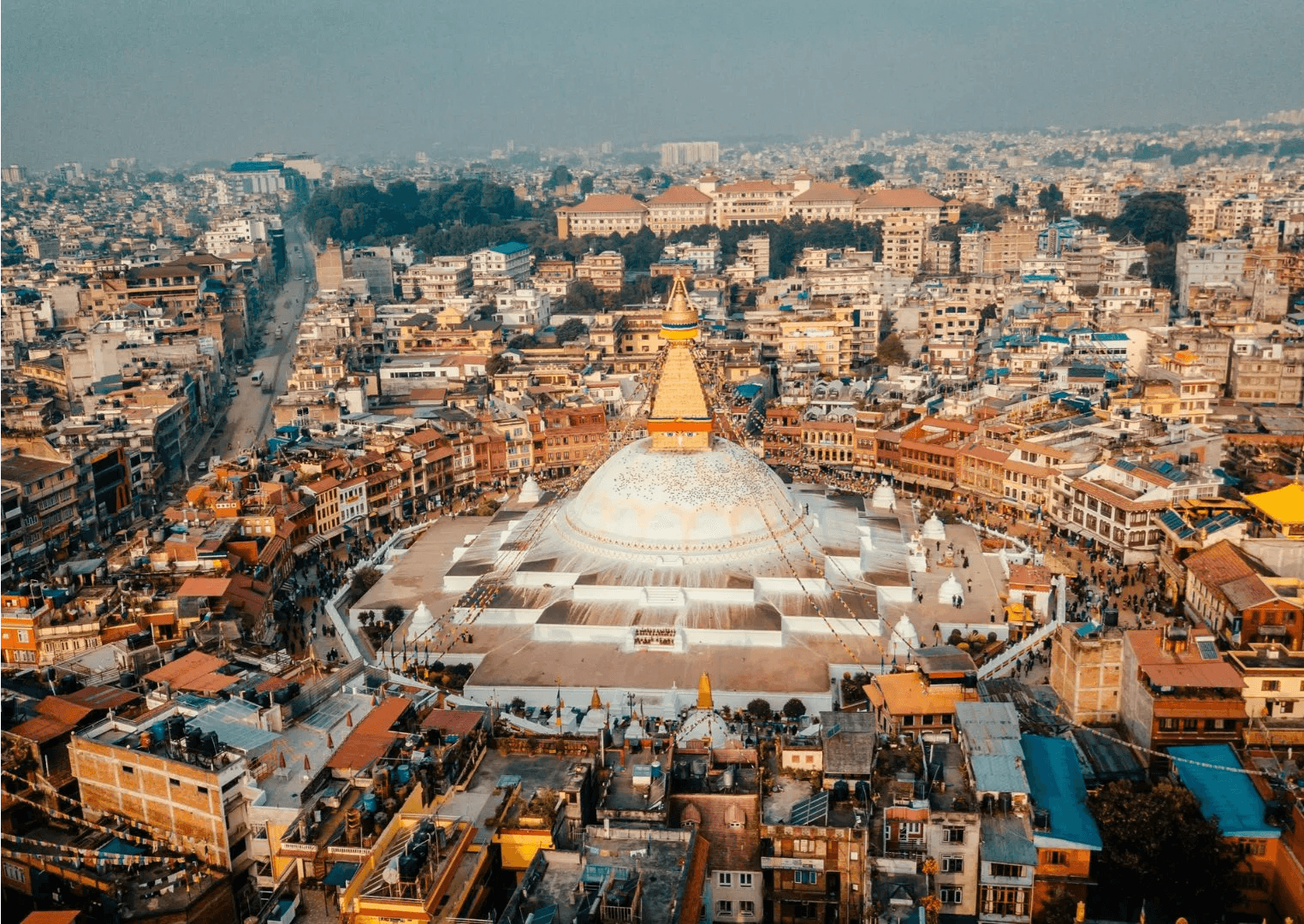
Boudhanath is one of the largest stupas in the world and the centre of Tibetan Buddhist life in Nepal, particularly since 1959 when refugees settled around it. The white dome is 36 m across, ringed by prayer wheels, and surrounded by more than fifty gompas belonging to different lineages. Walk the kora clockwise at dusk with the local crowd and the monks coming out of evening puja: it is the single most atmospheric hour in Kathmandu.
Patan, or Lalitpur, has the finest concentration of Newar architecture in Nepal. The Durbar Square holds the Krishna Mandir, carved from stone in 1637 in a distinctly north Indian shikhara style, the Golden Temple with its gilded facade and resident tortoises, and the Patan Museum, which is widely considered the best museum in the country and is housed in a restored palace wing. The surrounding lanes are still full of working metalworkers and thangka painters.
Altitude: 1,350 m | Overnight: 3-5 Stars | Meals: Breakfast
Travel duration
Elevation
Meal
Accommodation
Kathmandu to Nepal-Tibet Border at Rasuwa Ghadhi
Take a scenic drive from Kathmandu to the Nepal-Tibet border at Rasuwa Ghadhi.
Altitude: 1,800 m | Overnight: Hotel | Meals: Breakfast
Travel duration
Elevation
Meal
Accommodation
Easy Day in Kerung to Acclimatize
Drive to Kerung and spend the day acclimatizing to the high altitude.
Nyalam and Kerung sit on the Tibetan side of the Himalayan crest, and the road between the border and the plateau climbs through a spectacular gorge before emerging onto open, treeless high country. The altitude gain on this stretch is fast and the overnight here is an acclimatisation stop rather than a sightseeing one.
Altitude: 2,700 m | Overnight: Hotel | Meals: Breakfast
Travel duration
Elevation
Meal
Accommodation
Drive from Kerung to Saga
Travel further into Tibet, passing beautiful landscapes before arriving in Saga.
Nyalam and Kerung sit on the Tibetan side of the Himalayan crest, and the road between the border and the plateau climbs through a spectacular gorge before emerging onto open, treeless high country. The altitude gain on this stretch is fast and the overnight here is an acclimatisation stop rather than a sightseeing one.
Altitude: 4,600 m | Overnight: Hotel | Meals: Breakfast
Travel duration
Elevation
Meal
Accommodation
Drive from Saga to Mansarovar
Reach the sacred Lake Mansarovar, where you will have time for a holy bath and prayers.
Lake Mansarovar at 4,590 m is one of the highest freshwater lakes in the world and sacred in four religions. Pilgrims bathe in it and perform puja on the shore, with Kailash to the north and the Gurla Mandhata massif to the south. Nights here are cold and the accommodation is simple guesthouse or tented camp.
Altitude: 4,590 m | Overnight: Hotel | Meals: Breakfast
Travel duration
Elevation
Meal
Accommodation
Travel to Darchen - The Gateway to Mount Kailash
Proceed to Darchen, the base for Mount Kailash Parikrama.
Darchen at 4,670 m is the small settlement at the foot of Kailash where the kora begins and ends. It is a functional place of guesthouses, supply shops and pilgrims preparing, rather than somewhere you go for its own sake.
Altitude: 4,700 m | Overnight: Tea House | Meals: Breakfast
Travel duration
Elevation
Meal
Accommodation
Start Parikrama to Dehara Puk
Begin the Kailash Parikrama, trekking to Dehara Puk while soaking in views of the sacred mountain.
Altitude: 5,100 m | Travel: 4 to 6 hours | Overnight: Tea House | Meals: Breakfast, Lunch, Dinner
Travel duration
Elevation
Meal
Accommodation
A Day Hike to Charansprash (Optional)
Opt for a challenging day hike to Charansprash, a sacred site at the foot of Mount Kailash.
Altitude: 5,500 m | Travel: 8 to 9 hours | Overnight: Tea House | Meals: Breakfast, Lunch, Dinner
Travel duration
Elevation
Meal
Accommodation
Parikrama to Dolma-La Pass - The Most Challenging Day
Trek over the Dolma-La Pass, the highest point of the Parikrama, and descend to the valley below.
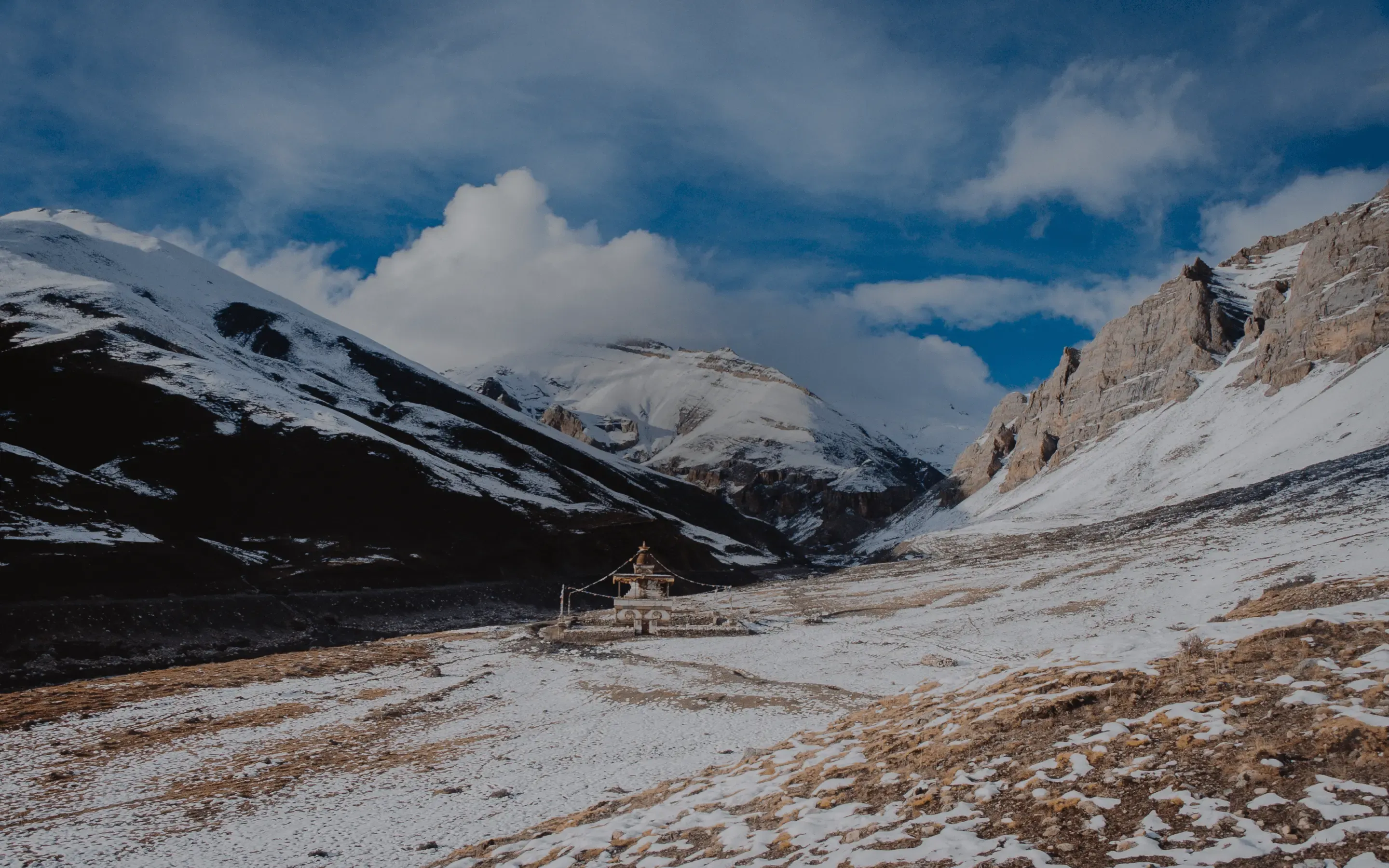
The Dolma La at 5,630 m is the high point of the Kailash kora and the hardest single stretch of the yatra: a steep 700 m climb to a pass thick with prayer flags, then a long knee-punishing descent past Gauri Kund. Most groups take ten to fourteen hours for the day and start well before dawn.
Altitude: 5,650 m | Travel: 10 to 12 hours | Overnight: Tea House | Meals: Breakfast, Lunch, Dinner
Travel duration
Elevation
Meal
Accommodation
Finish Parikrama and Return to Saga
Complete the Parikrama and return to Saga for a well-deserved rest.
Altitude: 4,600 m | Overnight: Tea House | Meals: Breakfast, Lunch, Dinner
Travel duration
Elevation
Meal
Accommodation
Return to Kathmandu via Kerung
Drive back to Kathmandu, reflecting on your spiritual journey.
Nyalam and Kerung sit on the Tibetan side of the Himalayan crest, and the road between the border and the plateau climbs through a spectacular gorge before emerging onto open, treeless high country. The altitude gain on this stretch is fast and the overnight here is an acclimatisation stop rather than a sightseeing one.
Altitude: 1,350 m | Overnight: 3-5 Stars | Meals: Breakfast
Travel duration
Elevation
Meal
Accommodation
Contingency Day - Preparing for the Unexpected
A day set aside for any potential delays or unforeseen events.
Altitude: 1,350 m | Overnight: 3-5 Stars | Meals: Breakfast
Travel duration
Elevation
Meal
Accommodation
Fly Home
Transfer to the airport about three hours before your international flight. If you have a late departure we will hold a day room or arrange a final few hours in the city rather than leave you sitting in the terminal.
If you would rather not go home yet, this is the easy point to extend: a few days in Pokhara, a wildlife stay in Chitwan or Bardiya, a short Bhutan add-on, or a rest week somewhere quiet. Tell us before you travel and we will build it in at cost rather than as a late upgrade.
Altitude: 1,350 m | Meals: Breakfast
Travel duration
Elevation
Meal
Accommodation
Getting ready
Two to three months of preparation makes the difference between enduring this trip and enjoying it. Walk hills, not treadmills. Build to a five or six hour day with a 7 kg pack, twice a week, and add a back-to-back weekend so your legs learn what consecutive days feel like. Stairs with a loaded pack are the best substitute if you live somewhere flat.
Break in your boots properly. More trips are ruined by new footwear than by altitude.
Altitude and acclimatisation
The high point on this trip is 5,650 m. The kora crosses the Dolma La at 5,630 m, the highest point on any of our trips, and you will already have spent days above 4,500 m. Fitness and acclimatisation both matter.
Rules we work to: gain no more than 400 to 500 m of sleeping altitude a day above 3,000 m, take a rest day roughly every 1,000 m, climb high and sleep low on those days, drink three to four litres daily, and skip alcohol and sleeping tablets above 3,500 m. Your guide carries a pulse oximeter and a first aid kit and records the group morning and evening.
Diamox (acetazolamide) is a legitimate aid, not a shortcut, and works best started 24 hours before you go high. Discuss it with your own doctor before you travel; we do not prescribe.
If anyone deteriorates, the answer is descent, immediately and without debate. Our guides have the authority to turn a client around and they use it.
Permits and paperwork
Chinese group visa, Tibet Travel Permit, Alien's Travel Permit and the Kailash area permit. Applications take at least 25 days and passports must be scanned early.
For Tibet you must send clear passport and visa scans at least 25 days before departure. The Chinese group visa is issued in Kathmandu and it is a physical document for the whole group, which is why late bookings are difficult and why you cannot join partway through.
Money, tipping and costs on the ground
Nepali rupees are the only currency accepted on the trail. Draw cash in Kathmandu or Pokhara before you leave; ATMs have a per-transaction limit of around NPR 35,000 and charge a fee, and above the roadhead there are no machines and no card terminals.
Budget roughly USD 10 to 20 a day for drinks, snacks, hot showers, charging and wifi that are not in the price. Bottled water is best avoided for both cost and plastic reasons.
Tipping is customary and genuinely matters to the crew, but it is not compulsory and never demanded. As a guide to the guide: around USD 8 to 12 per day for your trekking guide and USD 6 to 8 for each porter, pooled by the group and handed over at the end.
Staying in touch
Limited to none outside Darchen.
Ncell and Nepal Telecom tourist SIM cards are sold at Kathmandu airport and take about ten minutes. Bring your passport.
What to pack
We send a full checklist when you book. The items people most often get wrong:
- Broken-in boots with ankle support, plus trainers or sandals for the evenings
- A four-season down sleeping bag rated to at least minus 10 C, and a down jacket. We lend both at no charge if you would rather not buy them
- Layers rather than bulk: thermal base, fleece, windproof shell, waterproof jacket and trousers
- Sun hat, warm hat, glove liners and warm gloves, and category 4 sunglasses. Snow glare at altitude is brutal
- A one-litre bottle plus a two-litre bladder, and a SteriPen or chlorine tablets so you can refill instead of buying plastic
- Personal first aid: blister plasters, ibuprofen, rehydration salts, antiseptic, any prescriptions in original packaging
- A 20,000 mAh power bank, headtorch with spare batteries, and a two-pin European plug adapter
Health and safety
No vaccinations are legally required for Tibet or Nepal, but hepatitis A, typhoid and tetanus are sensible and a rabies course is worth discussing if you are travelling for a long time. Check with a travel clinic six to eight weeks before you fly.
Drink treated water rather than bottled where you can, wash hands before every meal, and eat what is freshly cooked. Stomach upsets ruin more trekking days than altitude does.
Our guides carry a comprehensive first aid kit, a pulse oximeter and, on the higher routes, supplementary oxygen. We hold a 24-hour operations line in Kathmandu throughout your trip, and we run rescue coordination ourselves rather than handing it to a third party.
Responsible trekking
We pay porters above the TAAN minimum, insure every member of staff, cap load weights and provide boots, jackets and shelter at altitude. That is not a marketing line; it is the reason our crew come back season after season and some have been with the family for twenty years.
On the trail: carry your rubbish out, use refill points instead of plastic bottles, ask before photographing people, walk clockwise around mani walls and chortens, and give way to loaded yaks on the mountain side of the path, not the drop side.
Booking and cancellation
A deposit confirms your dates and the balance is due before departure. If your plans change we will move your booking to another date rather than treat it as a cancellation wherever the ground operators allow it.
Written quotes are fixed. We do not add fuel or permit surcharges after you have booked, and if a government fee rises between your booking and your departure we absorb it.
Questions before you commit are welcome and never rushed. Write to us with what you actually want and we will tell you plainly whether this trip is the right one, including when the answer is that a different route would suit you better.
Ready to start your journey?
Start planning your dream trip today. Enquire now for more information or customize this trip to tailor it to your needs and make it truly unforgettable.