The Most Popular Tour in Tibet
Experience the Heart of Tibet
9-Days Exploring Tibet’s Spiritual and Scenic Wonders
The The Most Popular Tour in Tibet is a 9-day tour starting and finishing in Lhasa. The high point is 5,045 m. We run it as a private trip on your own dates, or as a small group departure.
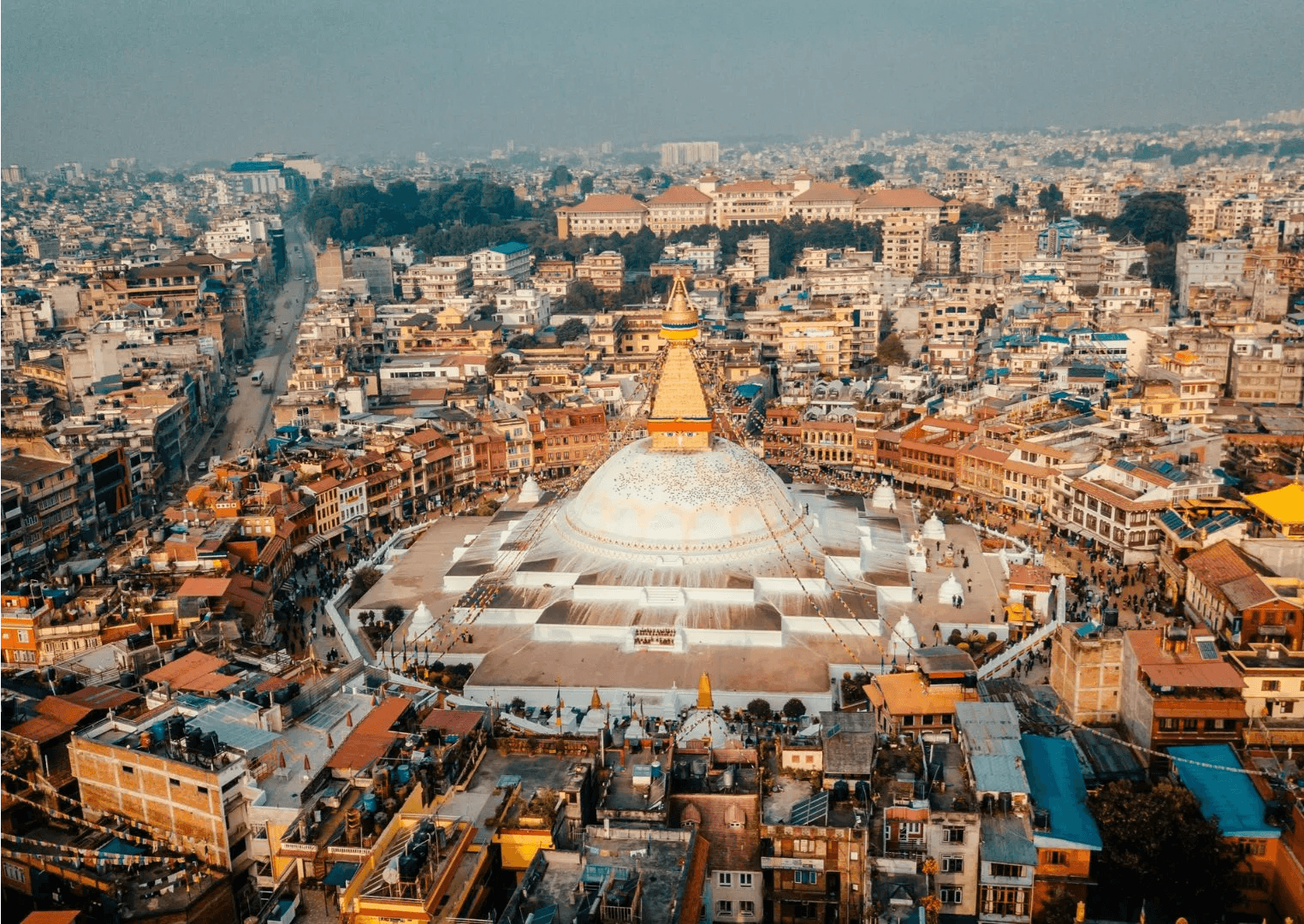
Potala Palace, Jokhang, Sera and Drepung monasteries, and the Barkhor kora walked clockwise. Tibetan, Sichuan and Nepali. Butter tea is an acquired taste and thukpa is not.
This is a cultural trip, not a trek. Expect vehicle transfers, guided site visits and short walks of an hour or two, with the option to add a longer hike where the itinerary allows. Lhasa is at 3,656 m and you arrive there by air, so day one is an altitude day. We keep the first 48 hours deliberately light.
Best time to go. April to October. Tibet closes to foreign visitors most years in February and March around the anniversary period, and we plan around that.
Permits and getting there. Chinese group visa, Tibet Travel Permit and Alien's Travel Permit for areas outside Lhasa. We handle the entire application; you must send passport scans at least 25 days before departure and you cannot travel on an individual Chinese visa. Flight Kathmandu to Lhasa, or overland via the Gyirong border. Some itineraries fly in and drive out to help with acclimatisation.
Where you sleep. Tourist-class and three to four star hotels in Lhasa, Shigatse and Gyantse; simpler guesthouses on the road to Everest.
Why book with us. Trekking Team is a family company in Gongabu, Kathmandu, running trips since 1991 under TAAN licence 1106. About ten thousand people have travelled with us and we hold more than 630 TripAdvisor reviews. Every departure runs with a government-licensed guide, permits arranged before you arrive, insured and equipped staff, and a fixed price. If the dates or the route do not suit you, write to us and we will rebuild the itinerary around what you want.
Trip Summary
Duration
Difficulty
Max Elevation
Start point
End point
Daily Activity
Group Size
Best Season
Trip Outline
- Day 1Arrival in Lhasa and Transfer to Tsedang
- Day 2Tsedang to Lhasa via Samye Monastery, Visit Chim Phu Caves
- Day 3Lhasa Sightseeing: Potala Palace, Norbulingka Palace, and Tibet Traditional Hospital
- Day 4Lhasa Sightseeing: Sera Monastery, Drepung Monastery, Jokhang Temple, and Barkhor Bazaar
- Day 5Lhasa to Gyantse via Karo La Pass and Yamdrok Tso Lake
- Day 6Gyantse Sightseeing and Drive to Shigatse
- Day 7Shigatse to Namtso Lake via Yangbajing
- Day 8Explore Namtso Lake and Return to Lhasa
- Day 9Final Departure
Included
- Chinese group visa, Tibet Travel Permit and Alien’s Travel Permit, arranged by us
- Military permit for the Everest and restricted areas where the route requires it
- Licensed Tibetan guide throughout
- Tourist vehicle with a permitted driver for the whole itinerary
- Hotel accommodation in Lhasa, Shigatse and Gyantse, and guesthouse or tented accommodation at Rongbuk, twin share
- Breakfast daily at the hotels
- All monastery and monument entry fees in the itinerary
- A pulse oximeter and a comprehensive first aid kit carried by the guide
- All government taxes and company service charges
Not Included
- International flights and the Kathmandu to Lhasa air ticket unless listed
- All lunches and dinners. Tibet programmes run on a bed and breakfast basis throughout
- Travel insurance covering high altitude and evacuation from Tibet. Compulsory
- Supplementary oxygen, which is available as an optional extra
- Drinks, laundry and items of a personal nature
- Costs arising from a border closure, permit refusal or itinerary change ordered by the authorities
- Emergency evacuation, which your insurance must cover
- Tips for the Tibetan guide and driver
- Anything not listed under what is included
Get started on your journey
Detailed itinerary
Arrival in Lhasa and Transfer to Tsedang
Arrival day in Lhasa is an altitude day and we treat it as one. The city sits at 3,656 m and you have arrived there by aircraft, which means no acclimatisation at all. Our Tibetan guide meets you at Gonggar airport and it is about an hour into the city.
Check in, then do almost nothing. Drink plenty of water, skip alcohol entirely, eat lightly and go to bed early. Mild headache and broken sleep on the first night are normal and usually gone by the second. Your guide will check on you in the evening and again at breakfast.
If you feel well, a short slow walk in the neighbourhood is better than lying down all afternoon, but keep it flat and keep it brief.
Altitude: 3,550 m | Overnight: Hotel | Meals: Breakfast
Travel duration
Elevation
Meal
Accommodation
Tsedang to Lhasa via Samye Monastery, Visit Chim Phu Caves
After breakfast, visit Samye Monastery, the first monastery in Tibet, and hike to the Chim Phu Caves, a retreat for Buddhist practitioners. Continue the drive to Lhasa (3,650m/11,976ft).
Tsedang in the Yarlung valley is where Tibetan civilisation began. Yumbulagang, said to be the oldest building in Tibet, stands on a spur above the valley, and Samye, founded around 775 CE, was the first Buddhist monastery in the country, laid out as a mandala of the Buddhist universe.
Altitude: 3,650 m | Overnight: Hotel | Meals: Breakfast
Travel duration
Elevation
Meal
Accommodation
Lhasa Sightseeing: Potala Palace, Norbulingka Palace, and Tibet Traditional Hospital
Explore the magnificent Potala Palace, a symbol of Tibetan Buddhism and former residence of the Dalai Lama. Visit the Norbulingka Palace, the summer residence of the Dalai Lama, and learn about traditional Tibetan medicine at the Tibet Traditional Hospital.
The Potala Palace rises thirteen storeys above Lhasa and was the winter residence of the Dalai Lamas from the seventeenth century. Inside are the golden funerary stupas of eight Dalai Lamas, the fifth's alone covered in more than three tonnes of gold, along with chapels, murals and the meditation cells of the earliest kings. Visits are on a timed ticket with a strict one-hour limit inside, and the climb up is at 3,656 m, so take it slowly.
Altitude: 3,650 m | Overnight: Hotel | Meals: Breakfast
Travel duration
Elevation
Meal
Accommodation
Lhasa Sightseeing: Sera Monastery, Drepung Monastery, Jokhang Temple, and Barkhor Bazaar
Visit Sera Monastery for its famous monk debates and explore Drepung Monastery, once the largest in the world. Continue to Jokhang Temple, the holiest site in Tibetan Buddhism, and immerse yourself in the vibrant Barkhor Bazaar.
The Jokhang is the most sacred temple in Tibetan Buddhism, founded in the seventh century to house the Jowo Rinpoche, a statue of the Buddha as a twelve-year-old brought to Tibet by the Chinese princess Wencheng. Pilgrims prostrate full-length on the flagstones outside from before dawn. The interior is dark, thick with butter lamp smoke, and unlike anywhere else.
The Barkhor is the pilgrim circuit around the Jokhang and the old heart of Lhasa: a clockwise kora walked by thousands of pilgrims a day, lined with stalls selling prayer wheels, turquoise, incense and yak butter. Walking it once with the flow of people tells you more about Tibet than any museum.
Sera Monastery, founded in 1419, is one of the three great Gelugpa university monasteries of Lhasa. The reason to go in the afternoon is the debating courtyard, where monks challenge each other on points of doctrine with a formalised hand clap that punctuates each question. It runs most weekday afternoons and it is genuinely gripping even without the language.
Drepung was once the largest monastery in the world, housing around ten thousand monks, and it climbs the hillside west of Lhasa like a small white city. The Ganden Podrang within it was the seat of the Dalai Lamas before the Potala was built.
Altitude: 3,650 m | Overnight: Hotel | Meals: Breakfast
Travel duration
Elevation
Meal
Accommodation
Lhasa to Gyantse via Karo La Pass and Yamdrok Tso Lake
Drive to Gyantse (5,045m/16,553ft) via the stunning Karo La Pass and stop at Yamdrok Tso Lake, a spectacular turquoise lake revered as one of the holiest in Tibet. Enjoy the dramatic landscapes as you continue to Gyantse.
Gyantse holds the Kumbum, a 32 m tiered stupa from 1427 containing seventy-seven chapels and thousands of murals, the finest surviving body of Newar-influenced Tibetan painting anywhere. The Gyantse dzong above the town gives a wide view over the barley fields of the Nyang valley.
Yamdrok Tso is one of Tibet's three sacred lakes, a startling turquoise fan of water seen from the Kamba La at 4,794 m on the road from Lhasa to Gyantse. The colour is genuine and the stop is brief, cold and windy.
Altitude: 5,045 m | Overnight: Hotel | Meals: Breakfast
Travel duration
Elevation
Meal
Accommodation
Gyantse Sightseeing and Drive to Shigatse
n Gyantse, visit the Palcho Monastery and the unique Kumbum Stupa with its countless Buddha images. Afterward, explore the charming old town before driving to Shigatse (3,900m/12,796ft) and visiting the famous Tashi Lhunpo Monastery, the seat of the Panchen Lama.
Gyantse holds the Kumbum, a 32 m tiered stupa from 1427 containing seventy-seven chapels and thousands of murals, the finest surviving body of Newar-influenced Tibetan painting anywhere. The Gyantse dzong above the town gives a wide view over the barley fields of the Nyang valley.
Shigatse is Tibet's second city at 3,840 m, the traditional seat of the Panchen Lamas, and the natural overnight stop between Lhasa and the Everest region. The old town market below Tashilhunpo is worth an hour.
Altitude: 3,900 m | Overnight: Hotel | Meals: Breakfast
Travel duration
Elevation
Meal
Accommodation
Shigatse to Namtso Lake via Yangbajing
Drive to the sacred Namtso Lake (4,718m/15,480ft), passing the Yangbajing Hot Springs and the high passes of Tagdruka and Xugula. Arrive at Namtso, one of the highest saltwater lakes in the world, where you'll be surrounded by stunning mountain scenery.
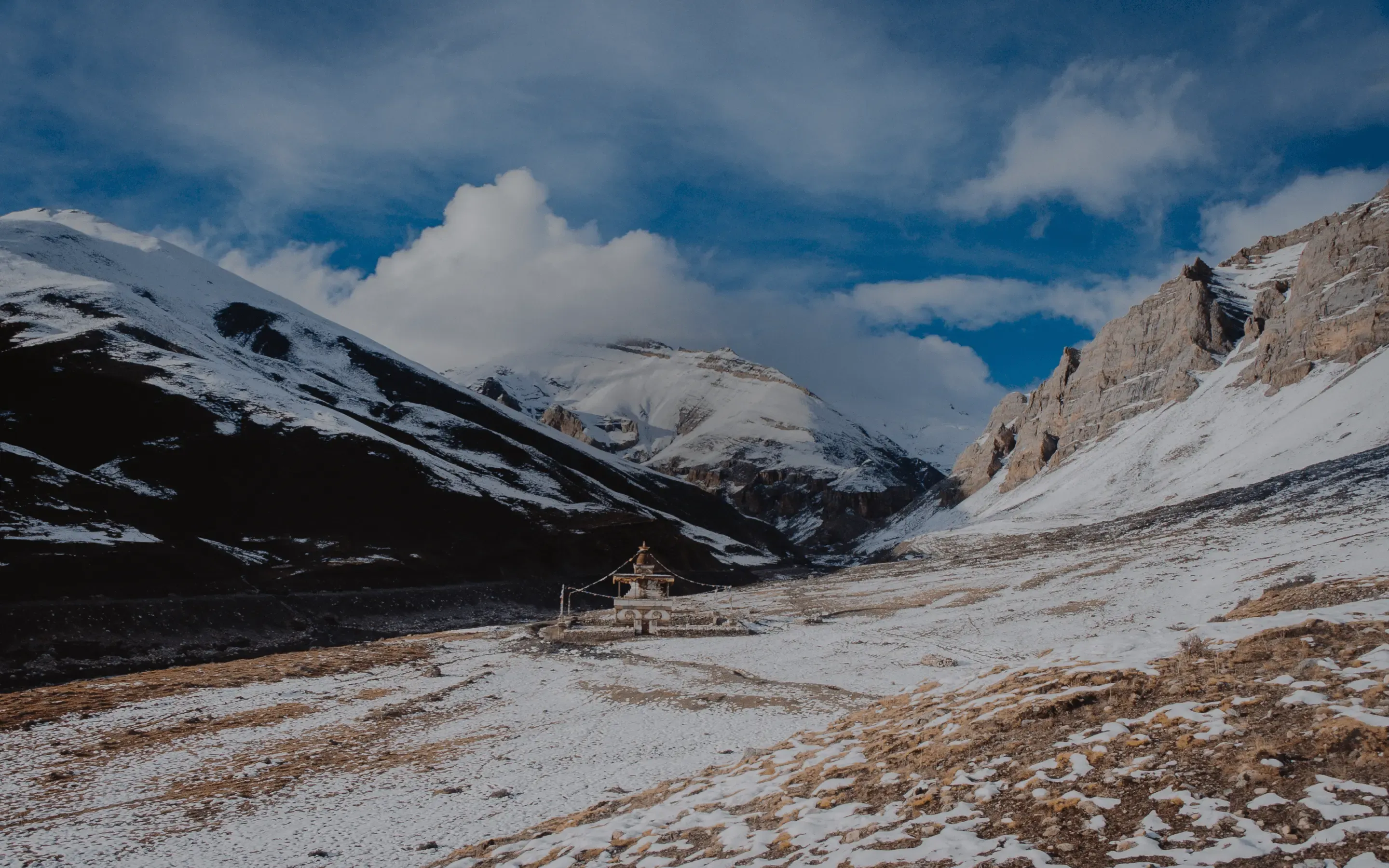
Namtso, the heavenly lake, sits at 4,718 m north of Lhasa and is the highest saltwater lake in the world. The drive crosses the Largen La at over 5,100 m. Nights at Namtso are cold and the accommodation basic, but the light on the Nyenchen Tanglha range across the water at dawn is worth it.
Shigatse is Tibet's second city at 3,840 m, the traditional seat of the Panchen Lamas, and the natural overnight stop between Lhasa and the Everest region. The old town market below Tashilhunpo is worth an hour.
Altitude: 4,718 m | Overnight: Hotel | Meals: Breakfast
Travel duration
Elevation
Meal
Accommodation
Explore Namtso Lake and Return to Lhasa
Take a morning walk around the Tashi Dor Hermitage near the shores of Namtso Lake. After exploring the natural beauty of the area, drive back to Lhasa (3,650m/11,976ft) for your last night in Tibet.
Namtso, the heavenly lake, sits at 4,718 m north of Lhasa and is the highest saltwater lake in the world. The drive crosses the Largen La at over 5,100 m. Nights at Namtso are cold and the accommodation basic, but the light on the Nyenchen Tanglha range across the water at dawn is worth it.
Altitude: 3,650 m | Overnight: Hotel | Meals: Breakfast
Travel duration
Elevation
Meal
Accommodation
Final Departure
Transfer to the airport about three hours before your international flight. If you have a late departure we will hold a day room or arrange a final few hours in the city rather than leave you sitting in the terminal.
If you would rather not go home yet, this is the easy point to extend: a few days in Pokhara, a wildlife stay in Chitwan or Bardiya, a short Bhutan add-on, or a rest week somewhere quiet. Tell us before you travel and we will build it in at cost rather than as a late upgrade.
Altitude: 3,650 m | Overnight: Hotel | Meals: Breakfast
Travel duration
Elevation
Meal
Accommodation
Getting ready
No special training is needed. Comfortable shoes for uneven cobbles and stone steps at the heritage sites, and a light layer for early mornings, will cover it.
Altitude and acclimatisation
The high point on this trip is 5,045 m. Lhasa is at 3,656 m and you arrive there by air, so day one is an altitude day. We keep the first 48 hours deliberately light.
Rules we work to: gain no more than 400 to 500 m of sleeping altitude a day above 3,000 m, take a rest day roughly every 1,000 m, climb high and sleep low on those days, drink three to four litres daily, and skip alcohol and sleeping tablets above 3,500 m. Your guide carries a pulse oximeter and a first aid kit and records the group morning and evening.
Diamox (acetazolamide) is a legitimate aid, not a shortcut, and works best started 24 hours before you go high. Discuss it with your own doctor before you travel; we do not prescribe.
If anyone deteriorates, the answer is descent, immediately and without debate. Our guides have the authority to turn a client around and they use it.
Permits and paperwork
Chinese group visa, Tibet Travel Permit and Alien's Travel Permit for areas outside Lhasa. We handle the entire application; you must send passport scans at least 25 days before departure and you cannot travel on an individual Chinese visa.
For Tibet you must send clear passport and visa scans at least 25 days before departure. The Chinese group visa is issued in Kathmandu and it is a physical document for the whole group, which is why late bookings are difficult and why you cannot join partway through.
Money, tipping and costs on the ground
Chinese yuan is the currency in Tibet. Foreign cards work poorly and Alipay and WeChat Pay dominate, so carry cash and change money in Lhasa.
Budget for drinks, souvenirs and any meals not listed in the itinerary.
Tipping is customary and genuinely matters to the crew, but it is not compulsory and never demanded. As a guide to the guide: around USD 8 to 12 per day for your trekking guide and USD 6 to 8 for each porter, pooled by the group and handed over at the end.
Staying in touch
Wi-Fi in hotels. Note that foreign apps and services are restricted in China; download offline maps before you go.
Health and safety
No vaccinations are legally required for Tibet, but hepatitis A, typhoid and tetanus are sensible and a rabies course is worth discussing if you are travelling for a long time. Check with a travel clinic six to eight weeks before you fly.
Drink bottled or treated water and be sensible about street food in the first few days.
Our guides carry a comprehensive first aid kit, a pulse oximeter and, on the higher routes, supplementary oxygen. We hold a 24-hour operations line in Kathmandu throughout your trip, and we run rescue coordination ourselves rather than handing it to a third party.
Booking and cancellation
A deposit confirms your dates and the balance is due before departure. If your plans change we will move your booking to another date rather than treat it as a cancellation wherever the ground operators allow it.
Written quotes are fixed. We do not add fuel or permit surcharges after you have booked, and if a government fee rises between your booking and your departure we absorb it.
Questions before you commit are welcome and never rushed. Write to us with what you actually want and we will tell you plainly whether this trip is the right one, including when the answer is that a different route would suit you better.
Ready to start your journey?
Start planning your dream trip today. Enquire now for more information or customize this trip to tailor it to your needs and make it truly unforgettable.