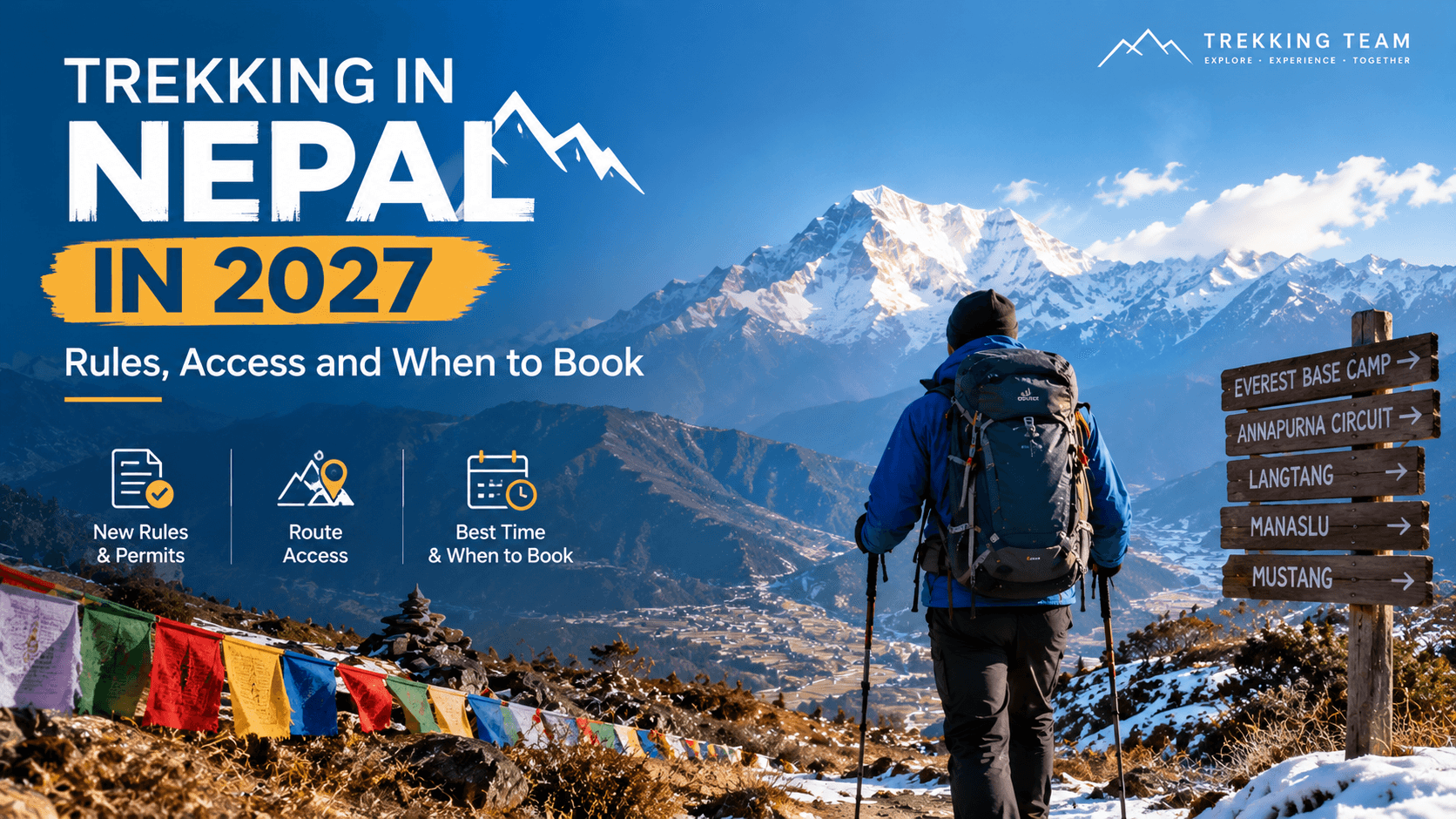
If you are reading this in late 2026 and thinking about a Himalayan trip next year, you are early, and that is the right place to be. The 2027 spring season is already being booked. The people who will get the Lukla flights they want, the Manaslu permits they want and the lodges they want are booking now.
Here is what we know about 2027 as it stands, what is still unsettled, and when each thing needs deciding.
The rules as they stand going into 2027
Solo trekkers can hold restricted-area permits
The biggest change of 2026 came on 22 March, when Nepal removed the two-person minimum for restricted-area permits. Manaslu, Upper Mustang, Dolpo, Nar Phu, Tsum Valley and Kanchenjunga permits can now be issued to a single applicant, which was not possible before.
What did not change: you still trek with a licensed guide booked through a registered agency. The rule removed the requirement to find a stranger to pair up with, not the guide requirement. This matters most to people travelling alone who previously had to join a group they had not chosen.
Restricted-area permits went online
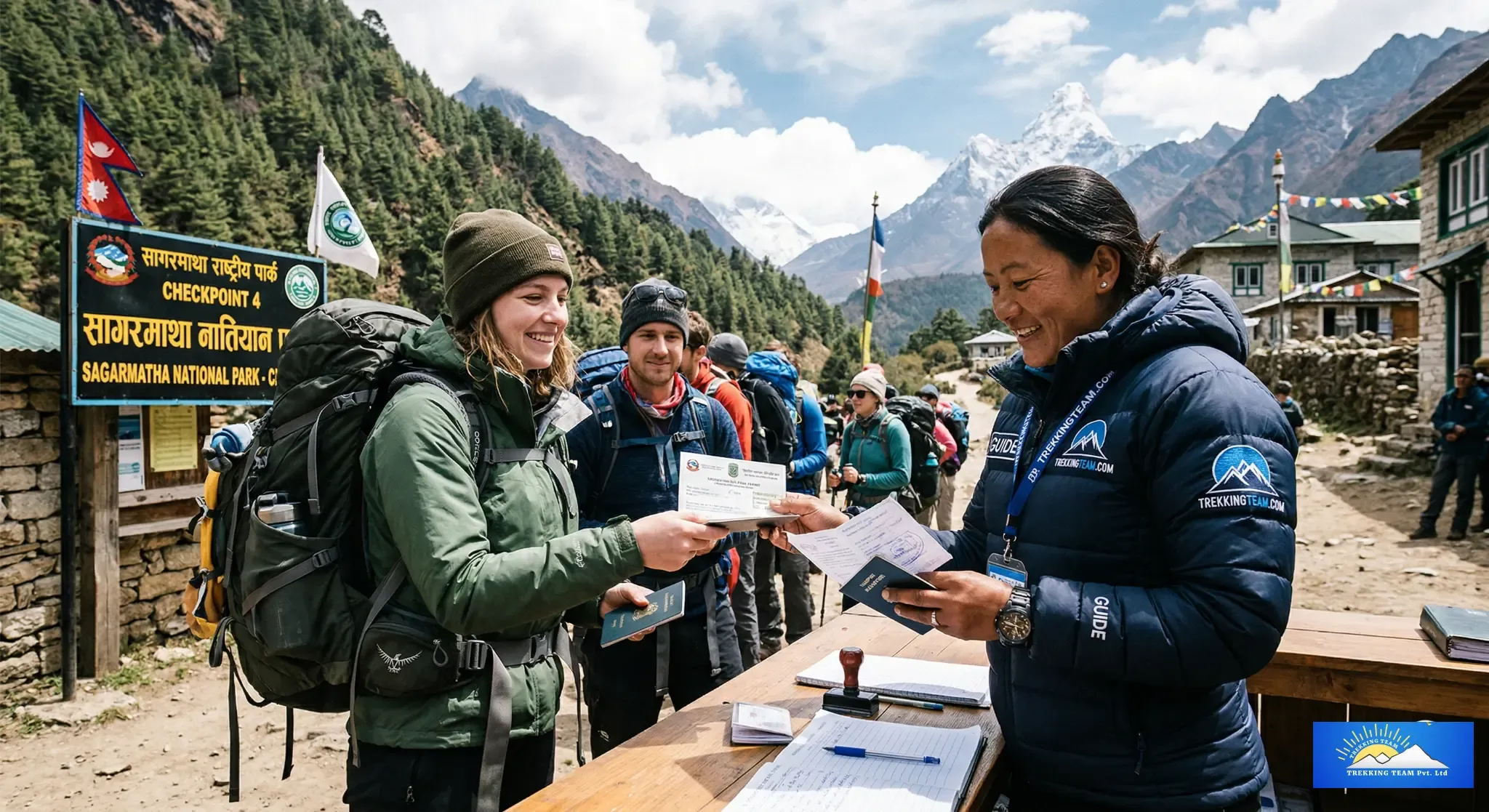
Also from March 2026, restricted-area permits can be processed before arrival rather than only over a counter in Kathmandu. In practice this shortens the buffer you need between landing and starting your trek, though we still recommend a full day in Kathmandu for the gear check and briefing.
Guide requirements by region, going into 2027
- Annapurna, Langtang and the TIMS regions: licensed guide recommended, not legally required.
- All restricted areas: licensed guide required and agency-issued permit.
- Everest and the Khumbu: the exception. Khumbu runs on a local municipality permit rather than TIMS, so independent trekking remains legally possible there. We do not sell unguided trips regardless.
- Tibet and Bhutan: independent travel not permitted at all. Guided group travel only.
Enforcement has tightened and fines for trekking without a required guide are being applied. Assume the rule will be checked at the permit posts.
Fees
Permit fees are set by the government and by the conservation area and municipality authorities, and they are reviewed periodically. Rather than quote figures that may move before you travel, we include all permits in our trip prices and we absorb any increase between the date you book and the date you travel. If you want the current numbers for budgeting, ask us and we will send you what is in force on the day you ask.
Access questions carried over from 2026
Two things from the 2026 monsoon will still be shaping trips into 2027.
The Prithvi Highway at Krishnabhir. A 70 metre section collapsed into the Trishuli on 1 September 2026, with a further 120 metre stretch cracked. Repairs were under way at the time of writing with no confirmed completion date. If it is not fully restored, the Kathmandu to Pokhara road remains a nine to eleven hour diversion instead of a six to seven hour drive, and flying becomes the default for Annapurna trips. We will keep this page updated.
Rasuwa and Langtang. The August 2026 Bhotekoshi flood destroyed sections of the Betrawati to Rasuwagadhi road and the Miteri bridge at the Tibet border. The Langtang trail itself was not damaged. Road reconstruction of this kind normally takes a season, so spring 2027 is a reasonable expectation for reliable access, but we will not confirm a Langtang departure until the access chain is actually working.
Rasuwagadhi to Kerung crossing. Closed. Overland Tibet and Kailash groups are routing via Lhasa by air. Whether the crossing reopens for 2027 is not yet known.
When to book what
The binding constraints are different in each region, and knowing which one applies to your trek tells you your real deadline.
- Everest region, autumn 2027 (Oct to Nov): book by March. Lukla seats in the peak weeks are the constraint, and in October flights shift to Manthali, which changes your logistics.
- Everest region, spring 2027 (Apr to May): book by December 2026.
- Manaslu, Upper Mustang, Dolpo, Kanchenjunga: three months minimum for restricted-area permits, and longer if you want specific dates in the peak weeks.
- Tibet and Kailash: the Chinese group visa needs passport scans at least 25 days out, and in practice we want three months to build the group and clear the paperwork. Kailash runs May to September only.
- Bhutan: book six months ahead if you want a specific tsechu festival. Paro Tsechu and the Thimphu Tsechu fill hotels in those valleys entirely.
- Annapurna: the most flexible. Six to eight weeks is usually enough outside the October peak.
- Winter treks (Dec to Feb): six weeks. Nothing is capacity constrained and prices are lower.
What we would book for 2027
Three suggestions, based on what has actually been working.
If it is your first Himalayan trek: the Everest View trek or Poon Hill. Both stay below 3,900 m, both are eight to twelve days, and both give you the thing people actually remember without the altitude gamble. Far more people should be booking these than do.
If you were going to book Everest Base Camp: look hard at Gokyo first. Same region, same class of view, a summit panorama from Gokyo Ri that includes four 8,000 m peaks, and a fraction of the traffic. If base camp specifically matters to you, book EBC and do it properly with both acclimatisation days intact.
If you have three weeks and real fitness: the Manaslu Circuit, now that solo permits are possible, or the Everest Three Passes. Both are better treks than the famous ones and both are still relatively quiet.
Frequently asked questions
When should I book a 2027 Nepal trek?
For autumn 2027 Everest dates, by March 2027. For spring 2027, by December 2026. Restricted areas such as Manaslu and Upper Mustang need three months. Annapurna and winter treks can be booked six to eight weeks out.
Can I trek solo in Nepal in 2027?
You can hold a restricted-area permit in your own name since March 2026, but a licensed guide is still required in the restricted areas, in the Annapurna Conservation Area and in Langtang. The Everest region remains the one mainstream exception where independent trekking is legally possible.
Will the Prithvi Highway be open in 2027?
Repairs at Krishnabhir were under way through autumn 2026 with no confirmed completion date. Plan Annapurna and Chitwan trips assuming you will fly, and treat road access as a bonus. We update our clients directly as the situation moves.
Will the Langtang trek run in 2027?
The trail is intact and the question is only road access after the August 2026 flood. Spring 2027 is a reasonable expectation but we will not confirm a departure until the access chain is demonstrably working, and we will tell you honestly rather than improvise.
How much does a Nepal trek cost in 2027?
It depends on the route, the group size and the standard of accommodation, and we quote fixed prices rather than headline rates with extras added later. What we can promise is that the quote you accept is the price you pay, including any government fee increase that lands between booking and departure.
Is Nepal safe to visit in 2027?
Yes. The 2026 monsoon damaged two road corridors, which is a logistical problem rather than a safety one, and the trekking regions themselves were largely unaffected. Everest, Annapurna, Manaslu, Mustang, Kanchenjunga, Makalu and Dolpo all operated normally through autumn 2026.
Start the conversation early
We have been running trips out of Kathmandu since 1991 and the single biggest predictor of a good trip is how early the planning started. Not because of deposits, but because early planning is what lets you pick your dates rather than take what is left.
Write to us with a rough window and what you are after. We will tell you what is realistic, what needs deciding first, and what we would do in your position.