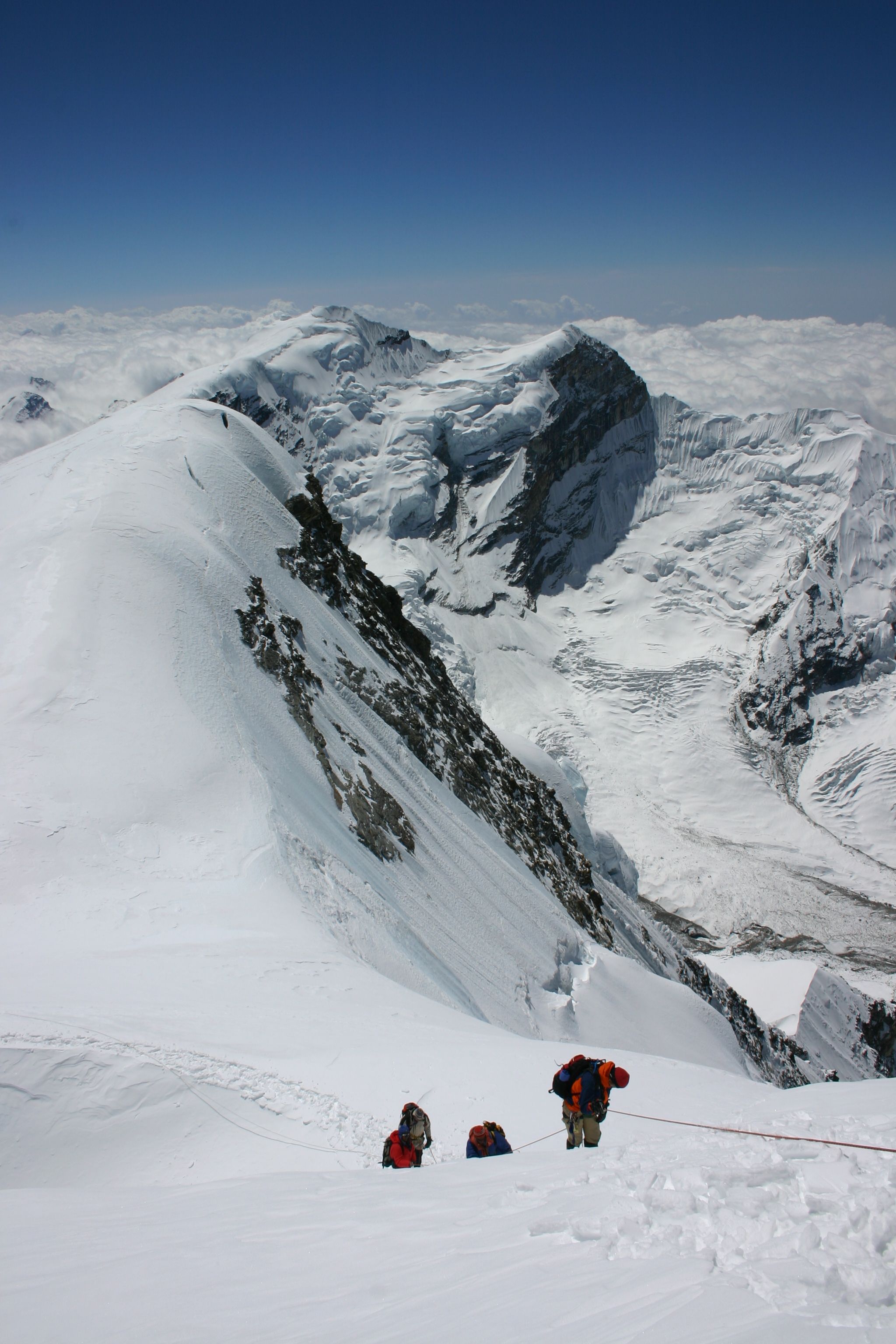
We have been putting people on Nepali trails since 1991. That is 35 seasons, more than 10,000 trekkers, and a lot of arguments in our Gongabu office about which routes actually deserve to be recommended.
This article came out of one of those arguments. Five of us sat down and picked the five destinations we would send a friend to in 2026 and 2027. We did not pick the five that sell best. Two of the treks on this list barely sell at all.
Short answer if you are in a hurry: Gokyo Lakes for the best mountain view in Nepal. Manaslu Circuit for the best high pass circuit. Mardi Himal if you have under a week. Pikey Peak for winter and for avoiding the Lukla flight. Upper Dolpo if you have already done the famous ones and want something that still feels like exploration.
What changed this year, and why it affects your booking
A guide is mandatory in restricted areas, and only there
Manaslu, Upper Dolpo, Upper Mustang, Tsum, Nar Phu, Kanchenjunga and Humla all sit inside restricted zones. In those places you cannot walk without a licensed guide, the permit has to be issued through a registered agency, and there is no walk-in counter at the Department of Immigration for individual foreigners. Two of the five treks below fall under that rule: Manaslu and Upper Dolpo.
On the open routes, Gokyo, Mardi Himal and Pikey Peak among them, a guide is not a legal requirement. We would still send you with one, and not because we sell guiding. Our staff know which teahouses have gone downhill this season, which sections get dangerous once the afternoon cloud builds, and what early altitude sickness looks like in someone who is insisting they feel fine. That last one is the whole argument. But it is a recommendation from us, not a rule from the government, and you should hear the difference from a Kathmandu operator rather than from a booking page.
The March 2026 change is the one worth knowing
On 22 March 2026 the Department of Immigration scrapped the two-trekker minimum for restricted area permits nationwide. Before that, a lone trekker who wanted Manaslu or Dolpo had to find a partner or pay for a phantom one. Now a Restricted Area Permit can be issued in a single name, provided a licensed guide goes along. The same update allows permits to be processed before arrival using visa details, which shortens the Kathmandu waiting time considerably. This is the best news for solo travellers in years, and most of the internet has not caught up with it.
The TIMS card is gone in Khumbu
Everest region trekkers now pay the Sagarmatha National Park fee plus the Khumbu Pasang Lhamu Rural Municipality fee, and no TIMS card. Annapurna treks including Mardi Himal still use ACAP plus TIMS. Restricted areas never needed it.
Lukla flights leave from Ramechhap, not Kathmandu
From 25 September to 30 November 2026, every scheduled Lukla flight departs from the Manthali airstrip in Ramechhap. The same applied from 15 March to 15 May. If your trek starts in Lukla in either of those windows, day one begins with a four to five hour drive in the dark. We put this in the first email. Other agencies mention it in the final briefing, which is how people end up furious at half past one in the morning.
Which of these five needs a guide
| Trek | Guide legally required | Permit through an agency |
|---|---|---|
| Gokyo Lakes | No | No, but simpler if you do |
| Manaslu Circuit | Yes, restricted area | Yes, mandatory |
| Mardi Himal | No | No |
| Pikey Peak | No | No |
| Upper Dolpo | Yes, restricted area | Yes, mandatory |
How we ranked them
Quality of the experience for the days invested. Actual crowding in peak season. Logistical reliability. Suitability for a first or second trip to Nepal.
Upper Dolpo sits at number five only because of that last criterion. On the mountain experience alone it would be number one.
The five at a glance
| Trek | Max altitude | Days (KTM to KTM) | Grade | Typical package |
|---|---|---|---|---|
| Gokyo Lakes | Gokyo Ri 5,357 m | 12 to 14 | Moderate to hard | USD 1,200 to 1,800 |
| Manaslu Circuit | Larke La 5,106 m | 14 to 17 | Strenuous | USD 1,000 to 1,600 |
| Mardi Himal | Base Camp 4,500 m | 5 to 7 | Easy to moderate | USD 350 to 700 |
| Pikey Peak | 4,065 m | 5 to 7 | Moderate | USD 520 to 900 |
| Upper Dolpo | Kang La about 5,350 m | 21 to 28 | Very strenuous | USD 3,500 to 5,000 |
Those are market rates and they move with season and group size. Our own quotes include every permit, and we absorb any government increase between the day you book and the day you travel.
1. Gokyo Lakes Valley, Everest Region
There is a junction above Namche called Sanasa where the trail forks. Almost everybody goes right, towards Tengboche and Base Camp. We send people left.
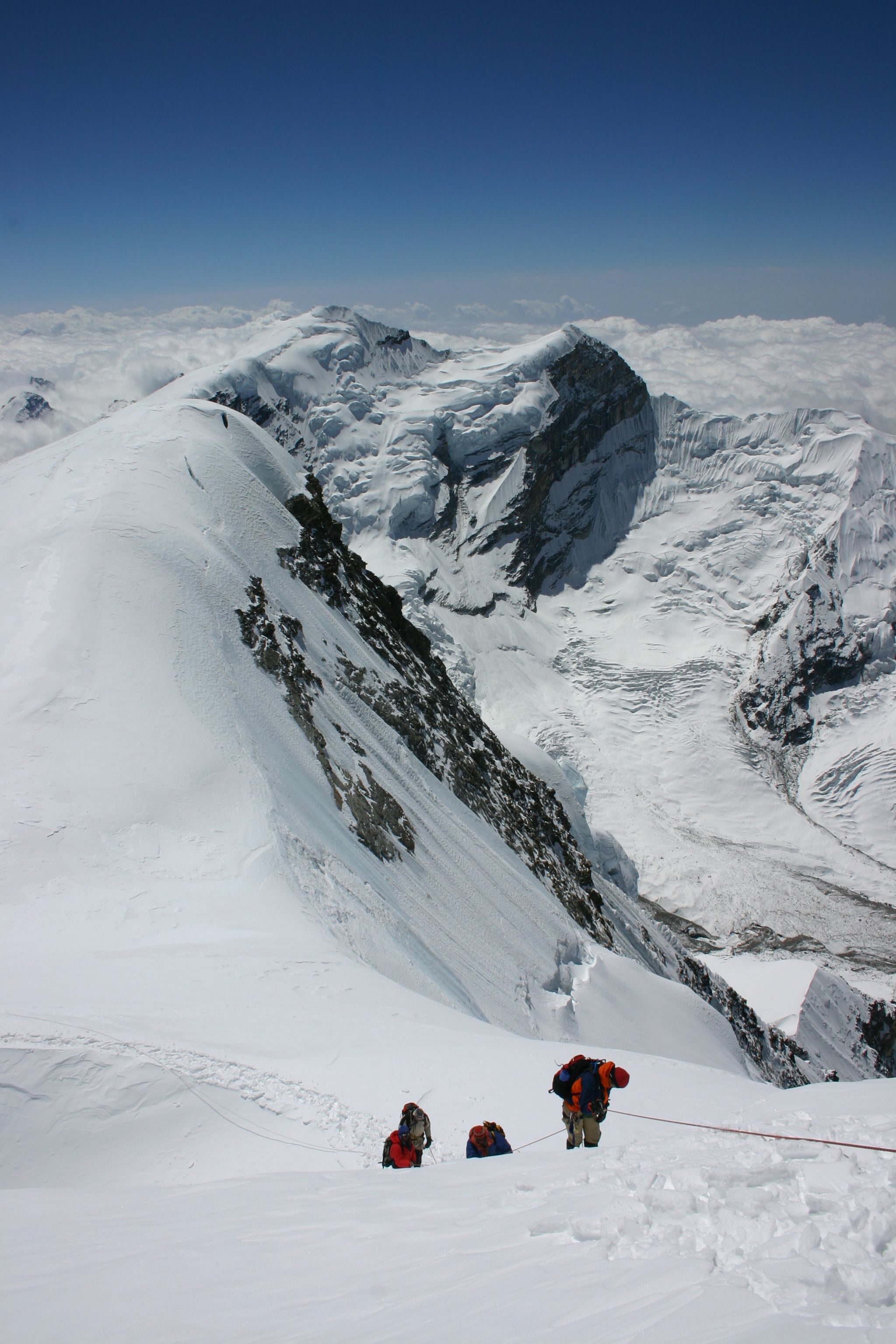
Everest Base Camp is a walk to a place. Gokyo is a walk to a view, and the view is better. From Gokyo Ri at 5,357 metres you see four eight-thousanders at once: Everest, Lhotse, Makalu and Cho Oyu. Below you the Ngozumpa Glacier, 36 kilometres of debris-covered ice running down from Cho Oyu and the longest glacier in the Himalaya, feeds a chain of lakes. You cannot see Base Camp from the Gokyo side. You can see Everest itself, which Base Camp cannot offer.
Our guides who have walked both routes many times over will tell you, off the record, that they prefer this one.
The route as we run it
| Day | Stage | Sleeping altitude |
|---|---|---|
| 1 | Fly to Lukla, trek to Phakding | 2,610 m |
| 2 | Phakding to Namche Bazaar | 3,440 m |
| 3 | Namche acclimatisation | 3,440 m |
| 4 | Namche to Dole | 4,200 m |
| 5 | Dole to Machhermo | 4,470 m |
| 6 | Machhermo to Gokyo | 4,790 m |
| 7 | Gokyo Ri, then the fourth and fifth lakes | 4,790 m |
| 8 to 10 | Return through Dole and Namche to Lukla | Descending |
Daily gain above 3,000 metres averages 400 to 500 metres, which is close to what the altitude literature recommends.
Two things we have learned from running this repeatedly. The climb out of Phortse Tenga up to Dole is the hardest hour of the trek and nobody warns clients about it, because it does not look like anything on an elevation profile. And the aid post at Machhermo runs an afternoon altitude talk. We route our groups to arrive in time for it even when we could push on, because a trekker who understands their own symptoms makes better decisions at 4,790 metres than one who is waiting for their guide to notice.
The mistake we correct most often
People treat Gokyo as the easy substitute for Base Camp and ask us to cut the Namche rest day. Gokyo village sits at 4,790 metres. This is a shorter trek, not a lower one, and the ascent is compressed into fewer days than the Base Camp route. We do not sell itineraries without that rest day. We have had that conversation enough times to know how it ends.
The other one: almost nobody walks past the third lake. The fourth and fifth are two to three hours round trip from Gokyo, and the ridge above the fifth looks straight up the Ngozumpa to the north-west face of Everest. It is the best hour of the whole trek, it costs nothing, and most groups spend it in a lodge drinking tea because their guide did not suggest it. Ours do.
If you have more days
Cho La at 5,420 metres links Gokyo to the Base Camp trail over about 16 days. Renjo La at 5,360 metres is the quieter crossing west into the Bhote Koshi. The full Three Passes circuit runs around 19 days. All three need real acclimatisation behind them, not enthusiasm.
When to go. Late September to early December, and March to mid-May. October is clearest. Late November into early December is cold, empty and visually the best of the year.
2. Manaslu Circuit, Gorkha
Manaslu is the eighth highest mountain in the world at 8,163 metres, and the circuit around it is the closest thing left in Nepal to the Annapurna Circuit as it was before the road went in.
This one matters to us for a reason beyond the trail. Our roots are in Gorkha district, so this is home ground. We have watched the route go from an obscure camping trip to a working teahouse circuit over about twenty-five years, and we have watched the villages change with it.
You follow the Budhi Gandaki gorge north from the roadhead, climb from Gurung country into Tibetan Buddhist country, spend two nights acclimatising beneath the mountain, cross Larke La and drop into the Annapurna region on the far side. The restricted area system keeps numbers down and you feel it. The trail is quiet and the villages have not been rebuilt for tourism.
The part of the route that decides your trip
| Day | Stage | Note |
|---|---|---|
| 7 | Lho to Samagaon, 3,530 m | First full view of the mountain |
| 8 | Samagaun acclimatisation | Pungyen Gompa or Manaslu Base Camp |
| 9 | Samagaun to Samdo, 3,865 m | Tibetan trading settlement |
| 10 | Samdo acclimatisation | Hike towards the border, around 5,100 m |
| 11 | Samdo to Dharmasala, 4,460 m | Short day, basic lodge, early sleep |
| 12 | Dharmasala over Larke La to Bimthang | Start 4:30 am, eight to nine hours |
Larke La is most commonly given as 5,106 metres, though you will see 5,135, 5,160 and even 5,340 quoted elsewhere. The number matters less than the day. It is long, it is exposed, and the weather on the far side turns faster than anyone expects.
Dharmasala is the weak link on this circuit and always has been. One basic lodge, cold, crowded in October, and everyone sleeping badly at 4,460 metres before the hardest day of their trip. We plan around it rather than pretending it is fine. Short day in, early food, early sleep, moving by 4:30.
The Samdo acclimatisation day is the one clients most often ask to cut, usually because they feel strong. Feeling strong at 3,865 metres tells you nothing about how you will feel at 5,100. We hold that day.
Why the guide rule exists here
Manaslu is a restricted area, so the guide is not optional and the permit cannot be self-applied. We think the reasoning holds up. Larke La produces real emergencies every season, and the years when unaccompanied trekkers were being helicoptered off that pass are the reason the requirement exists. Our guides have turned groups around up there. That call is easier to make well when a qualified person is making it, rather than a tired trekker at 5,000 metres with a summit in their head.
Add Tsum Valley if you can
Tsum Valley is a separate restricted zone with its own permit, five to seven extra days, and a sealed side valley of gompas and Tibetan settlements with a strong local non-violence tradition. Most Manaslu trekkers skip it. Almost everyone we have sent there describes it as the better half of the trip.
When to go. Mid-September to late November, and March to May. Larke La can hold snow into early April. Winter is possible but plan for a closed pass.
3. Mardi Himal, Annapurna Region
Mardi Himal only opened as a teahouse route in 2012, which is why it is missing from older guidebooks and why it still does not feel like the rest of Annapurna. The trail climbs a forested ridge between the Modi Khola and the Mardi Khola, directly facing the south wall of Machhapuchhre. Above Low Camp the forest stops and you walk a narrow spine with the mountain filling the whole view ahead.
Forty to forty-five kilometres round trip. Close views of Mardi Himal at 5,587 m, Machhapuchhre at 6,993 m, Annapurna South at 7,219 m and Hiunchuli at 6,441 m. No domestic flight, which removes the single largest source of delay and cost from a Nepal trek.
The route as we run it
| Day | Stage | Altitude |
|---|---|---|
| 1 | Pokhara to Kande, trek to Deurali or Forest Camp | 2,600 m |
| 2 | Forest Camp to Low Camp | 2,970 m |
| 3 | Low Camp to High Camp via Badal Danda | about 3,580 m |
| 4 | High Camp to Viewpoint and Base Camp, back to Badal Danda | 4,500 m |
| 5 | Descend to Siding, drive to Pokhara | 1,750 m |
Where we disagree with the marketing
Every operator in Pokhara calls this a beginner trek. It is beginner friendly in duration and infrastructure. It is not beginner friendly in gradient. Long stretches are steep, uneven stone steps, and the push from High Camp to Base Camp is roughly five hours and 920 metres of gain, in the dark, usually in wind.
Two practical things our guides deal with every trip. Water at High Camp is scarce and expensive, so we carry up from Badal Danda. And the descent to Siding is longer and harder on the knees than anything on the way up, so anyone with a dodgy knee should be on poles from the top rather than discovering the problem halfway down.
Take the five day version. The three day version exists to hit a price point on a booking site.
When to go. October to December and March to April. December and January give the sharpest views of the year, with snow at High Camp that is beautiful and occasionally needs crampons. Avoid late June to August.
4. Pikey Peak, Lower Solu
Pikey Peak is a 4,065 metre hilltop in Solu, south of Khumbu, reached entirely by road. It is widely credited as Sir Edmund Hillary's favourite viewpoint in the Himalaya. We have never found a primary source for that story, but the view explains why it stuck. On a clear morning it runs from Kanchenjunga in the east through Everest, Lhotse and Makalu, west to Annapurna and Dhaulagiri.
The appeal is structural. You are far enough south that the foothills fall away and nothing blocks the horizon, and low enough that altitude is barely a factor. Nowhere else in Nepal does both.
This is the trek we recommend most often and sell least often, because it does not sound impressive. Nobody goes home and tells their friends they climbed a 4,065 metre hill.
The route
Start at Dhap, walk through Jhapre to Pikey Base Camp, summit at dawn, then on through Jase Bhanjyang to Junbesi and out at Phaplu or Salleri. The summit is a thirty minute climb from Base Camp.
Junbesi is the part people remember. It sits on the old Jiri to Everest walking route, the approach Hillary and Tenzing used before Lukla existed, and it is one of the most attractive Sherpa villages in the country. Thubten Choling monastery is a short walk above it. We build in an afternoon there rather than pushing through, because the trek is short enough to afford it.
Getting there
The road is the trade-off. Shared jeeps from Kathmandu to Dhap take nine to eleven hours depending on conditions. Flying to Phaplu is the alternative. Our standing advice is to fly one way and drive the other. The drive is worth doing once and not twice.
Read the itinerary before you compare prices
Three day, six day, eight day and eleven day trips are all sold as the Pikey Peak Trek. They start from different roadheads, cover different ground, and occasionally cross different permit zones. A three day Phaplu fly-in and a seven day Dhap to Phaplu traverse are different products wearing the same name. Compare the start point first.
When to go. This is the one trek here that is genuinely good in winter. December, January and February give the clearest skies of the year and 4,065 metres is low enough that the cold is manageable. October and November are excellent. March and April add rhododendron through the forest sections.
5. Upper Dolpo, Far Western Nepal
Dolpo is the one we have the longest relationship with. Trekking Team has supported the Amici del Dolpo medical camp in the Panzang Valley since 2011. We have been going back to the same villages north of Shey for fifteen years, in some cases carrying in supplies rather than tourists. What follows is not researched.
Upper Dolpo is the Tibetan plateau on the Nepali side of the border: ochre cliffs, old salt trade routes, Bon monasteries older than most of Nepal's Buddhist ones, and villages that sit above 4,000 metres year round. It only opened to foreigners in 1989.
You may know it without knowing it. Peter Matthiessen wrote The Snow Leopard here. Eric Valli filmed Himalaya, released in some countries as Caravan, in Dolpo. It was the first Nepali film nominated for Best Foreign Language Film at the Academy Awards, at the 72nd ceremony in 1999.
The route
Fly to Juphal, west of Dhaulagiri. Walk north into Shey Phoksundo National Park to the lake at about 3,600 metres. Then over the Kang La, given variously as 5,279, 5,309 and 5,364 metres depending on which map you trust, to Shey Gompa beneath Crystal Mountain. Beyond Shey the trail runs on to Saldang and Yangtser Gompa in the Bonpo heartland.
Full itineraries run 23 to 25 days and we build in one or two spare days as standard, because Juphal flights cancel more reliably than Lukla ones. North of Phoksundo there are no teahouses. This is a crewed camping expedition with kitchen staff and pack animals.
Permits, and a warning about what you will read elsewhere
Be careful with the numbers published online, including on our competitors' sites.
The long standing rate for Upper Dolpo has been USD 500 per person for the first ten days, then USD 50 per day. In December 2025 the government abolished that flat structure for Upper Mustang and replaced it with USD 50 per person per day. Some Kathmandu operators now state that the same per-day structure applies to Upper Dolpo. Others state that only Mustang changed. Most published pages still quote the old figure, and some official pages still show superseded information.
We are not going to publish a number we cannot stand behind. Before you budget an Upper Dolpo trip, have a registered agency confirm the current rate against the live Immigration and Nepal Tourism Board circular. We check it for every enquiry. On top of the restricted permit you also need the Lower Dolpo restricted permit, and most Upper Dolpo routes need two of those, one going in and one coming out, plus the Shey Phoksundo National Park fee.
Full packages run roughly USD 3,500 to 5,000 per person. Very little of that is margin. It is crew wages, pack animals, food carried in from the roadhead, and the permit itself.
Who should actually do this
Not your first Nepal trek, and not your second. You want prior high altitude experience, tolerance for camping above 4,000 metres for two weeks, and real flexibility about flights. Expect five to seven hours of walking a day.
If you have done Everest Base Camp, the Annapurna Circuit and Manaslu and you are wondering what comes next, this is the answer and there is not a close second. Shey Phoksundo National Park holds blue sheep, Himalayan black bear, grey wolf and snow leopard. Blue sheep above Shey are routine. The snow leopard is not, and anyone who promises you one is selling something.
When to go. Mid-May to early October, which is the opposite of every other trek here. Dolpo lies in the rain shadow and stays dry through the monsoon while the rest of Nepal is under cloud. Late August and September are the best of it. Winter closes the passes.
Which one is yours
| If you want | Go |
|---|---|
| A first Himalayan trek, big mountains, two weeks | Gokyo Lakes |
| A real circuit with a serious pass | Manaslu |
| Under a week, no flights, close-up peaks | Mardi Himal |
| Winter trekking, or Everest views without Lukla | Pikey Peak |
| Remote culture, camping, three weeks or more | Upper Dolpo |
| To trek in June, July or August | Upper Dolpo, or Upper Mustang |
| The lowest total cost | Mardi Himal |
| The emptiest trail | Upper Dolpo, then Manaslu |
If you are planning two Nepal trips rather than one, do Mardi Himal or Pikey Peak first and Gokyo or Manaslu second. Short treks teach you how your body handles altitude for a fraction of what it costs to find out at 4,800 metres.
What each one costs
| Cost | Gokyo | Manaslu | Mardi | Pikey | Upper Dolpo |
|---|---|---|---|---|---|
| Domestic flights | Both ways to Lukla | None | None | Optional, Phaplu | Both ways to Juphal |
| Guide | Optional | Required | Optional | Optional | Required, in package |
| Food and lodging | Higher, altitude | Moderate | Low | Low | Crewed camping |
| Typical package | USD 1,200 to 1,800 | USD 1,000 to 1,600 | USD 350 to 700 | USD 520 to 900 | USD 3,500 to 5,000 |
Permit fees are set by government, conservation area and municipality authorities and are reviewed periodically. Rather than quote figures that may move before you travel, we include all permits in our trip prices and absorb any increase between the day you book and the day you go. If you want the current numbers for budgeting, ask us and we will send what is in force on the day you ask.
One universal piece of advice on food. Dal bhat is the best value on any menu in Nepal because the refills are free. Carry purification rather than buying bottled water. It saves money and keeps plastic off the trail, and we have watched enough of it accumulate above Namche to have an opinion about this.
Things we tell every client
Lukla baggage is 15 kg, and it is enforced. Ten kilos in the duffel and five in hand carry. On full flights excess gets refused even if you offer to pay. Suitcases stay in the Kathmandu hotel.
Build buffer days into any flight-dependent trek. Gokyo needs one. Dolpo needs two or three.
Check the altitude ceiling on your insurance, not just whether the policy says trekking. You need helicopter evacuation cover above 5,000 metres, and helicopter costs are not inside anybody's package price.
Book restricted area treks earlier than teahouse treks. Manaslu and Dolpo permits need passport scans, confirmed itineraries and Immigration processing. Two to three weeks minimum, longer in October.
Ask who your guide and porter are, and what they are paid. Every route above passes through villages where lodge income is the local economy. Load limits, insurance and hiring from the region are not marketing points. They are the difference between tourism that helps a valley and tourism that extracts from it.
Questions we get asked
Which is the best trek in Nepal for 2026 and 2027?
For most people, Gokyo Lakes. Four eight-thousanders from one viewpoint, a well-paced 12 to 14 day profile, and a fraction of the traffic on the Base Camp trail.
Can I trek alone in Nepal?
On open routes such as Gokyo, Mardi Himal and Pikey Peak, yes. In restricted areas including Manaslu, Upper Dolpo, Upper Mustang, Tsum, Nar Phu and Kanchenjunga, no. Those require a licensed guide and an agency-issued permit. Since 22 March 2026 a single trekker can hold a restricted area permit in their own name, which was not possible before.
Do I need a guide for the Gokyo Lakes trek?
Not legally. Gokyo sits inside Sagarmatha National Park, not a restricted area, so the trek can be done without one. We recommend a guide for altitude management and route decisions above Machhermo, but that is our advice rather than a legal requirement.
Do I still need a TIMS card?
Not in the Everest region. Annapurna treks including Mardi Himal still use ACAP plus TIMS. Restricted areas use their own permit systems.
Is Gokyo harder than Everest Base Camp?
Shorter, with comparable altitude stress. The maximum sleeping altitude is lower and the distance is shorter, but the ascent is compressed into fewer days. Do not skip the Namche rest day.
How high is Larke La on the Manaslu Circuit?
Most commonly given as 5,106 metres. You will see other figures quoted. The crossing is a nine hour day from Dharmasala starting at 4:30 am.
Is Mardi Himal suitable for beginners?
Yes for duration and lodging, less so for gradient. Take the five day version. Base Camp from High Camp is 920 metres of gain in one pre-dawn push.
Can you see Everest from Pikey Peak?
Yes, along with Lhotse, Makalu and Kanchenjunga, and on the clearest mornings Annapurna and Dhaulagiri.
Do I need to fly to Lukla for Pikey Peak?
No. Pikey Peak is road accessible via Dhap, nine to eleven hours from Kathmandu by shared jeep. A Phaplu flight is an optional shortcut.
Why is Upper Dolpo so expensive?
The restricted area permit, plus crewed camping, pack animals and food carried in from the roadhead. Confirm the current permit rate with an agency before budgeting, because the structure changed for Upper Mustang in December 2025 and its application to Dolpo is not settled.
When can I trek during the monsoon?
Upper Dolpo and Upper Mustang. Both sit in the Himalayan rain shadow and stay dry from June to August.
Will my Lukla flight leave from Kathmandu?
Not in peak season. From 25 September to 30 November 2026 and 15 March to 15 May 2026, all scheduled Lukla flights operate from Manthali Airport in Ramechhap.
Who wrote this
Trekking Team Pvt. Ltd. was founded in 1991 by the Pathak brothers and has operated continuously for 35 years. TAAN registration number 1106. Registered with NTB, NMA, KEEP and PPGI. More than 10,000 trekkers guided and over 630 TripAdvisor reviews. We have supported the Amici del Dolpo medical camp in the Panzang Valley since 2011, and we built one of the first business websites in Nepal in 1993.
Our office is at Gongabu, Pragatinagar, Kathmandu. We arrange permits, guides, flights and logistics for all five of these routes. If you want a plain answer about which one suits you, write to us and say how many days you have and what you have walked before. That is usually enough for us to tell you.