The Kathmandu Valley is about 25 km across and holds seven UNESCO World Heritage monument zones, three former royal capitals, the most important Hindu temple in Nepal and the largest stupa in the country. All of it inside an area you can drive over in ninety minutes, traffic permitting.
That density is why almost every visitor to Nepal spends time here, and why almost every visitor gets the same rushed version of it. This guide is the one we wish existed when people write to ask us what to do with their two days in Kathmandu before the trek starts. It covers what is actually here, what it costs, how long each thing takes, and which combinations work.
We have been running trips out of an office in Gongabu since 1991, so the timings and the honest warnings here come from doing this rather than from reading about it.
What are the seven UNESCO sites in the Kathmandu Valley?
The Kathmandu Valley was inscribed on the UNESCO World Heritage list in 1979 as a single property made up of seven monument zones: the Durbar Squares of Kathmandu, Patan and Bhaktapur, the Buddhist stupas of Swayambhunath and Boudhanath, and the Hindu temple complexes of Pashupatinath and Changu Narayan. They are counted as one site, not seven, which is why you will see the number written both ways.
| Monument zone | What it is | Entry fee 2026 | Time needed |
|---|---|---|---|
| Kathmandu Durbar Square | Royal palace complex, around fifty temples, the Kumari house | NPR 1,000 | 1.5 to 2 hours |
| Patan Durbar Square | The finest Newar architecture in Nepal, plus the Patan Museum | NPR 1,000 | 2 to 3 hours |
| Bhaktapur Durbar Square | Medieval city, Nyatapola temple, Pottery Square | NPR 1,800 | 3 to 4 hours |
| Swayambhunath | Hilltop stupa, 365 steps, valley panorama | NPR 200 | 1 to 1.5 hours |
| Boudhanath | Largest stupa in Nepal at 36 m, Tibetan Buddhist quarter | NPR 400 | 1 to 2 hours |
| Pashupatinath | Nepal's most important Hindu temple, cremation ghats, evening aarti | NPR 1,000 | 1.5 to 2 hours |
| Changu Narayan | The oldest temple in Nepal, fifth-century stone sculpture | NPR 300 | 1 hour |
Total entry cost for all seven: about NPR 5,700, roughly USD 42. Indian and other SAARC nationals pay reduced rates at most sites and Nepali citizens enter free. Fees are reviewed periodically and the Bhaktapur ticket in particular has moved more than once, so treat these as current rather than fixed forever. On any of our day tours the fees are included and you pay nothing at the gates.
Can you see all seven UNESCO sites in one day?
No, not in any way that is worth doing. The seven zones are spread from Swayambhunath in the west to Changu Narayan on the eastern rim, and the constraint is not distance but Kathmandu traffic. Fitting all seven into a single day leaves roughly forty minutes at each, including the walk in from where the vehicle can park.
Plenty of agencies sell exactly that, usually as a seven-sites-in-one-day package at a low headline price. You will come home with photographs of all seven and a clear memory of none of them.
The honest split is two days. Five zones fit comfortably into one full day inside the city ring: Swayambhunath, Kathmandu Durbar Square, Patan, Boudhanath and Pashupatinath. That is our Kathmandu World Heritage Sites day tour. Bhaktapur and Changu Narayan sit together on the eastern side and make a natural second day, which is our Bhaktapur, Changu Narayan and Panauti day tour. Two days, all seven, nothing rushed.
The seven monument zones, one by one
Kathmandu Durbar Square
The old royal complex at the centre of the city, roughly fifty temples and the Hanuman Dhoka palace packed into a few connected squares. Look for the Kumari Chowk, where the living goddess appears briefly at an upper window; she is a prepubescent girl from the Shakya caste chosen by a process your guide can explain properly. Kal Bhairav, a sixth-century stone image of Shiva in his terrifying aspect, stands in the open and was historically used for swearing oaths, on the understanding that lying in front of him killed you. Several structures are still scaffolded from 2015 and a few are gone entirely.
Patan Durbar Square
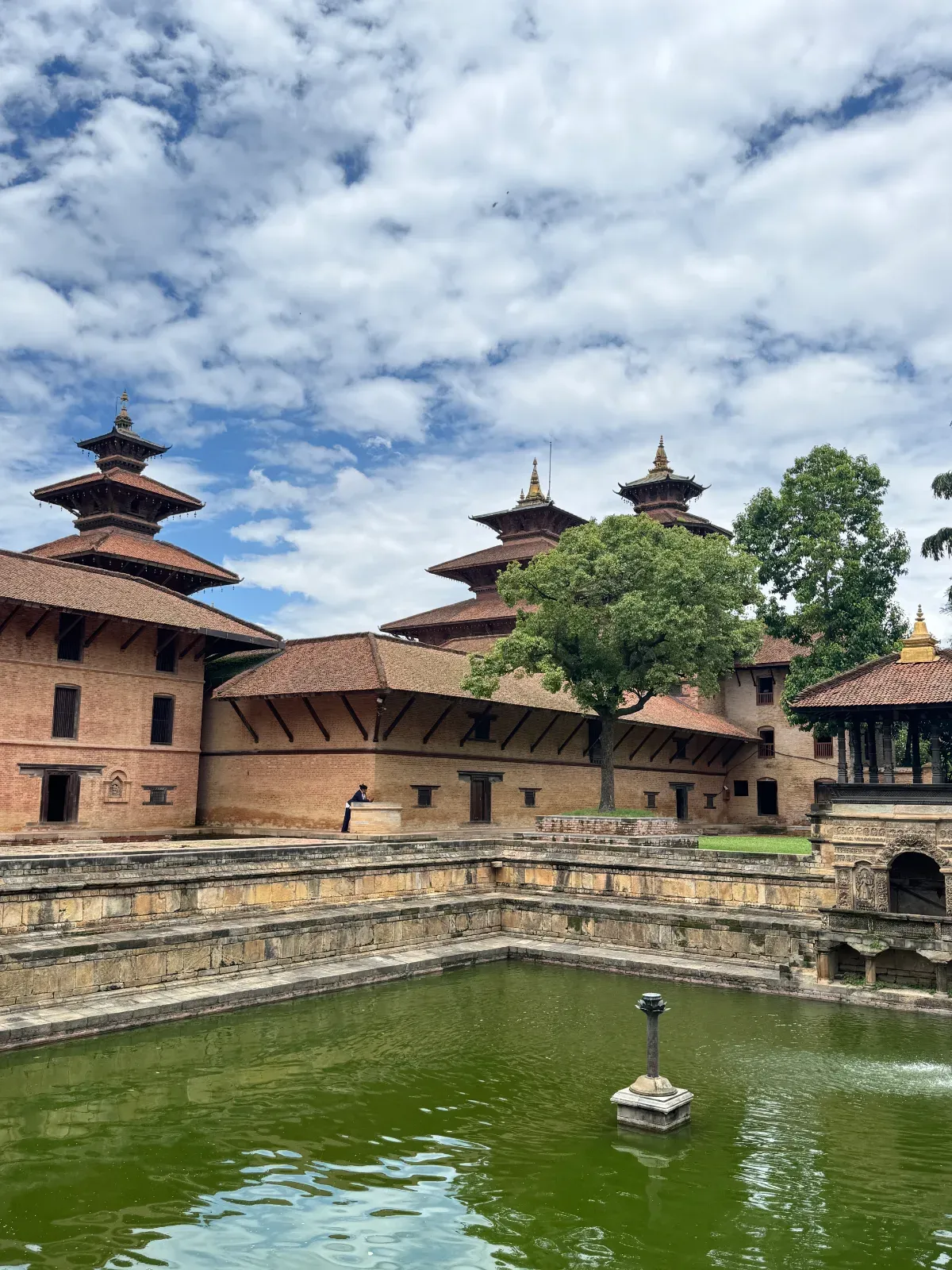
The best of the three squares architecturally, and the one with the most to look at per square metre. The Krishna Mandir is the outlier: built in 1637 entirely of carved stone in a north Indian shikhara style rather than the brick and timber pagoda form used everywhere else in the valley. The Patan Museum occupies a restored palace wing and is the single most useful hour you can spend in Nepal, because it teaches you to read the iconography you will then see everywhere. Behind the square, bahals and courtyards where families still cast bronze by lost wax.
Bhaktapur Durbar Square
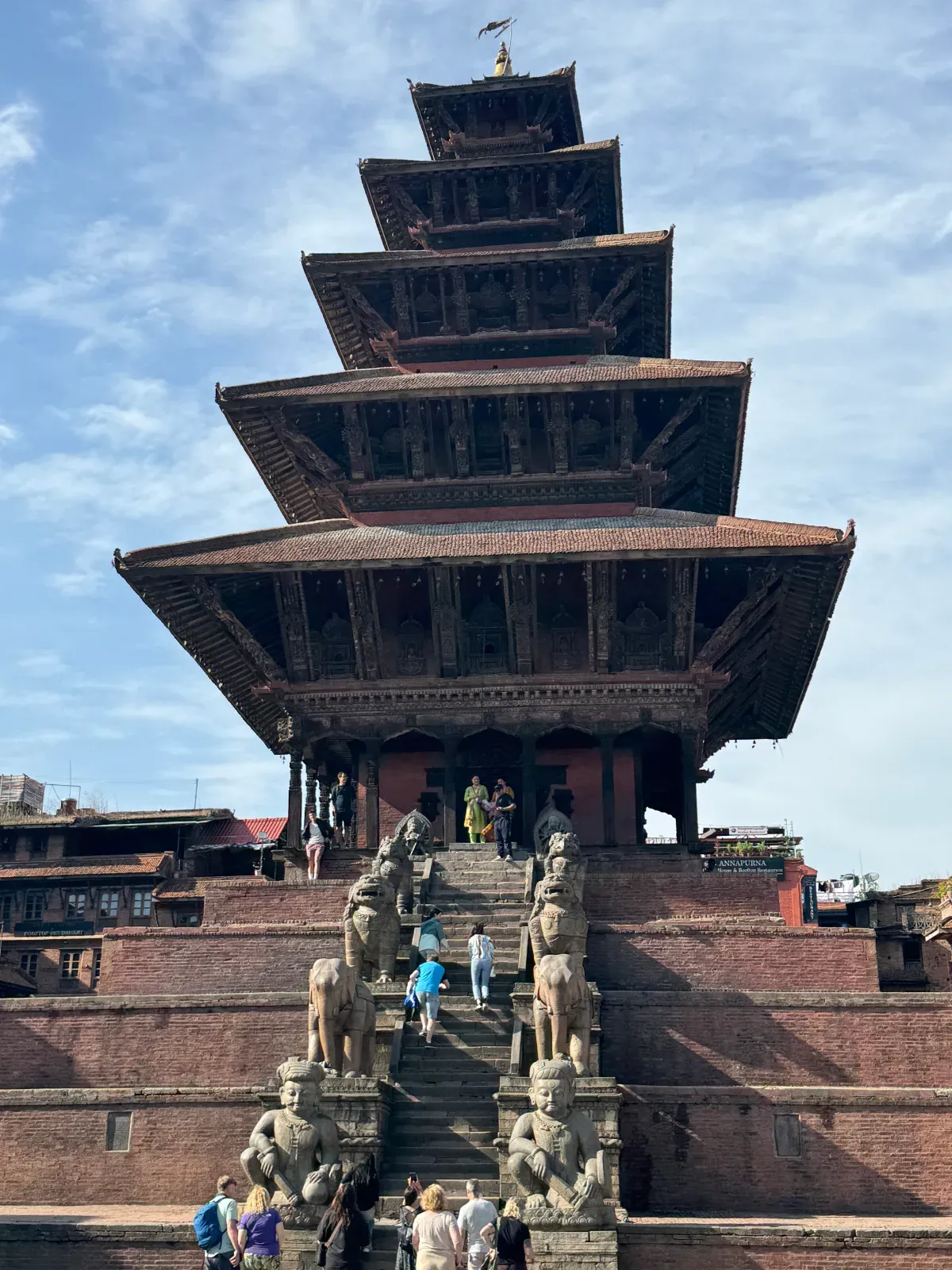
The most complete medieval city in Nepal and the one where the street plan, not just the monuments, survived. The Golden Gate and the fifty-five window palace are on the main square; the five-storey Nyatapola, built in 1702 on a five-tier plinth, stands in Taumadhi a few minutes away and is the tallest temple in the country. It came through both the 1934 and 2015 earthquakes essentially intact. Pottery Square is a working potters quarter, and juju dhau, the king curd, is made here and nowhere else.
Swayambhunath
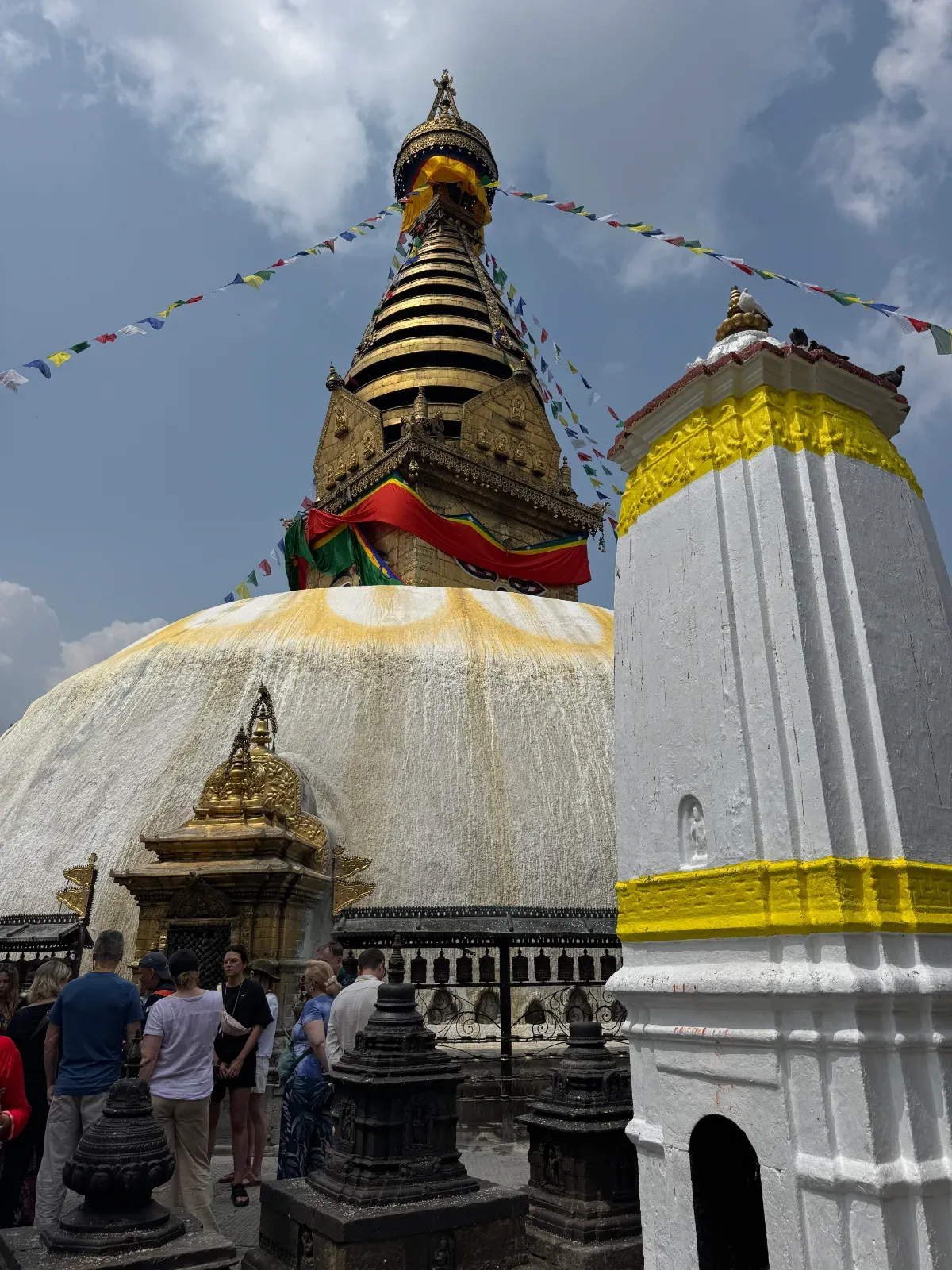
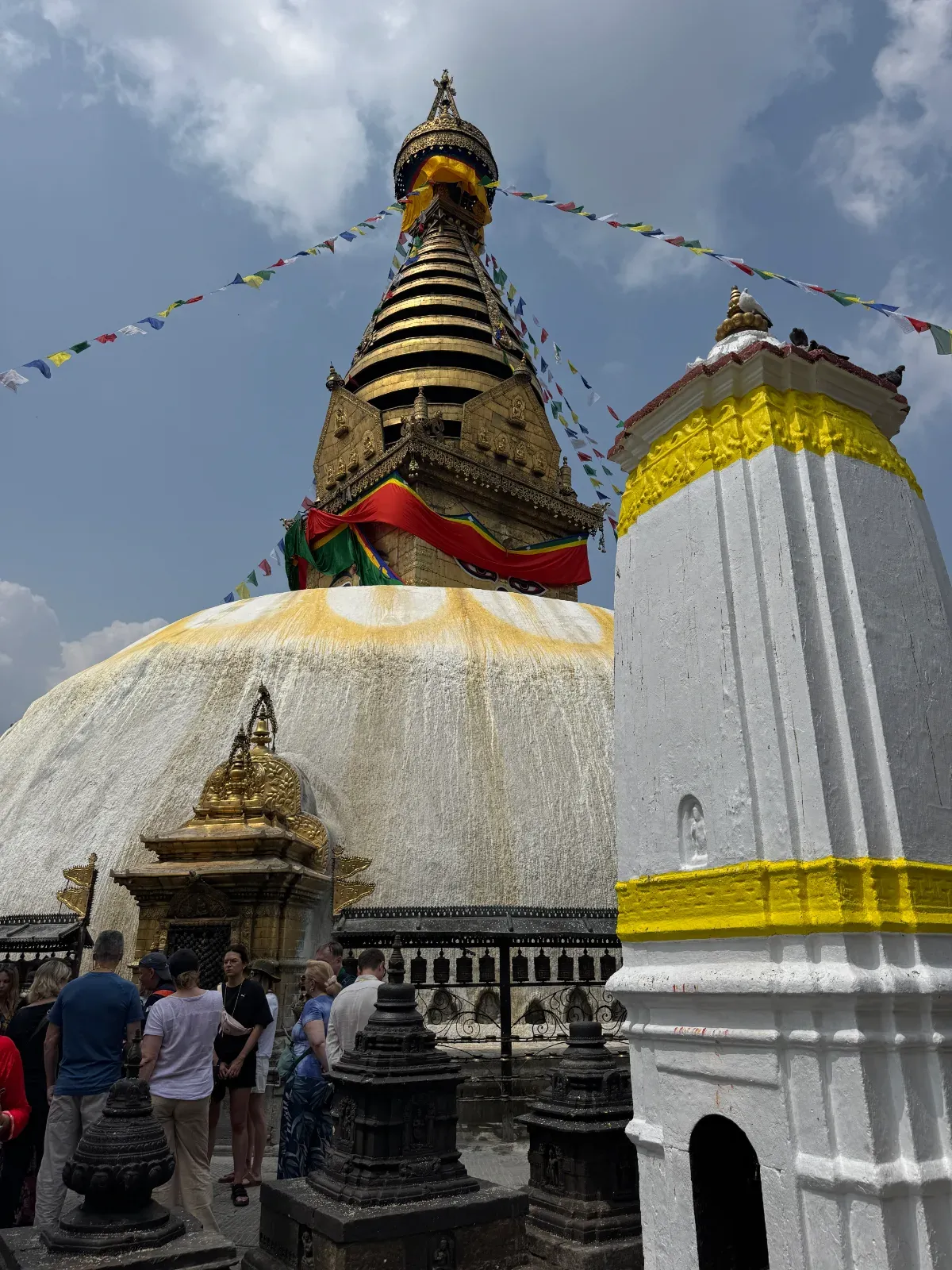
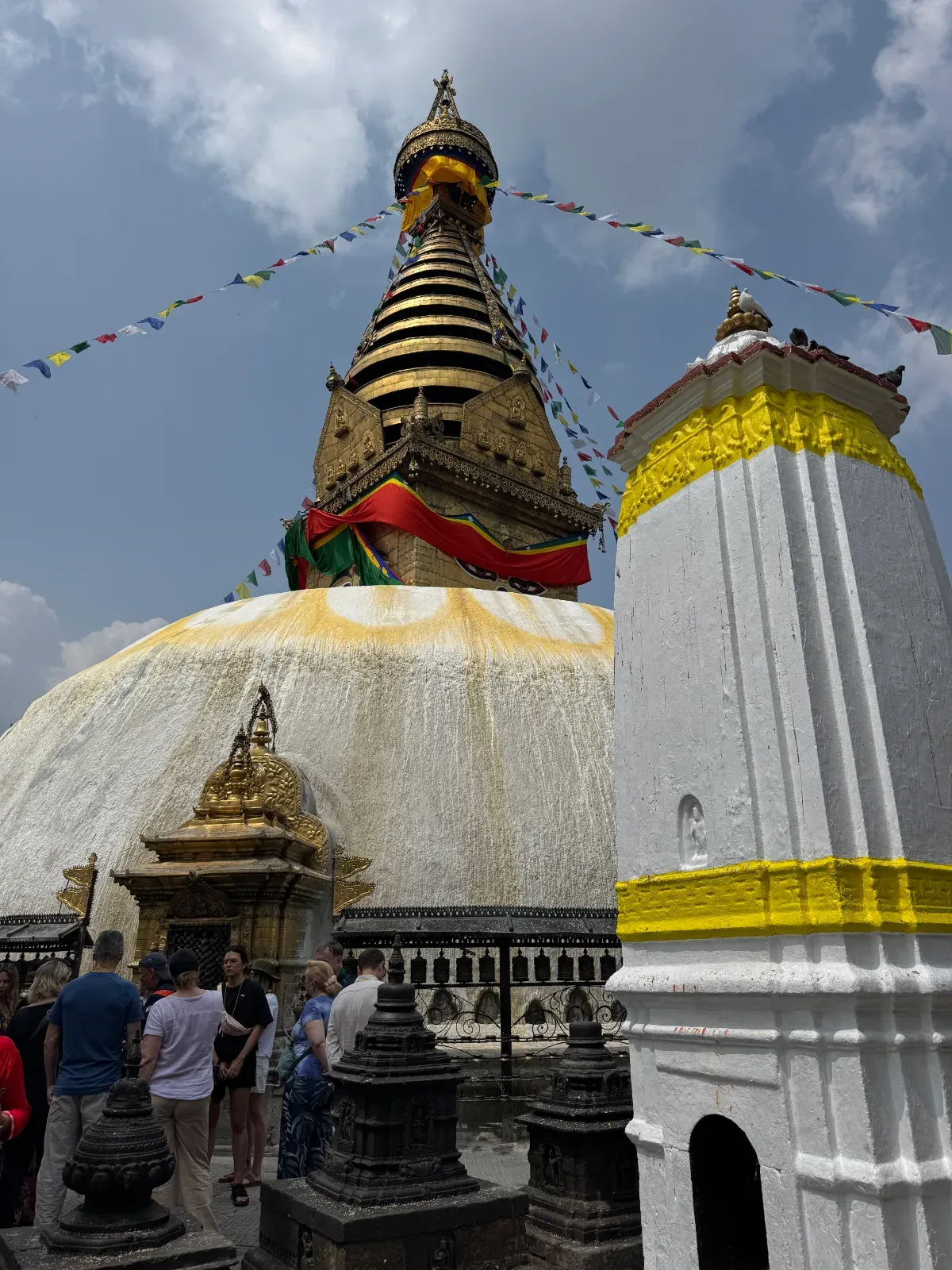
A stupa on a hill west of the city, Buddhist since at least the fifth century and probably a much older sacred site. The eastern stairway is 365 stone steps through the trees and takes most people fifteen to twenty minutes; a road reaches the western car park if steps are a problem. The painted eyes on the harmika face the four directions and the squiggle beneath them is the Nepali numeral one, for unity. The monkeys are genuinely bold and will go into an open bag.
Boudhanath
The largest stupa in Nepal, 36 m high, and the centre of Tibetan Buddhist life in the valley since refugees settled here from 1959. The dome sits on a mandala base and the whole structure was rebuilt after 2015 largely by public donation. Walk the kora clockwise with everybody else; late afternoon is when it fills with monks and families and the butter lamps go on. The monasteries around the circuit run afternoon prayers and most will let you sit quietly at the back.
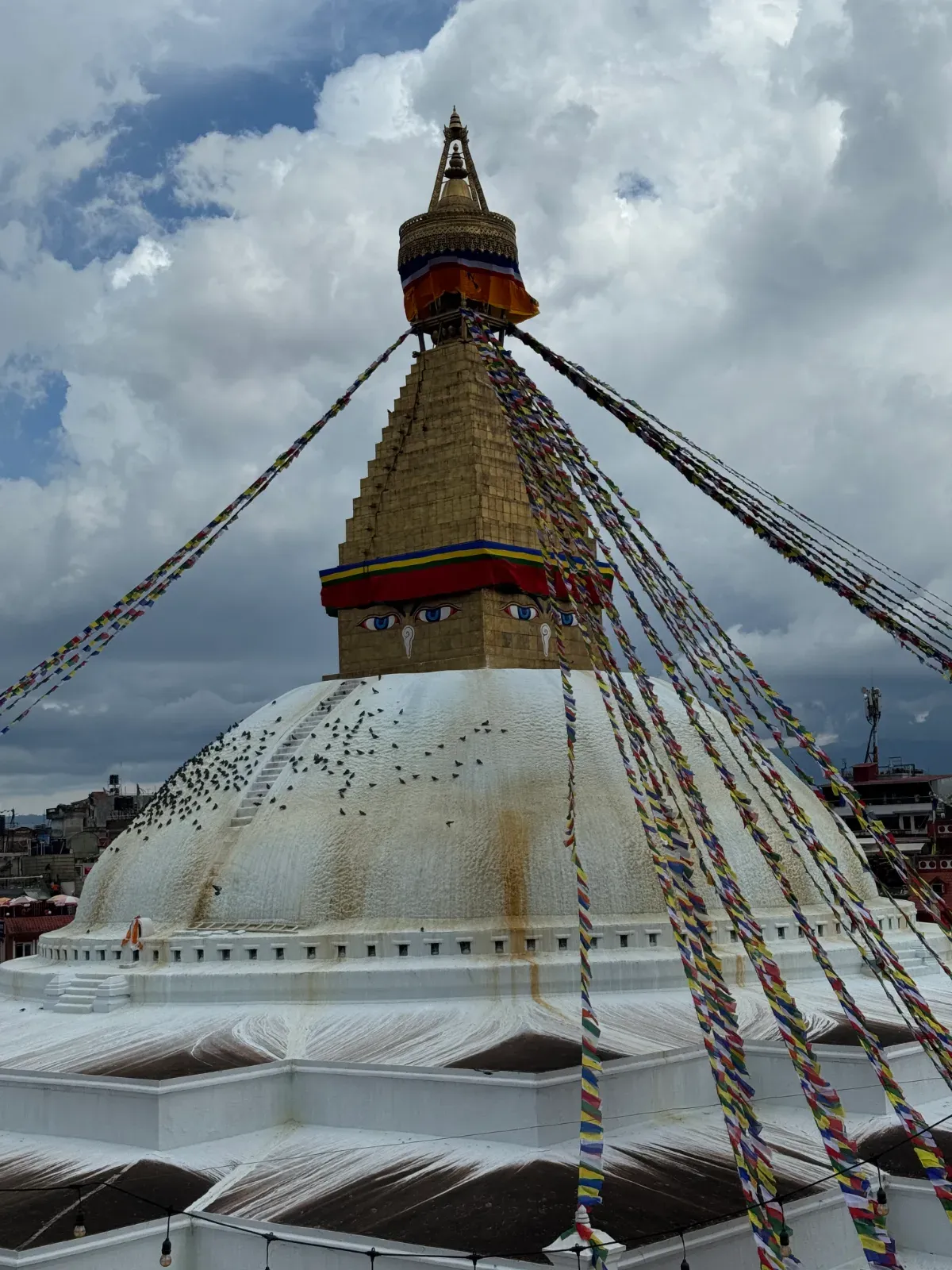
Pashupatinath
The most important Hindu temple in Nepal, dedicated to Shiva as lord of the animals, on the banks of the Bagmati. The main sanctum is closed to non-Hindus; everything else is open, including the ghats where cremations run through the day and the terraces on the eastern bank where visitors and sadhus sit. The complex is open roughly 04:00 to 21:00 and the evening aarti on the river runs around 18:00 in winter and 19:00 the rest of the year. This is the one site where how you behave matters as much as what you see.
Changu Narayan
The oldest temple in Nepal, on a ridge above Bhaktapur, and the least visited of the seven zones. The stone pillar inscription of King Manadeva here is dated 464 CE, the earliest dated inscription in the country. The courtyard holds stone sculpture from the fifth to seventh centuries including the Vishnu Vikrant, the Garuda and a Vaikuntha Vishnu, and the two-storey pagoda has been rebuilt more than once while the stone has stayed put. An hour is usually enough, and it pairs naturally with Bhaktapur twenty minutes down the ridge.
How many days do you need in the Kathmandu Valley?
Two full days covers the seven UNESCO zones properly. Three gives you the valley beyond the monuments. Five lets you stop counting sites and start noticing things.
| Time available | What to do |
|---|---|
| Half a day | Boudhanath at dusk and the evening aarti at Pashupatinath. The evening tour is built for exactly this, and it is the best use of a spare evening before an early flight. |
| One day | The five city monument zones with a licensed guide. If you would rather eat your way through the old town than count temples, the Kathmandu food and cultural tour is the alternative. |
| Two days | Day one in the city, day two east to Bhaktapur and Changu Narayan. All seven zones, properly. |
| Three days | Add either the Nagarkot sunrise, or Patan with the craft villages at Bungamati and Khokana. Both go somewhere the day-trip crowd does not. |
| Four to five days | Add a day hike on the valley rim, a cycling day, or Panauti and Namobuddha to the southeast. Our extended Kathmandu Valley tour runs this as a single package. |
Which Kathmandu day tour should you choose?
Most people arrive with one or two free days and a vague sense that they should see the heritage sites. Here is the honest comparison.
| Tour | Length | Best for |
|---|---|---|
| Kathmandu World Heritage Sites | 8 to 9 hours | First time in Nepal, one day only, wants the headline monuments |
| Nagarkot sunrise and Bhaktapur | 9 to 11 hours | Himalayan views plus the best-preserved medieval city, October to March |
| Pashupatinath aarti and Boudhanath | 4 to 5 hours | A spare evening, or anyone who wants ritual rather than architecture |
| Patan, Bungamati and Khokana | 7 to 8 hours | Second day in the valley, crafts and working villages, quietest option |
| Bhaktapur, Changu Narayan and Panauti | 8 to 9 hours | Completing the seven zones, and the oldest temple in Nepal |
| Kathmandu valley day hike | Full day | Walking the rim rather than driving the floor |
| Kathmandu cycling tour | Full day | Covering the back lanes under your own power |
What is the best time to visit Kathmandu?
October and November are the best months, with clear air, daytime temperatures around 20 to 25 degrees Celsius and the two biggest festivals of the year. February to April is the second window, warmer and hazier but with rhododendron and jacaranda in flower.
| Season | Temperature | What it is like |
|---|---|---|
| October to November | 20 to 25 by day, 8 to 12 at night | The clearest air of the year and the best mountain visibility. Dashain and Tihar fall here. Busiest and worth it. |
| December to January | 15 to 19 by day, 2 to 5 at night | Cold mornings, bright days, excellent Himalayan views from the rim. Winter smog builds in the valley bowl on still days. |
| February to April | 20 to 28 by day, 8 to 15 at night | Warming up, flowers out, Shivaratri and Bisket Jatra. Pre-monsoon haze cuts mountain views from March. |
| May to June | 26 to 30 by day | Hot and hazy, with the first storms. Monuments quiet, mountain views unlikely. |
| July to September | 25 to 29 by day | Monsoon. Around 60 per cent of the annual 1,500 mm of rain falls now, usually as heavy afternoon downpours. Greenest valley, emptiest monuments, cheapest hotels. |
One thing nobody selling tours mentions: the valley has a serious winter air quality problem. Kathmandu sits in a bowl at about 1,400 m, and from roughly December to February cold air traps brick-kiln smoke, dust and vehicle emissions near the ground. On bad days the city has ranked among the most polluted in the world. It does not ruin a visit, but if you have asthma, bring your inhaler and plan the outdoor days for the morning.
Which festivals are worth planning around?
The Kathmandu Valley runs more festivals than any comparable place in Asia, and most of them are street events you can walk into rather than ticketed performances.
| Festival | When | Where |
|---|---|---|
| Maha Shivaratri | Late February | Pashupatinath. Tens of thousands of pilgrims and sadhus. Go very early. |
| Holi | Mid March | Kathmandu Durbar Square and everywhere else. Colour, water, chaos. |
| Bisket Jatra | Mid April, Nepali new year | Bhaktapur. Giant chariots hauled through the streets and a 25 m pole raised and felled. |
| Rato Machhindranath | April to June | Patan and Bungamati. The longest chariot festival in Nepal. |
| Buddha Jayanti | Early to mid May | Boudhanath and Swayambhunath. Butter lamps and processions. |
| Gai Jatra | Mid August | Bhaktapur and Kathmandu. A memorial procession that turns into public satire. |
| Indra Jatra | Late September | Kathmandu Durbar Square. The city's biggest festival, with the Kumari paraded through the old town. |
| Dashain | October | Everywhere. The longest holiday of the year; much of the city goes home to the villages and shops close. |
| Tihar | Early November | Everywhere. Lamps, marigolds and rangoli across the whole valley. |
Dates move each year because they follow the lunar calendar. We keep a running guide in our Nepal festival season post. Two practical warnings: during the main days of Dashain many businesses close and the valley empties, and during Indra Jatra the old town is impassable by vehicle, which changes how any tour has to run.
What does a trip to the Kathmandu Valley cost?
Entry fees for all seven monument zones come to about NPR 5,700. Beyond that, a realistic daily budget outside your tour price looks like this.
| Item | Typical cost |
|---|---|
| Guesthouse in Thamel or Patan | USD 15 to 40 a night |
| Mid-range or heritage hotel | USD 60 to 150 a night |
| Meal in a local restaurant | NPR 400 to 900 |
| Meal in a tourist restaurant | NPR 900 to 2,500 |
| Taxi across the city | NPR 400 to 800, agreed before you get in |
| Licensed guide for a day, hired directly | USD 25 to 40 |
| Private car with driver for a day | USD 45 to 70 |
Taxis in Kathmandu have meters and drivers rarely use them. Agree the fare before you get in, or use one of the ride-hailing apps, which are cheaper and remove the negotiation.
Do you need a guide for the Kathmandu Valley?
No. A guide is not a legal requirement anywhere in the valley, and you can buy a ticket and walk into any of the seven monument zones on your own. This is different from the restricted trekking areas, where a licensed guide genuinely is mandatory.
What a guide buys you here is meaning. Kathmandu Durbar Square has around fifty temples in it and nothing on site tells you which ones matter, what the erotic carvings on the roof struts are for, or which courtyard you should not walk into. Without that, you are looking at very old brick. With it, the whole valley becomes legible. If you do go alone, spend the first hour in the Patan Museum and you will get a surprising amount of it for the price of a ticket.
How do you get around the Kathmandu Valley?
Everything in this guide is within about an hour's drive of Thamel in normal traffic, and twice that in bad traffic. There is no metro and the public buses are difficult if you do not read Devanagari.
- Taxi. Everywhere, cheap by international standards, negotiate first.
- Ride-hailing apps. Pathao and InDrive both work well, and both are cheaper than a negotiated taxi.
- Private car with driver. The sane option for a full day covering several sites, and what our tours use.
- Walking. The old towns of Kathmandu, Patan and Bhaktapur are all best walked. Between them, no.
- Bicycle. Genuinely good on the back lanes and the southern valley, genuinely unpleasant on the ring road. See our cycling day tour.
What should you know about etiquette at temples and ghats?
Three rules cover almost everything. Cover your shoulders and knees. Walk clockwise around stupas, chortens and mani walls. Take your shoes off where everyone else has.
Beyond that: leather belts and bags are not allowed inside some Hindu temple precincts. Non-Hindus cannot enter the main sanctum at Pashupatinath, and that is enforced. Do not point the soles of your feet at a shrine or a person. Do not touch anyone's head. Ask before photographing people, particularly sadhus, several of whom will then ask for money, which is a fair trade rather than a scam.
The cremation ghats at Pashupatinath need more care than the rest. Hindu cremation is a public rite and watching from the opposite bank is accepted. Photographing a specific family's cremation is not. Keep your voice down, no flash, no close-up filming of the pyres, and do not approach the platforms. If that sounds like a lot to hold in your head, it is the single best argument for taking a guide on the evening aarti tour.
Is Kathmandu safe, and what about the altitude?
Kathmandu is a safe city for visitors by most measures. Violent crime against tourists is rare. Pickpocketing in crowded festival streets and around Thamel at night is the realistic risk, and the usual precautions handle it.
The valley floor sits at roughly 1,400 m, which is too low to cause altitude sickness in anyone. You will feel nothing. That matters more than it sounds, because it means Kathmandu is not acclimatisation for a trek. If you are heading to Everest or Annapurna afterwards, a night at 2,000 to 2,500 m on the valley rim does more for you than a week in the city, which is the subject of our acclimatisation guide.
Two practical things. Do not drink the tap water, anywhere, including for brushing teeth if you are cautious. Street food is generally fine if it is cooked in front of you and served hot; the risk is in things washed in tap water rather than things fried.
What is there to do beyond the monuments?
The seven zones are the reason people come and the least interesting answer to what the valley actually holds.
Craft villages. Bungamati carves wood and Khokana presses mustard oil in wooden mills, both about 10 km south of Patan, both still working rather than preserved. Our Patan, Bungamati and Khokana day covers them.
The valley rim. Nagarkot at 2,175 m for the Himalayan sunrise, Shivapuri and Nagi Gompa to the north, Champadevi and Chandragiri to the southwest. The Nagarkot sunrise day tour takes the first of these, and the walk down the ridge from Nagarkot to Changu Narayan is four to five hours of farmland and villages.
Panauti and Namobuddha. Southeast past Banepa. Panauti sits at a river confluence with a temple complex on the UNESCO tentative list and almost no visitors. Namobuddha is a working Tibetan monastery on a hill with one of the best views in the region.
Food. Newari cuisine is distinct from the dal bhat most visitors eat: bara, chatamari, choila, yomari, and juju dhau, the king curd of Bhaktapur. Our food and cultural tour is built around it.
Frequently asked questions
How many UNESCO sites are in the Kathmandu Valley?
Seven monument zones, inscribed together in 1979 as a single World Heritage property: Kathmandu, Patan and Bhaktapur Durbar Squares, Swayambhunath, Boudhanath, Pashupatinath and Changu Narayan. Because they are counted as one property, you will see Nepal described as having four World Heritage sites and Kathmandu as having seven. Both are correct.
What is the entry fee for Kathmandu Durbar Square in 2026?
NPR 1,000 for foreign nationals, NPR 150 for Indian nationals and free for Nepalis. The ticket covers the square and the Tribhuvan Museum inside the Hanuman Dhoka palace. Patan Durbar Square is also NPR 1,000 and includes the Patan Museum; Bhaktapur is NPR 1,800 and is the most expensive in the valley.
Can non-Hindus enter Pashupatinath temple?
You can enter the wider complex but not the main sanctum, which is restricted to Hindus and enforced at the gate. Everything else is open: the Bagmati ghats, the Gorakhnath temple on the eastern bank, the sadhus and the terraces where the evening aarti is watched from. Most of what visitors come to see is outside the sanctum anyway.
Is one day enough for Kathmandu?
One day covers five of the seven UNESCO monument zones at a reasonable pace, which is a proper introduction. It is not enough for all seven, and anyone selling you that is selling you forty minutes per site. If you have exactly one day, take the city tour and accept that Bhaktapur waits for the next trip.
What is the best month to visit the Kathmandu Valley?
October, for clear air, comfortable temperatures around 20 to 25 degrees Celsius and the Dashain and Tihar festivals. November is nearly as good and slightly quieter. If you want Himalayan views from the valley rim, December and January are the clearest months of all, though the city itself gets smoggy and the mornings are cold.
How far is Nagarkot from Kathmandu?
About 32 km east and roughly ninety minutes by road, depending on traffic. It sits at 2,175 m on the valley rim and on a clear morning gives a Himalayan panorama of more than 300 km, from Everest in the east to Dhaulagiri in the west. Leaving Kathmandu at about 04:30 puts you on the ridge before first light.
Can you see Everest from Kathmandu?
Not from the valley floor. From the rim at Nagarkot or Chandragiri, yes on a clear morning, as a small sharp peak about 160 km away rather than a dominant one. The closer giants such as Langtang Lirung at 7,227 m are far more impressive in that view. For a proper Everest view you want the mountain flight or the Khumbu itself.
Is Kathmandu walkable?
The old towns of Kathmandu, Patan and Bhaktapur are each very walkable and best seen on foot. The distances between them are not; the ring road is noisy, dusty and unpleasant on foot. Walk within each old town and take a vehicle between them.
Do I need to book Kathmandu day tours in advance?
Not usually, except during Dashain and Tihar in October and November when vehicles and guides are scarce because much of the city has gone home, and around Indra Jatra when the old town closes to traffic. A day or two of notice is normally plenty. Private tours with a specific guide request need longer.
What is Newari food and where should I try it?
The cuisine of the Newar people, the valley's indigenous inhabitants, and quite different from the dal bhat most visitors eat. Look for bara, a lentil pancake, chatamari, often called Newari pizza, choila, spiced grilled buffalo, and juju dhau, the sweet set curd of Bhaktapur. Patan and Bhaktapur both have better Newari restaurants than Thamel.
Was the Kathmandu Valley rebuilt after the 2015 earthquake?
Largely, though not completely, and the rebuilding is part of what you see. Bhaktapur was hit hardest and its restoration has been the most careful, done in brick and timber by local craftsmen rather than in concrete. Several temples in Kathmandu Durbar Square are still scaffolded or still empty plinths. Bungamati lost its main temple entirely and has rebuilt it.
Which Kathmandu tour is best for a first visit?
The Kathmandu World Heritage Sites day tour, which covers the five city monument zones with a licensed guide in eight to nine hours. If you have a second day, add the Bhaktapur and Changu Narayan day to complete all seven.
Planning your days in the valley
Everything described here runs from our office in Gongabu, Pragatinagar, and every tour above is private by default: your own vehicle, your own guide, and an itinerary that bends on the day rather than one you are locked into at booking. You can see the full set on our Kathmandu Valley page.
If you are reading this because you have two spare days before a trek and you are not sure what to do with them, the short answer is: one day in the city, one day east to Bhaktapur, and an evening at the aarti if you can fit it. That is the valley at the right speed.