Why 2026 is the Absolute Best Year to Visit Nepal: A Local’s Perspective

Let’s be real: your bucket list has likely had "Nepal" sitting on it for years. But why wait for some vague "someday" when 2026 is shaping up to be a landmark year for the Himalayan nation? With a surge in eco-conscious infrastructure and the digital streamlining of trekking permits, Nepal is no longer just for the "rugged" adventurer. It’s for anyone seeking a soul-deep connection with the world. Here are four intensive reasons to pack your bags for Nepal in 2026.
1. A Cultural Renaissance in the Kathmandu Valley
In 2026, Nepal isn't just maintaining its history; it’s inviting you into it. The restoration of the Malla-era palaces in Kathmandu, Patan, and Bhaktapur is nearly complete, offering a visual clarity we haven't seen in decades.
If you time your visit for October 2026, you’ll land right in the middle of Dashain and Tihar. Unlike the generic "cultural shows" in hotels, these festivals turn the entire Kathmandu Valley into a living, breathing theater. You’ll see the Kumari (the Living Goddess) being carried through the streets of Basantapur and witness the "Festival of Lights" where every window in the city is lit with oil lamps. It’s chaotic, it’s vibrant, and it’s completely authentic.
2. The High-Altitude High: Beyond the Everest "Hype"
We all know Mount Everest (Sagarmatha), but 2026 is the year of the "Off-the-Beaten-Path" peaks. While the Everest Base Camp trek remains a gold standard, the Nepali government has recently opened several new 6,000m and 7,000m peaks in Western Nepal to promote regional growth.
Pro Tip for 2026: Look into the Manaslu Circuit or Upper Mustang. These regions offer the same "roof of the world" views but with significantly fewer crowds.
Infrastructure Update: The teahouse networks in these remote areas have been upgraded. You can now find reliable Wi-Fi and solar-powered showers even in places that felt "untouched" five years ago.
3. Natural Wonders: The Push for "Green" Tourism
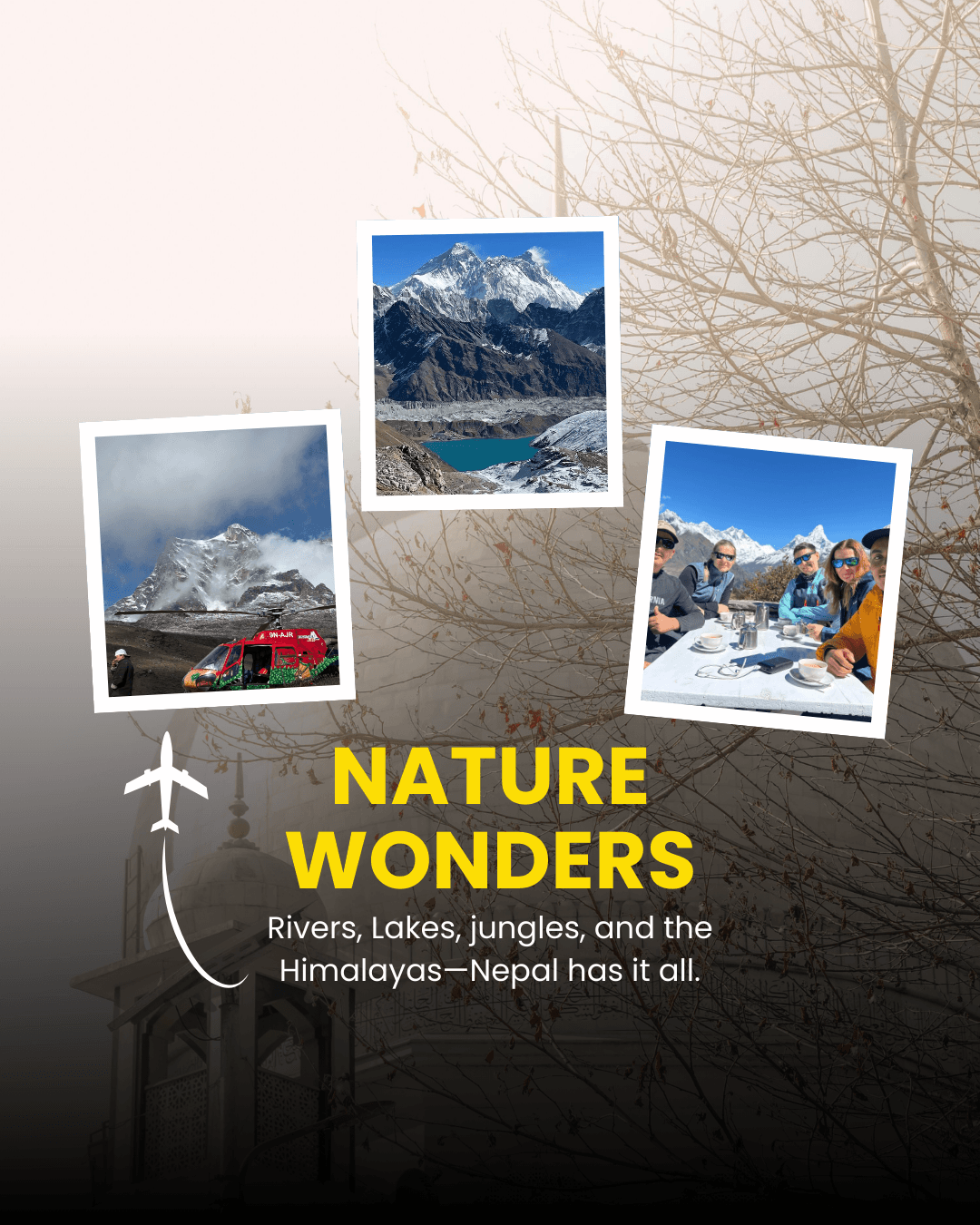
Nepal is leading the charge in sustainable travel for 2026. The Chitwan and Bardia National Parks have intensified their tiger conservation efforts, and the results are showing. 2026 is projected to be one of the best years for spotting the elusive Bengal Tiger.
But it’s not just about the wildlife. The "Natural Wonder" of Nepal is its verticality. In a single day, you can travel from the sub-tropical plains (at 100m) to the alpine forests (at 3,000m). For 2026, the domestic flight network from the new Pokhara International Airport makes reaching these diverse micro-climates faster than ever, giving you more time on the trails and less time on dusty buses.
4. A Spiritual Reset for the Modern World
If 2025 felt like a burnout year, 2026 in Nepal is your antidote. Lumbini, the birthplace of Lord Buddha, has expanded its "Monastic Zone," allowing travelers to stay in guest houses run by monasteries from around the world—Japan, Thailand, Germany, and beyond.

Spiritual travel here isn't a "spa day"; it’s an immersion. Whether it’s waking up at 4:00 AM to the sound of temple bells in Pharping or joining a silent meditation retreat in the hills of Dhulikhel, the energy of the land is undeniable. In a world that’s increasingly digital and loud, the stillness of a Himalayan monastery is the ultimate luxury.