Leading the Evolution of Sustainable Alpine Adventure in 2026
Beyond the Summit: Why "Business as Usual" is Over in the Himalayas
Let’s be honest: the secret is out. Everyone wants a piece of the Himalayas. Since 2020, we’ve seen a massive global surge in outdoor tourism—over 160 million people in the US alone are hitting the trails. While it’s great to see people craving adventure, this "boom" has put a target on the back of our fragile alpine ecosystems. At Trekking Team Pvt. Ltd., we’ve been navigating these trails since 1991. We’ve seen the changes firsthand. As glaciers retreat, they aren't just leaving behind ice; they’re revealing decades of "frozen" waste and environmental neglect.
We don't just see this as a problem , we see it as our responsibility to fix it. Here is how we’re shifting from "taking guests on treks" to "guarding the mountains."
It’s Not Just a Hike : It’s Recreation Ecology
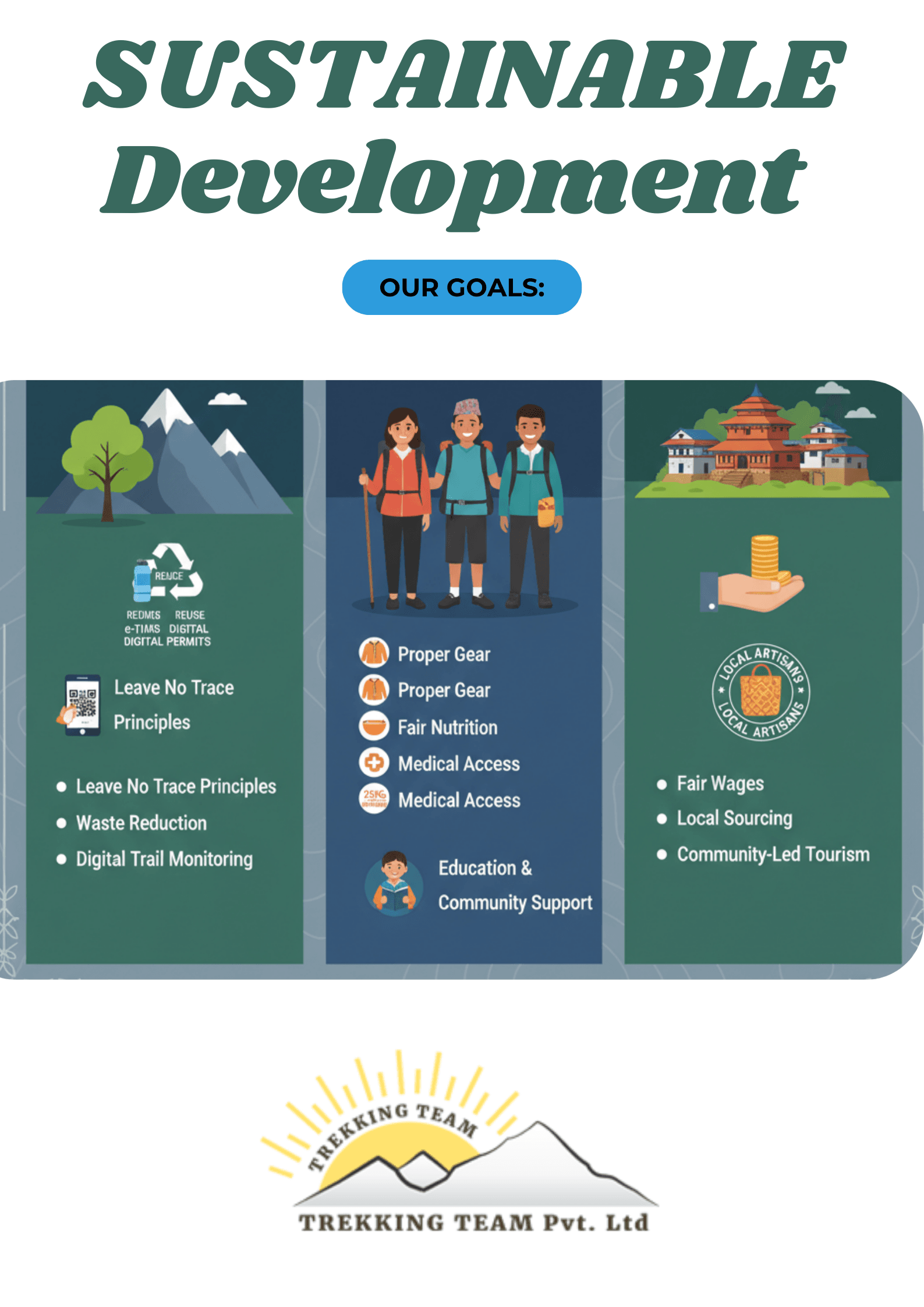
We don't just follow "Leave No Trace" (LNT) because it’s a catchy slogan. We follow it because it’s the only scientific way to keep these trails alive. Every single decision where we set up camp, how we manage waste, and even the paths we walk dictates whether these corridors will survive another 30 years.
The Power of Small Choices: One person stepping off a trail might not seem like much, but when 50,000 people do it, it kills the high-altitude flora that holds the soil together.
The "Revealed Legacy": We are actively involved in the 2025–2029 Everest Cleaning Action Plan. We are not just talking about it but our action speak themselves.
Preparation: The "Anti-Emergency" Strategy
Most environmental damage happens when people are unprepared. If you run out of fuel or bring too much plastic, the mountain pays the price. At Trekking Team, we kill the problem before it starts:
The Zero-Plastic Mission: Before any of our gear leaves the warehouse, we strip away the packaging. We use reusable containers for everything. If there’s no plastic to carry in, there’s no plastic to "accidentally" leave behind.
Digital 2026 Compliance: We’ve fully moved to the e-TIMS system. No more paper permits. By using digital QR codes at checkpoints like Monjo and Namche Bazaar, we’re helping the government track human density in real-time.
Our Crew, Our Family: Why Ethical Trekking is the Only Way Forward
At Trekking Team Pvt. Ltd., we’ve always believed that a successful summit is meaningless if the people who got you there aren't treated with the respect they deserve. In the high-altitude world of the Himalayas, "sustainability" isn't just about picking up trash—it’s about the human beings carrying the load.
We don't just "hire help." We build a social contract with our mountain crews. Following the global standards set by the IPPG (International Porter Protection Group) and IMEC, we’ve made worker welfare the heartbeat of our operations since 1991.
The Trekking Team "Five Pillars" of Care
The reality of being a porter in Nepal is tough, and the risks are real. That’s why we don’t compromise on these five non-negotiables:
1. Gear That Actually Protects
A cotton hoodie doesn't cut it at 5,000 meters. Every one of our porters is issued professional-grade technical gear: windproof jackets, proper snow boots, UV-rated sunglasses to prevent snow blindness, and high-altitude sleeping bags. If our clients are warm, our crew is warm.
2. Nutrition and Shelter
There is no "second-class" food on a Trekking Team expedition. Our porters eat the same high-quality, three-standard meals as our trekking leaders. Whether we’re in a tea house or a high-altitude tent, they have a dry, warm place to sleep every single night.
3. Medical Equality (The Oximeter Rule)
If a porter feels the effects of altitude, they get the exact same medical attention as a guest. We monitor our crew's oxygen levels with oximeters daily. Every porter is covered by comprehensive insurance that includes emergency helicopter evacuation. We value their lives as much as our own.
4. The Descent Protocol
No sick porter is ever sent down a mountain alone. Period. If one of our team members needs to descend, they are accompanied by a staff member who speaks their language, and they are provided with full funds for their medical treatment and travel.
5. Fair Weight Limits
While the official Nepal limit is 30kg (66 lbs), we know the physiological strain of the thin air above 4,000 meters. We advocate for a 25kg maximum. We ask our trekkers to pack light (aiming for 12–13kg) so that our porters can work safely and stay healthy for their families.
The Bottom Line
At the end of the day, the mountains aren't a commodity; they are our heritage. After 35 years in the game, Trekking Team Pvt. Ltd. knows that the future of trekking isn't just about reaching the top—it’s about making sure the mountain is still there when we come back down.
Join us in 2026 for a different kind of adventure. One where the planet comes first.