Manaslu Circuit Trek Guide 2026: Permits, Itinerary, Larkya La and Cost
By Trekking Team Pvt. Ltd., Gongabu, Kathmandu. Published 31 August 2026. Permit fees and road access checked August 2026.
Twenty years ago the Manaslu Circuit was a camping trek for the committed. Today it has teahouses the whole way, a road to the trailhead and a reputation as the trek the Annapurna Circuit used to be: a full loop around an 8,000 m mountain, a real high pass, Tibetan Buddhist villages that still feel remote, and a fraction of the foot traffic. It is also a restricted area, which keeps numbers down and adds some paperwork. This guide covers everything you need to plan it in 2026: permits and the rules on guides and group size, a 14-day itinerary, the Larkya La crossing, costs, the best months, and how it compares with the Annapurna Circuit.
Manaslu Circuit at a glance
- Duration: 14 to 18 days from Kathmandu (12 to 14 walking days)
- Highest point: Larkya La, 5,106 m
- Start: Machha Khola (or Soti Khola), 7 to 9 hours by road from Kathmandu
- End: Dharapani, then drive to Besisahar and Kathmandu
- Difficulty: Challenging. Long days, one very high pass, basic lodges at the top
- Permits: Restricted Area Permit, Manaslu Conservation Area Permit, Annapurna Conservation Area Permit
- Rules: Licensed guide and a minimum of two trekkers required
- Best months: October, November, late March to early May
Permits: what you need and what they cost
Manaslu sits inside a restricted zone along the Tibetan border, so three permits are needed and they can only be issued through a registered Nepali agency. We handle all of them; you send passport scans and photos, and we collect the permits in Kathmandu the day before departure.
Restricted Area Permit (RAP). Charged per person per week for the section between Jagat and Sama Gaun. In the peak season of September to November it costs USD 100 for the first seven days and USD 15 for each additional day. From December to August it drops to USD 75 for the first seven days and USD 10 per extra day. Most itineraries spend eight or nine days in the restricted zone.
Manaslu Conservation Area Permit (MCAP). NPR 3,000 for foreign nationals, valid for the whole trek.
Annapurna Conservation Area Permit (ACAP). NPR 3,000. You enter the Annapurna area after Larkya La at Bimthang and need this for the final two days to Dharapani.
Two rules matter more than the fees. You must trek with a licensed guide from a registered agency, and the RAP requires a minimum of two trekkers on the permit. If you are travelling alone, tell us your dates and we will match you with another trekker, or you can pay a small supplement for a private departure with a guide and porter.
Day by day: the 14-day itinerary
Day 1: Kathmandu to Machha Khola (870 m)
A long jeep ride west along the Prithvi Highway, then north up the Budhi Gandaki on a rough road. Eight to nine hours. Road conditions change every monsoon; we confirm the exact start point a few days before.
Day 2: Machha Khola to Jagat (1,340 m)
Hot, low and humid, following the river through Tatopani (there are hot springs) to Jagat, where the restricted area begins and your RAP is stamped. About 6 hours.
Day 3: Jagat to Deng (1,860 m)
The gorge narrows and the trail climbs and drops repeatedly, crossing the river on long suspension bridges. Around 6 to 7 hours. Deng is the first village with a Tibetan feel.
Day 4: Deng to Namrung (2,630 m)
Through pine and rhododendron forest, past the turn-off to the Tsum Valley, to Namrung, where the lodges improve noticeably. About 6 hours.
Day 5: Namrung to Lho (3,180 m)
A shorter day, 4 to 5 hours, and the first big view: Manaslu's twin summits fill the sky above Lho, and the Ribung Gompa above the village is the place to watch the sunset.
Day 6: Lho to Sama Gaun (3,530 m)
Three to four hours across open pasture to Sama Gaun, the largest village on the route, with a monastery, a health post and a few of the best lodges on the trek.
Day 7: Acclimatisation day at Sama Gaun
Do not skip this. The classic option is the walk to Manaslu Base Camp (4,800 m), a 6 to 7 hour round trip with 1,300 m of climbing. Birendra Lake below the glacier is an easier alternative. Either way, sleep low again in Sama Gaun.
Day 8: Sama Gaun to Samdo (3,875 m)
A gentle 3 to 4 hours up the widening valley to Samdo, the last village before the pass, a day's walk from the Tibetan border.
Day 9: Samdo to Dharamsala (4,460 m)
Three to four hours to the collection of stone huts and lodges at Dharamsala, also called Larkya Phedi. It is basic, cold and, in peak season, crowded, which is why we fix departures early and book beds in advance. Eat early and sleep early.
Day 10: Larkya La (5,106 m) to Bimthang (3,720 m)
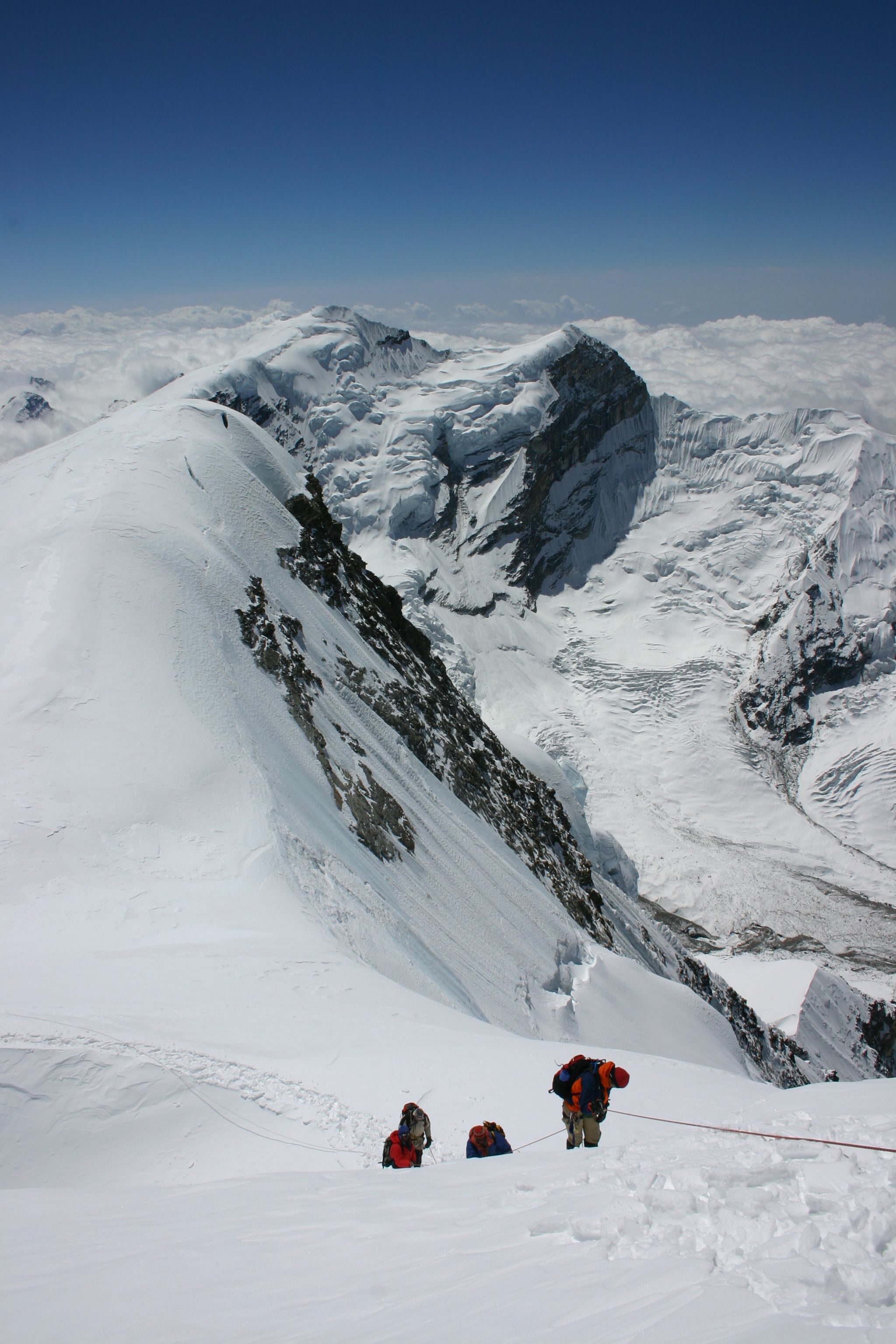
The big day. Leave around 4 am by headlamp, climb steadily for 4 to 5 hours to the prayer flags on the pass, then a long, steep, sometimes icy descent of 1,400 m to Bimthang. Eight to ten hours in total. Our guides carry microspikes for the descent when there is snow. The views from the pass, across to Himlung, Cheo Himal and the Annapurna II massif, are the reward.
Day 11: Bimthang to Tilije (2,300 m)
Down through rhododendron forest and across the Dudh Khola. Five to six hours, mostly descending, with the relief of thick air.
Day 12: Tilije to Dharapani (1,860 m) and drive to Besisahar
Two to three hours of walking to Dharapani on the Annapurna Circuit, then a jeep down the Marsyangdi valley to Besisahar.
Day 13: Besisahar to Kathmandu
Six to seven hours back to the capital, with a spare day 14 kept in hand for weather or road delays.
The Larkya La crossing
Larkya La is not technical but it is high, long and cold, and it is the reason the Manaslu Circuit is graded harder than the Annapurna Circuit. The pass itself is broad; the difficulty is the length of the day, the pre-dawn start in temperatures around minus 15 degrees, and the descent, which is steep scree and often has snow or ice on the shaded upper section into late spring. After heavy snowfall the pass can close for days. Our itinerary keeps two acclimatisation opportunities before it (Sama Gaun and the gentle days to Samdo and Dharamsala) and a spare day after it. Anyone showing altitude symptoms at Dharamsala goes down, not up.
What the Manaslu Circuit costs in 2026
Manaslu is more expensive than Langtang and slightly more than the Annapurna Circuit because of the Restricted Area Permit and the two long jeep transfers, but it needs no internal flight, which keeps it below Everest. A guided, all-inclusive 14-day trip with Trekking Team covers permits, private transport both ways, a licensed guide, porters, teahouse rooms and all meals on trek. Ask us for the current price for your dates and group size.
The on-the-ground costs behind that price, for reference:
- Permits: roughly USD 150 to 170 per person for a nine-day peak-season RAP plus MCAP and ACAP
- Private jeep Kathmandu to Machha Khola and Besisahar to Kathmandu, shared by the group
- Licensed guide: USD 35 to 40 per day; porters USD 22 to 25 per day
- Teahouse rooms: NPR 500 to 1,500 per night, most expensive at Dharamsala
- Meals: NPR 700 to 1,200 per dish above Namrung; budget NPR 3,500 to 4,500 per day
- Extras: hot showers, charging and Wi-Fi are all paid, and prices climb with altitude
There are no ATMs after Arughat. Carry all the cash you need in Nepali rupees.
Best time to trek Manaslu
October and November are the safest choice: dry, clear and cold at the top, with the pass reliably open. Late March to early May is the second window, with rhododendrons in the lower valley and generally good mornings, though more afternoon cloud and a higher chance of late snow on the pass. December to February is possible for experienced, well-equipped trekkers, with the real risk that Larkya La is closed. June to September is monsoon: rain, leeches and landslides on the lower trail and road. We do not run the circuit then.
Lodges, food and connectivity
Teahouses all the way, simpler than on the Annapurna Circuit and noticeably more basic above Sama Gaun. Rooms are twin-share with shared toilets; hot showers are available up to Samdo for a fee. Dharamsala has dormitory-style lodges and limited beds, and in October it fills up, which is one reason we book ahead and depart on fixed dates.
Food is the standard trekking menu with a Tibetan accent: dal bhat, thukpa, tsampa porridge, momos, fried rice and noodles, plus local yak butter tea if you ask. Phone signal is patchy but exists in most villages; Wi-Fi is sold by the voucher in Namrung, Lho and Sama Gaun.
Manaslu Circuit vs Annapurna Circuit
They are similar in length and both cross a 5,100 m pass, so people often choose between them. The Annapurna Circuit has better lodges, more side trips (Tilicho Lake especially) and easier logistics, but a road now follows much of the route and the trails are busier. Manaslu has fewer people, a stronger sense of remoteness, tighter permit rules and rougher accommodation at the top. If you have done one classic Nepal trek and want something wilder, Manaslu is the answer. If it is your first trek at altitude, the Annapurna Circuit or Langtang is the gentler introduction.
If you have three weeks, the Tsum Valley extension adds six or seven days in a hidden Buddhist valley off the main route before you rejoin the circuit, and our 27-day Tsum Valley and Manaslu trek does exactly that.
Frequently asked questions
Can I do the Manaslu Circuit solo?
No. The Restricted Area Permit requires a licensed guide and at least two trekkers. We regularly pair solo travellers with others on the same dates.
How fit do I need to be?
Fit enough to walk 6 to 8 hours a day for two weeks with a daypack, and to handle one 9 to 10 hour day over the pass. Previous experience above 4,000 m helps but is not essential if you respect the acclimatisation days.
Is altitude sickness a serious risk?
It is the main risk on this trek. Sleeping altitudes rise from 3,180 m at Lho to 4,460 m at Dharamsala over four days, which is why the rest day at Sama Gaun is fixed in every itinerary. Our guides carry a pulse oximeter and a first-aid kit including Diamox, and we have helicopter evacuation arrangements from Sama Gaun and Samdo.
What about the road at the start?
The road up the Budhi Gandaki is extended a little further each year and damaged a little each monsoon. In 2026 jeeps reach Machha Khola in normal conditions. If the road is cut, the trek starts one day lower at Soti Khola or Arughat.
Can I combine it with the Annapurna Circuit?
Yes. From Dharapani you can continue up the Marsyangdi to Manang, Tilicho Lake and Thorong La instead of driving out. Our 26-day Manaslu and Annapurna with Tilicho Lake trek does this and is one of the finest long treks in Nepal.
Book the Manaslu Circuit
We have run Manaslu since the restricted zone opened to trekkers in the early 1990s, and our guides know the lodge owners in every village from Jagat to Bimthang. See dates, inclusions and the full itinerary on our Manaslu Circuit Trek page, or the longer Tsum Valley and Manaslu Trek, and write to info@trekkingteam.com or message us on WhatsApp with your dates.