Trekking in Nepal in Winter: The Routes That Work in December, January and February
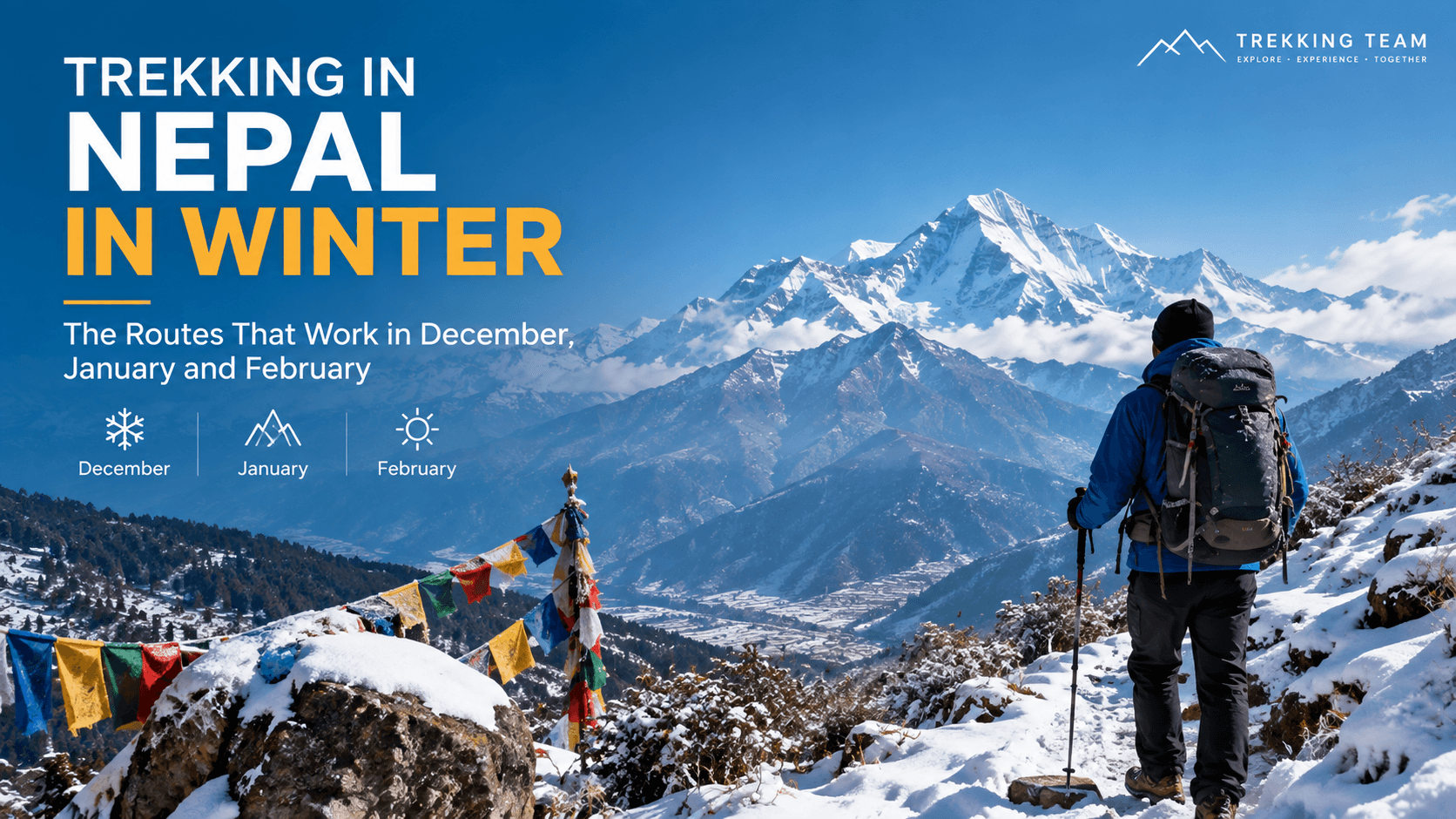
Nepal's trekking calendar is written by people selling October. Ask most operators about December and you get a shrug, a warning about cold, and a nudge back towards the autumn dates that are already full and already expensive.
That is a shame, because a good part of Nepal trekking is at its best between December and February. The air is the clearest it gets all year. The trails that were shoulder to shoulder in October are empty. Lodge owners who could not find you a room six weeks earlier will give you their best one and sit down for a chat. And the price of everything drops.
Winter is not universally good. Some routes genuinely should not be attempted, and we will be specific about which. But the blanket idea that Nepal shuts down after November is wrong, and it costs people the best trip they could have had.
What winter in the Himalaya actually feels like
The thing that surprises people is that winter days are warm. Nepal sits at the latitude of Florida. On a clear December day at 3,000 m in the sun you will be walking in a base layer and thinking about taking that off too.
The cold arrives the moment the sun drops behind a ridge, which in a deep valley can be as early as three in the afternoon. Overnight at 3,500 m expect minus 5 to minus 15 C. Dining rooms are heated by a yak dung stove lit at six. Bedrooms are not heated at all, anywhere, in any season, so the question is simply whether your sleeping bag is good enough.
The other winter facts worth knowing:
- Visibility is exceptional. The post-monsoon haze that builds through late autumn is gone. December and January give the sharpest mountain views of the year and the most reliable sunrises.
- Precipitation is low but not zero. Nepal gets occasional westerly disturbances in January and February that dump snow at altitude for a day or two and then clear. High passes can close for 48 hours.
- Days are short. Sunrise around 6.45, dark by 5.30. You start later and finish earlier, which suits a slower pace.
- Some high lodges close. Above about 4,500 m a proportion of teahouses shut for the season or run with a skeleton family. This is the single most important planning constraint and it is why route choice matters so much.
Routes that work well in winter
Everest View trek and the Khumbu below 4,000 m
Lukla, Phakding, Namche, Khumjung, Tengboche. You get the full Khumbu experience, the Everest and Ama Dablam views, Sherpa villages and Tengboche monastery, and you stay low enough that lodges stay open and nights stay bearable. Namche in January, with the market running and almost no trekkers, is a different and better place than Namche in October.
Poon Hill and the Annapurna foothills
The classic winter trek and for good reason. Maximum altitude 3,210 m, warm days, good lodges the whole way, and a Poon Hill sunrise in December that beats anything you will see there in spring. Five to seven days from Pokhara. If you have limited time or are trekking with children or parents, this is the answer.
Annapurna Base Camp
Runs all winter and the Sanctuary in fresh snow is genuinely spectacular. The caveat is real though: the approach into the Sanctuary crosses avalanche-prone ground and after heavy snowfall we will hold a group at Deurali rather than push through. A guide who knows the conditions is not optional here.
Mardi Himal
High camp at 3,550 m, ridge walking with Machhapuchhre directly in front of you, and short enough that you can pick a settled weather window. One of the best winter weeks in Nepal and still not crowded even in October.
Langtang
Normally an excellent winter valley, lower than the Everest and Annapurna high routes and warmer than both. For winter 2026 into 2027 this depends entirely on road access being restored after the August flood, and we are reconfirming that separately.
Upper Mustang
Technically possible and visually extraordinary, but genuinely cold and windy, and many families in Lo Manthang go down to Pokhara for the winter, which thins out both the villages and the lodges. We run it, but only for people who want emptiness more than comfort.
Chitwan and Bardiya
Not a trek, but worth saying: winter is the best wildlife season in the Terai. Cool mornings, the grass cut back, and animals concentrated at the water. February and March give the highest tiger sighting rates of the year. A week combining Poon Hill and Chitwan is one of the best value trips in Nepal and almost nobody books it.
Routes to avoid between December and February
We will not run these in deep winter, and any operator who offers them without a serious conversation about conditions is taking your money and hoping.
- Thorong La on the Annapurna Circuit (5,416 m). The pass closes with snow, high camp lodges shut, and people get caught out on it every year. Do the Circuit in October or April.
- Larke La on the Manaslu Circuit (5,106 m). Same reasoning. Manaslu is an autumn and spring trek.
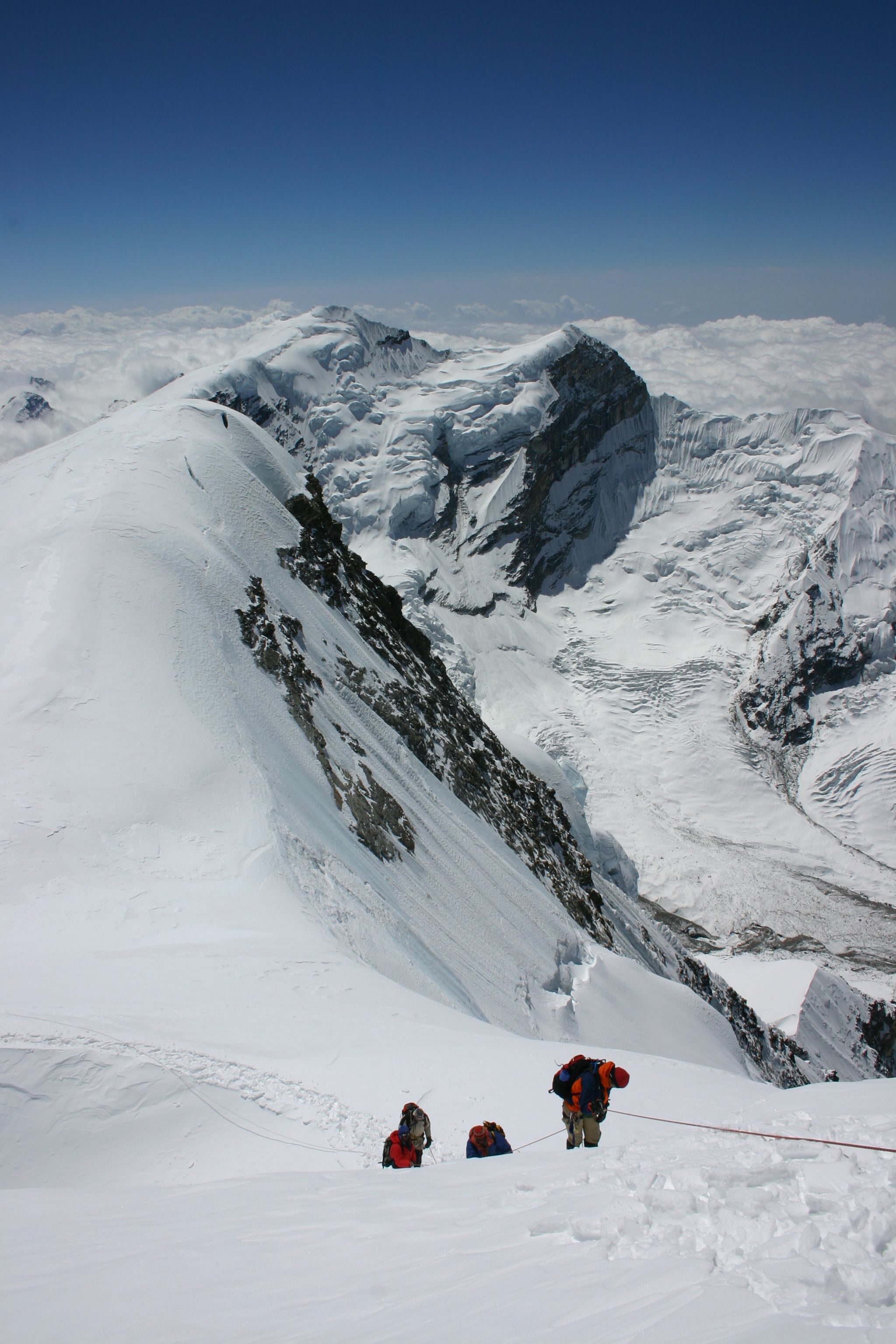
- The Everest Three Passes. Kongma La, Cho La and Renjo La in winter snow is mountaineering, not trekking.
- Kanchenjunga, Makalu and Upper Dolpo. Remote, high, minimal lodge infrastructure and no realistic rescue margin in winter.
- Gokyo and Cho La. Gokyo alone is arguable with the right forecast. Adding Cho La is not.
Everest Base Camp in winter: the honest answer
People ask this constantly, so here is the full version rather than a yes or no.
EBC in December is genuinely doable and we run it. Skies are the clearest of the year, the trail is quiet, and Kala Patthar at sunrise in December is as good as that view ever gets. Gorak Shep will be around minus 20 C overnight and a proportion of the highest lodges run reduced service, so the trip needs to be built with that in mind rather than booked as the standard October product with a colder date on it.
January and February are harder. Deeper cold, more lodge closures at Lobuche and Gorak Shep, and a higher chance of a westerly system snowing you in for a day or two. We will run it for experienced walkers with proper equipment who understand they may lose a day to weather. We will not run it for someone doing their first Himalayan trek.
The equipment question is the deciding one. A three-season sleeping bag that was adequate in October will not be adequate in January, and the difference between a good winter night and a miserable one is a bag rated to minus 20 C, a decent down jacket, an insulated sleeping mat and a hot water bottle. We supply the first two at no charge.
What winter costs, and why it is cheaper
Everything that is capacity-constrained in October is not constrained in January. Lukla flights are available at short notice instead of being booked out. Lodges negotiate. Guides and porters, who make most of their annual income in two short seasons, are available and glad of the work.
Practically that means a winter trek generally runs cheaper than the same trek in October, sometimes noticeably so, and you can book it six weeks out instead of six months. It also means the money you do spend goes further into the local economy at the time of year the local economy needs it, which is not a marketing point so much as an observation about how seasonal tourism actually works in the hills.
Packing differently for winter
The list is not longer than the autumn list, it is warmer in four specific places.
- Sleeping bag rated to minus 20 C. This is the single most important item and the one people most often get wrong. We lend one.
- A real down jacket, not a fleece with a hood. Also lent.
- Insulated boots with room for a thick sock, and gaiters if you are going above 4,000 m. Boots that fit perfectly with a thin sock will give you cold feet with a thick one.
- Hands and head: glove liners plus insulated outer gloves, a warm hat that covers your ears, and a buff. Extremities are where winter trekking goes wrong.
Add a thermos, which lodges will fill with hot water each morning for a small charge, and a pair of microspikes if your route touches snow. Both are cheap and both change the day.
Frequently asked questions
Is it too cold to trek in Nepal in winter?
No, if you pick the right route and carry the right sleeping bag. Days below 3,500 m are warm and sunny. Nights are cold everywhere, in every season, because no lodge bedroom in Nepal is heated. The routes that become genuinely unsuitable in winter are the high passes above 5,000 m, not trekking in general.
Which is the best winter trek in Nepal?
For most people, Poon Hill or the Everest View trek. Both stay below 3,900 m, both have lodges that stay open and staffed all winter, both give exceptional December and January visibility, and both are short enough to fit a settled weather window. Annapurna Base Camp and Mardi Himal are the next step up.
Can you do Everest Base Camp in December or January?
December, yes, with proper equipment and a plan built for winter. January and February, only for experienced trekkers who accept that some high lodges will be closed and that a storm can cost a day. The views in either month are the best of the year.
Is there snow on the trails in winter?
Below 3,000 m, rarely and not for long. Between 3,000 and 4,000 m, patchy and usually only after a westerly system. Above 4,000 m, yes, and on the high passes it can be deep enough to close them. Microspikes handle the ordinary case; the extreme case is handled by not being on a 5,000 m pass in January.
Are teahouses open in winter?
Below about 4,000 m, almost all of them. Between 4,000 and 4,500 m, most. Above that a real proportion close for the season, and on some routes the family running the lodge has gone down to Kathmandu until March. This is exactly why winter route choice should be made with someone who knows which specific lodges are running, and it is why we phone ahead rather than assume.
Is winter cheaper than autumn?
Usually yes. Flights are easier to get, lodges are negotiable and nothing is capacity-constrained. You can also book much later, which suits people whose leave dates are not fixed six months out.
Come in the quiet season
We have been guiding out of Kathmandu since 1991 and the winter trips are, quietly, some of our favourites. Fewer people, better light, more time with the families who run the lodges, and guides who are not on their eighth group of the month.
If you have December, January or February dates and you are not sure what will work, write to us with the dates and roughly what you are after. We will tell you which routes are sensible, which are not, and what we would book ourselves.