Langtang Valley Trek Guide 2026: Route, Permits, Cost and Post-Flood Access
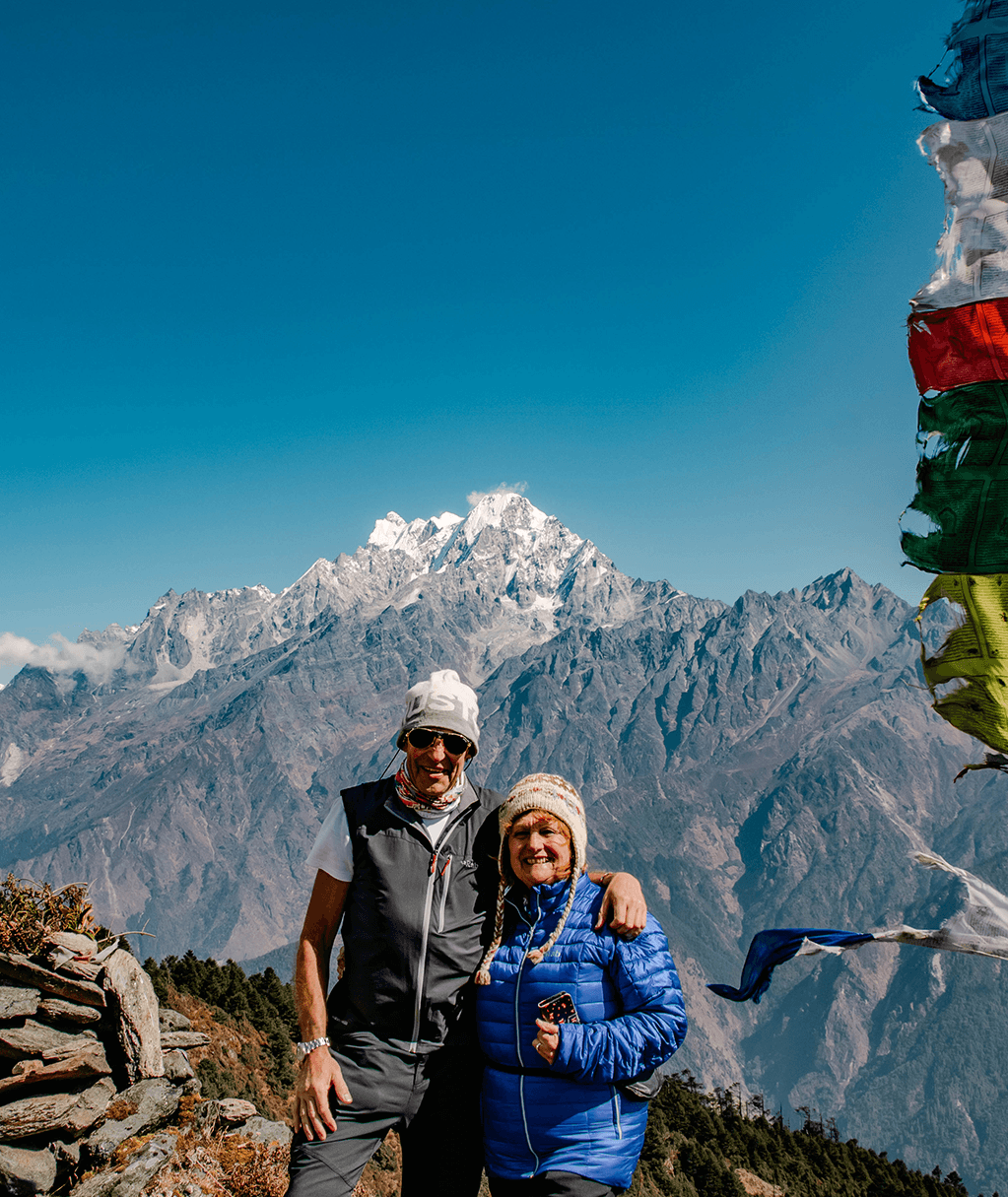
By Trekking Team Pvt. Ltd., Gongabu, Kathmandu. Published 31 August 2026. We will update the road-access section as repairs progress after the Bhotekoshi flood.
Langtang is the closest big-mountain valley to Kathmandu, and for a long time that was its whole reputation: the trek you did if you did not have time for Everest or Annapurna. That undersells it. In eight to eleven days you walk from subtropical forest at 1,500 m to a glacial basin at nearly 4,000 m, ringed by Langtang Lirung, Gangchenpo and the Tibetan border peaks, through Tamang villages that were rebuilt almost from scratch after 2015. It is quieter than the two famous regions, cheaper, and needs no internal flight. This guide covers what you need to plan it in 2026: the current access situation, permits, a day-by-day itinerary, real costs, difficulty, and the questions we get asked most.
Is Langtang open after the August 2026 flood?
The short version: the valley trail is intact, the road in is being repaired, and we are taking bookings for October onward with a flexible start date.
On 26 August 2026 a section of glacier collapsed near Langtang Lirung on the Tibetan side of the border. The resulting flood of ice, rock and meltwater ran down the Lhende Khola into the Bhotekoshi and Trishuli rivers and caused catastrophic damage in Rasuwa, Nuwakot and Dhading districts. The Pasang Lhamu Highway between Trishuli Bazaar and Syabrubesi, which is the normal road to the Langtang trailhead, was hit in several places.
The trekking trail itself, which climbs east from Syabrubesi along the Langtang Khola, was not in the flood's path. Kyanjin Gompa, Langtang village and Lama Hotel are all above the affected corridor. What has changed is getting there. Until the road is fully reopened, expect one of three options: a longer drive with a section on foot around damaged stretches, a start from a point further down the valley, or a short delay to your departure date. We will confirm the exact plan with you a week before you travel and will not run the trip until our own drivers have used the road.
Langtang Valley trek at a glance
- Duration: 8 to 11 days from Kathmandu, including transfers
- Highest point: Tserko Ri, 4,984 m (optional); Kyanjin Gompa, 3,870 m (highest overnight)
- Start and end: Syabrubesi, 1,503 m, about 7 to 8 hours by road from Kathmandu
- Difficulty: Moderate. No technical ground, but sustained altitude gain and long days
- Accommodation: Teahouses throughout
- Best months: October, November, March, April
- Permits: Langtang National Park entry permit and a TIMS card
- Guide: Required for foreign trekkers
The route, day by day
This is the 10-day version we run most often. It includes one acclimatisation day at Kyanjin Gompa, which is the day most people remember best.
Day 1: Kathmandu to Syabrubesi (1,503 m)
A long day in a private jeep, leaving Kathmandu by 7 am. The road climbs out of the valley, drops to the Trishuli river and follows it north to Dhunche, the district headquarters, where your park permit is checked, then descends to Syabrubesi. Normally 7 to 8 hours. Allow longer in 2026 while road repairs continue.
Day 2: Syabrubesi to Lama Hotel (2,470 m)
Cross the Bhote Koshi and climb steadily through oak, bamboo and rhododendron forest along the Langtang Khola. This stretch is where you are most likely to see langur monkeys and, if you are lucky, red panda tracks. Around 6 hours. Lama Hotel is a cluster of lodges in the forest, not a village.
Day 3: Lama Hotel to Langtang village (3,430 m)
The forest thins and the valley opens. You pass Ghodatabela, where the park checkpoint sits, and then the site of the old Langtang village. In April 2015 an earthquake-triggered avalanche buried the village and killed more than 300 people. The new village is built a little further up the valley. Walk through quietly, and stop at the memorial. About 6 hours.
Day 4: Langtang village to Kyanjin Gompa (3,870 m)
A shorter day, 3 to 4 hours, through yak pastures and past long mani walls to Kyanjin Gompa, the last settlement in the valley. The afternoon is for resting, visiting the monastery and the cheese factory, and watching the light change on Langtang Lirung, which rises 3,000 m straight above the village.
Day 5: Acclimatisation day, Tserko Ri (4,984 m) or Kyanjin Ri (4,773 m)
Tserko Ri is the big one: a 5 to 6 hour round trip with 1,100 m of climbing, rewarded by a full circle of peaks including Shishapangma in Tibet on a clear morning. Kyanjin Ri is closer and about half the effort. Start before dawn either way; clouds usually build by late morning.
Days 6 and 7: Return to Syabrubesi
Two days back down the way you came, usually with a night at Lama Hotel or Bamboo. Descending is faster but hard on the knees; poles help.
Day 8: Syabrubesi to Kathmandu
The drive back. Most people sleep most of it.
The 11-day version adds a night in Langtang village on the way down and a side trip to the Langshisha Kharka glacier, and the 8-day version cuts the acclimatisation day, which we do not recommend for anyone who has not been above 4,000 m before.
Permits and rules
You need two documents, both of which we arrange before you arrive:
The Langtang National Park entry permit costs NPR 3,000 for most foreign nationals and NPR 1,500 for SAARC citizens. It is checked at Dhunche and at Ghodatabela.
The TIMS card (Trekkers' Information Management System) costs NPR 2,000 for foreign trekkers and is issued through registered agencies. Langtang is an open route, so a licensed guide is recommended rather than legally required. The Dhunche checkpoint verifies your permits. Solo trekkers without a guide are turned back.
Langtang is not a restricted area, so there is no Restricted Area Permit and no minimum group size beyond you and your guide.
What the Langtang trek costs in 2026
Langtang is the most affordable of Nepal's major valley treks because there is no flight. A guided, all-inclusive 10-day trip with Trekking Team, including private transport, permits, a licensed guide, a porter, teahouse accommodation and all meals on trek, comes in well under the cost of an equivalent Everest itinerary. Ask us for the current price for your dates.
If you want to understand where the money goes, here are the on-the-ground figures for 2026:
- Private jeep Kathmandu to Syabrubesi and back: shared between the group
- Licensed guide: USD 30 to 35 per day, plus food and lodging, which the lodges provide free for guides
- Porter: USD 22 to 25 per day for up to 20 kg
- Teahouse room: NPR 500 to 1,000 per night, more at Kyanjin Gompa in peak season
- Meals: NPR 600 to 1,000 per dish, rising with altitude. Budget NPR 3,000 to 4,000 per day for three meals and tea
- Extras: hot showers (NPR 300 to 500), charging (NPR 200 to 400 per device), Wi-Fi where it exists (NPR 500)
- Tips: the usual guideline is around 10 percent of the trip cost for the guide and 5 percent for the porter
Carry cash in Nepali rupees for the whole trek. The last ATM is in Kathmandu; Dhunche has one that works some of the time.
How hard is it?
Moderate, honestly. There are no passes, no exposure and no scrambling. The challenge is that you gain 2,400 m of altitude in four walking days, and Kyanjin Gompa at 3,870 m is high enough for anyone to feel it. The first two days are also long, hot and mostly uphill through forest, which surprises people who expected a gentle warm-up.
If you can walk 6 hours on hilly ground with a daypack at home, you can do Langtang. Train with hills and stairs in the two months before you come, and take the acclimatisation day seriously. Our guides carry a pulse oximeter and check everyone each evening above 3,000 m.
Best time to trek Langtang
October and November are the most reliable: stable weather, sharp views, cool nights. March to early May is the second choice, with rhododendrons flowering in the forest below Lama Hotel and generally clear mornings, though afternoons haze over more than in autumn.
December to February is cold but perfectly possible up to Kyanjin Gompa; Tserko Ri may hold snow and lodges thin out. We do not run Langtang in June to September. Monsoon rain makes the Trishuli road prone to landslides, and this year's flood is a stark reminder of why.
Where you sleep and what you eat
Teahouses the whole way, almost all run by Tamang families who rebuilt after 2015. Rooms are twin-share with a bed, mattress, pillow and blanket; bring or rent a sleeping bag rated to around minus 10 degrees for Kyanjin Gompa in spring and autumn. Bathrooms are shared. Hot showers are available at most lodges for a fee, gas-heated lower down and solar higher up, so they are warmest in the afternoon.
Menus are similar everywhere: dal bhat with unlimited refills, fried rice, noodles, pasta, momos, pancakes, porridge, eggs and Tibetan bread. Kyanjin Gompa's cheese factory, set up with Swiss help in the 1950s, sells yak cheese that is worth carrying down. Drink boiled or treated water rather than buying bottled; every lodge sells boiled water by the litre.
Packing for Langtang
You need less than for Everest, but the temperature range is wide: 25 degrees on day two, well below freezing at Kyanjin Gompa before dawn. The essentials are broken-in boots, a warm down jacket, a fleece, base layers, a waterproof shell, a sleeping bag, poles, a headlamp, sunglasses, sunscreen and a 30-litre daypack. Everything else can be rented in Kathmandu. Our full Nepal trekking packing list covers the rest, including what to leave at home.
Langtang or somewhere else?
Choose Langtang if you have 8 to 11 days, want to avoid the Lukla flight, prefer quieter trails and are happy with a valley trek that ends at a viewpoint rather than a base camp. Choose Everest Base Camp if the name matters to you and you have 14 days. Choose Annapurna Base Camp if you want an amphitheatre of peaks with slightly gentler altitude. Langtang also combines well with the sacred lakes at Gosainkunda and the Helambu ridge for a 17-day loop that finishes an hour from Kathmandu.
Frequently asked questions
Can I do Langtang without a guide?
On open routes yes. In restricted areas a licensed guide is required by law. The rule is enforced at the Dhunche checkpoint. Guides are inexpensive relative to the rest of the trip and, in a valley still recovering from two disasters in eleven years, their local knowledge is worth having.
Is there phone signal and Wi-Fi?
NTC and Ncell signal is patchy but present in Syabrubesi, Langtang village and Kyanjin Gompa. Several lodges sell Wi-Fi vouchers. Do not count on either for anything important.
Do I need travel insurance?
Yes, and it must cover trekking to at least 5,000 m and helicopter evacuation. We ask for your policy number before departure.
Can children do the Langtang trek?
Fit children from about 10 upward manage it well, with an extra night for acclimatisation. We shorten the days and skip Tserko Ri for younger trekkers.
What happens if the road is still closed on my dates?
We will offer a revised start point, a delayed departure, or a switch to an equivalent trek with no change fee. We will not put a group on a road we have not driven ourselves.
Book the Langtang Valley trek
Trekking Team has been running Langtang since 1991, through the earthquake, the pandemic and now the flood, and the Tamang families who host trekkers there are people we have known for decades. Every booking this season puts money directly back into a valley that needs it. See the full itinerary and dates on our Langtang Valley Trek page, or the longer Langtang, Gosainkunda and Helambu Trek, and write to us at info@trekkingteam.com or on WhatsApp with your dates.