Upper Mustang Trek Guide 2026: Permits, Itinerary to Lo Manthang and Best Time
By Trekking Team Pvt. Ltd., Gongabu, Kathmandu. Published 31 August 2026. Permit fees checked August 2026.
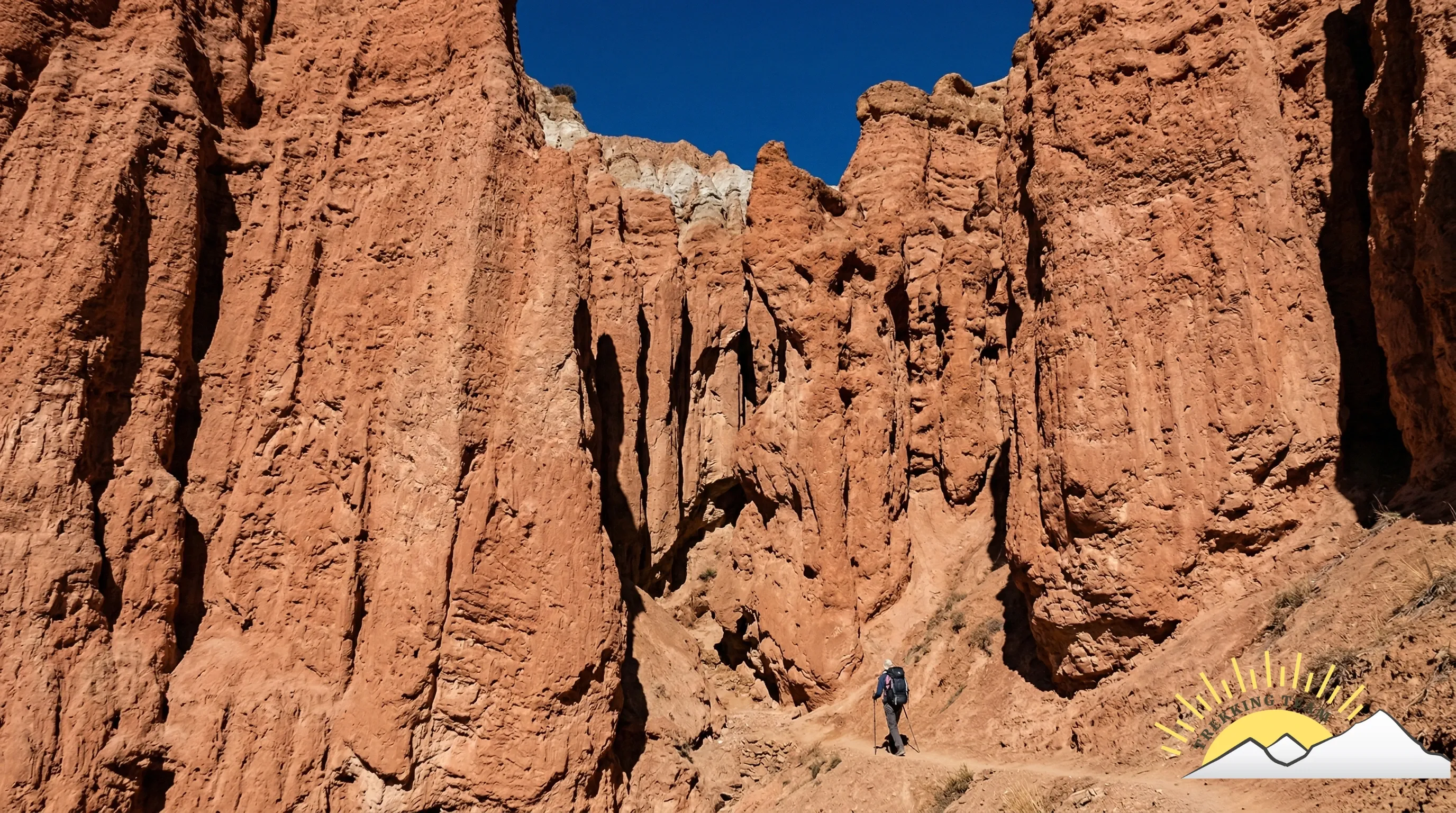
Upper Mustang is the part of Nepal that does not look like Nepal. North of the Annapurna and Dhaulagiri ranges the monsoon never arrives, and what is left is a high desert of eroded cliffs, red and ochre canyons, cave monasteries and walled villages that belonged to the kingdom of Lo until 2008. It was closed to foreigners until 1992, is still a restricted area with a daily permit fee, and remains one of the few places in the Himalaya where you can trek in July and stay dry. This guide covers the permit rules and costs, how to get there, a 12-day itinerary to Lo Manthang, the road question, the best months, and what to expect from lodges and food.
Upper Mustang at a glance
- Duration: 12 to 17 days from Kathmandu, including flights to Jomsom
- Highest point: around 4,200 m on the passes; Lo Manthang itself is 3,840 m
- Start and end: Jomsom (2,720 m), reached by flight from Pokhara
- Difficulty: Moderate. Dust, wind and dry air more than steepness
- Permits: Restricted Area Permit (10-day block) plus Annapurna Conservation Area Permit
- Rules: Licensed guide and minimum two trekkers
- Best months: March to November, including the monsoon
Permits and the rules on guides
Upper Mustang, from Kagbeni northward, is a restricted area. Two permits are needed and both are arranged through a registered agency; we include them in our trip price and handle the paperwork before you arrive.
Restricted Area Permit (RAP). USD 50 per person per day, with a two-day minimum. The clock starts when you pass the checkpoint at Kagbeni and stops when you return through it, so itineraries are built to fit the 10-day block where possible. This fee is what keeps Upper Mustang quiet: a few thousand trekkers a year rather than the tens of thousands on the Annapurna Circuit.
Annapurna Conservation Area Permit (ACAP). NPR 3,000, valid for the whole trip including the Jomsom and Kagbeni section.
A licensed guide is compulsory and the RAP requires at least two trekkers. Solo travellers can join a fixed departure or pay a supplement for a private trip with a guide. Bring your passport; it is checked at Kagbeni and again in Lo Manthang.
Getting there
Fly Kathmandu to Pokhara (25 minutes), overnight, then take the early morning flight to Jomsom (20 minutes, weather permitting, in a small turboprop through the Kali Gandaki gorge). From Jomsom it is a two-hour walk or a short jeep ride to Kagbeni, where the restricted area begins. The return is the same in reverse. Jomsom flights only operate in the morning before the valley wind rises, and they are cancelled in poor visibility, so we build a spare day into every itinerary. When flights are grounded for more than a day, the fallback is a long jeep ride down the Kali Gandaki road to Pokhara.
Day by day: 12 days to Lo Manthang
Day 1: Kathmandu to Pokhara
Fly or drive to Pokhara and overnight by the lake.
Day 2: Pokhara to Jomsom, trek to Kagbeni (2,810 m)
The dawn flight, then a 2 to 3 hour walk up the wide, windy riverbed to Kagbeni, a medieval village of tunnelled alleys and a 15th-century monastery at the mouth of the restricted zone.
Day 3: Kagbeni to Chele (3,050 m)
Into Upper Mustang. The trail follows the Kali Gandaki through the eroded landscape that defines the region, passing Tangbe and Chhusang before a steep climb to Chele. Five to six hours.
Day 4: Chele to Syangboche (3,800 m)
The hardest walking day: three passes, including Taklam La and Dajori La, and the spectacular gorge crossing at Samar. Six to seven hours. The cave monastery at Chungsi is a worthwhile detour.
Day 5: Syangboche to Ghami (3,520 m)
Over Yamda La and Nyi La, the highest point of the trek at around 4,010 m, then down to Ghami, a village of whitewashed houses below red cliffs. Five to six hours.
Day 6: Ghami to Charang (3,560 m)
Past the longest mani wall in Mustang and over Charang La to the old capital, with its crumbling dzong and a monastery full of painted scrolls. Four to five hours.
Day 7: Charang to Lo Manthang (3,840 m)
A short 3 to 4 hour day over Lo La to the first view of the walled city, which is one of the great arrivals in Himalayan trekking.
Day 8: Lo Manthang
A full day for the town: the royal palace, the three main monasteries (Jampa, Thubchen and Chode) with their 15th-century murals, and an afternoon jeep or horse trip to the cave settlements at Chhoser. If your dates coincide with the Tiji festival in May, this is the day to be here.
Days 9 to 11: Return to Jomsom
Three days back down, usually via Dhakmar (red cliffs and the Ghar Gompa, said to be older than Samye in Tibet), Samar and Chhusang, with a final walk out to Jomsom.
Day 12: Jomsom to Pokhara to Kathmandu
The morning flight to Pokhara and onward to Kathmandu, with a spare day held in reserve for weather.
Longer versions add the Yara and Luri Gompa loop east of Lo Manthang, or return on the eastern bank of the Kali Gandaki via Tetang and Tangge for a genuine circuit.
The road: does it spoil the trek?
A jeep road now runs the length of Upper Mustang from Jomsom to Lo Manthang and on to the Chinese border at Korala. It is honest to say that it has changed the trek. On some stretches the walking trail and the road are the same thing, and you will share it with the occasional jeep and motorbike. It has also made the region safer and better supplied, and it means our itineraries can use the old high trails and side valleys that the road does not touch, particularly on the return via Dhakmar and the eastern villages. If you want to avoid walking on the road altogether, ask us about the eastern circuit variation or the Upper Mustang by mountain bike, which makes a virtue of it.
Best time to go
Upper Mustang is the exception to Nepal's seasons. Because it lies in the rain shadow, June to September is dry, warm and green by local standards, and the Kali Gandaki valley floor is at its most walkable. The catch is that flights to Jomsom go through Pokhara, which is very wet, so allow extra days for delays.
March to May and September to November are the most comfortable months, with cool nights and the clearest views of Nilgiri, Tilicho and Dhaulagiri behind you. The Tiji festival in Lo Manthang, three days of masked dances marking the victory of good over evil, falls in May on the Tibetan lunar calendar and is worth planning a trip around. December to February is cold and many villagers leave for the winter, so lodges close; we do not recommend it.
Whatever the month, expect wind. It rises from late morning every day and blows hard up the valley until evening. We start walking early and aim to be in the lodge by early afternoon.
Lodges and food
Family-run lodges in every village on the route, simpler than in the Annapurna region but clean and improving each year. Rooms are twin-share with shared bathrooms; hot showers are available at most stops for a fee. Lo Manthang and Kagbeni have a few more comfortable guesthouses if you want to upgrade. Menus are Tibetan and Nepali: dal bhat, thukpa, momos, Tibetan bread, and local apple products around Marpha and Jomsom. Water is scarce in the desert; carry two litres and refill from boiled or filtered sources at lodges.
Difficulty and fitness
Moderate. Daily distances are 12 to 18 km with 400 to 800 m of ascent, on good trails and jeep tracks, and the highest pass is just over 4,000 m. What tires people is the environment: dust, relentless wind, strong sun at altitude and very dry air. Sunglasses, a buff over the mouth, lip balm and a wide-brimmed hat are as important as boots. Anyone who walks regularly and can manage six hours a day will be fine, and horses can be hired in most villages for anyone who is struggling.
What it costs
Upper Mustang is one of the more expensive treks in Nepal per day, mainly because of the USD 50 per day restricted-area permit and the two internal flights each way. A guided, all-inclusive 12-day trip with Trekking Team covers both permits, Kathmandu to Jomsom flights, a licensed guide, porters or a support jeep, lodge accommodation and all meals. Ask us for the current price for your dates. Extras to budget for are drinks, hot showers, charging, monastery entrance fees in Lo Manthang, a horse or jeep to Chhoser, and tips for the crew.
Frequently asked questions
Can I trek Upper Mustang without a guide?
No. The Restricted Area Permit is only issued to groups of two or more with a licensed guide from a registered agency.
Is the restricted-area permit really worth it?
If what you want is Tibetan culture, dramatic desert landscape and empty trails, yes. If you mainly want big snow peaks up close, the Annapurna or Everest regions give you more for less.
Can I drive to Lo Manthang instead of walking?
Yes, and some visitors do a jeep tour in four or five days. The permit rules are the same. We think the walking, especially the high trails between Samar and Ghami and the return via Dhakmar, is the point, but a jeep version suits older travellers or anyone short on time.
What is altitude like on this trek?
Gentler than most Nepal treks. You sleep between 2,800 and 3,840 m and the passes are just above 4,000 m, so serious altitude sickness is uncommon. The gradual climb from Kagbeni gives natural acclimatisation.
Is there phone signal?
NTC works in most villages and Lo Manthang has 4G on good days. Wi-Fi is available in Kagbeni, Ghami, Charang and Lo Manthang for a fee.
Book the Upper Mustang trek
Trekking Team has been taking groups into Mustang since the restricted area opened in 1992. See the full itinerary and departures on our Upper Mustang Trek page, the Upper Mustang Bike Tour if you would rather ride it, or the Upper Mustang Trek with Lo Manthang Helicopter Return, and write to info@trekkingteam.com or on WhatsApp with your dates.