Your 2026 Guide to the Everest Base Camp Trek

Standing at the Foot of the World: Your 2026 Guide to the Everest Base Camp Trek
Let’s be honest: standing at Everest Base Camp (EBC) isn't just about checking a box on a bucket list. It’s about the thin air, the sound of yak bells echoing through the Khumbu Valley, the taste of a hot ginger tea after a six-hour climb, and that moment of pure silence when you realize you’re surrounded by the highest peaks on Earth.
If you’re planning to head to the Himalayas in 2026, things are changing from new flight patterns to updated local permits. Here is the "no-nonsense" guide to making sure your journey is as smooth as the view from Kala Patthar.

When Should You Actually Go?
In 2026, the mountains are as unpredictable as ever, but there are two "golden windows" we always recommend:
- The Flower Bloom (Spring: March–May): This is when the hillsides turn pink with Rhododendrons. It’s also "Summit Season." If you want to see the famous yellow tents of the world’s elite climbers at Base Camp, this is your time.
- The Crystal Clear Sky (Autumn: Sept–Nov): After the monsoon rains wash the dust away, the visibility is staggering. It’s a bit colder, but the mountain views are the sharpest you’ll ever see.
"Am I Fit Enough?" (The Question Everyone Asks)
You don’t need to be a marathon runner to reach 5,364 meters. We’ve seen trekkers from ages 8 to 80 make it to EBC. What you do need is "mountain legs."
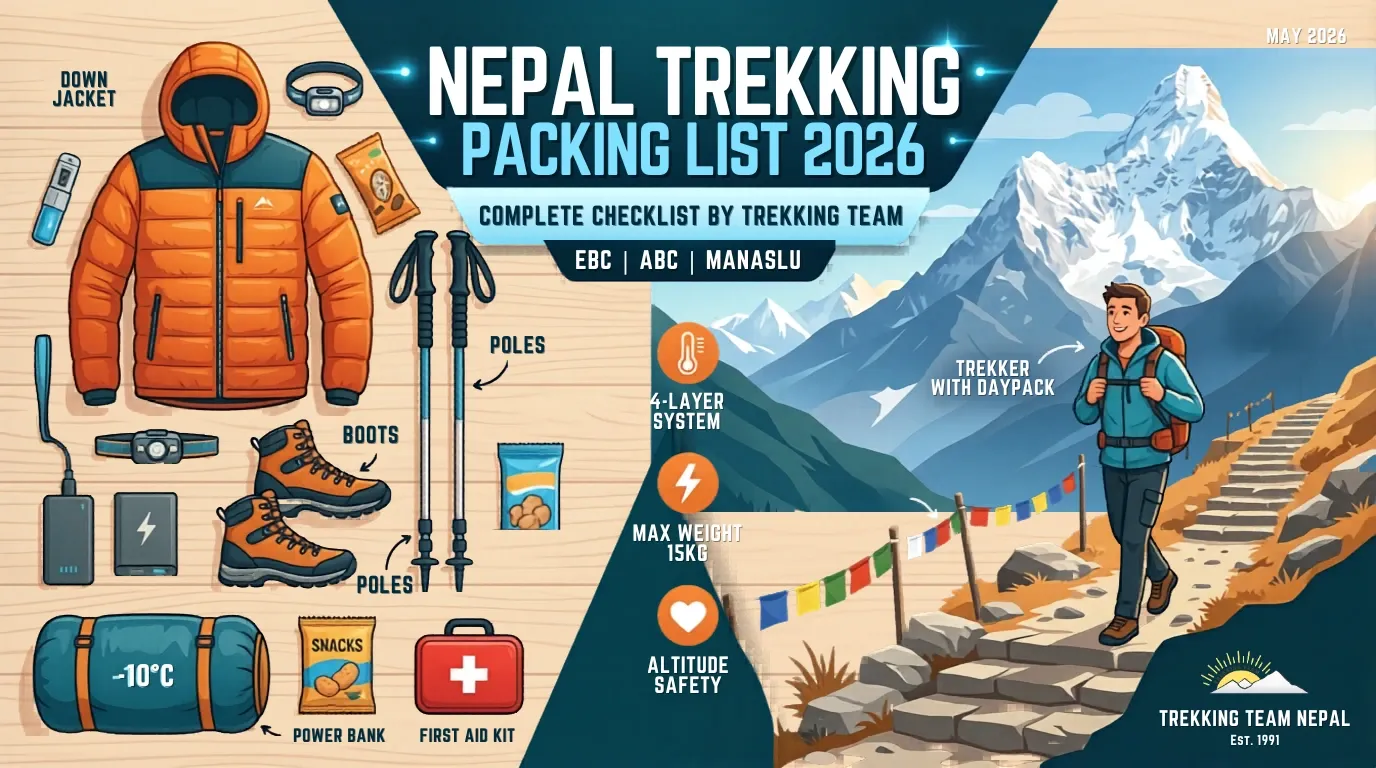
My advice: Don’t just run on a flat treadmill. Find a hill or a set of stairs, put on your hiking boots and a weighted backpack, and start walking. It’s about building the endurance to walk for 5–7 hours a day, multiple days in a row. Your future self will thank you.
What’s New for 2026? (The Logistics)
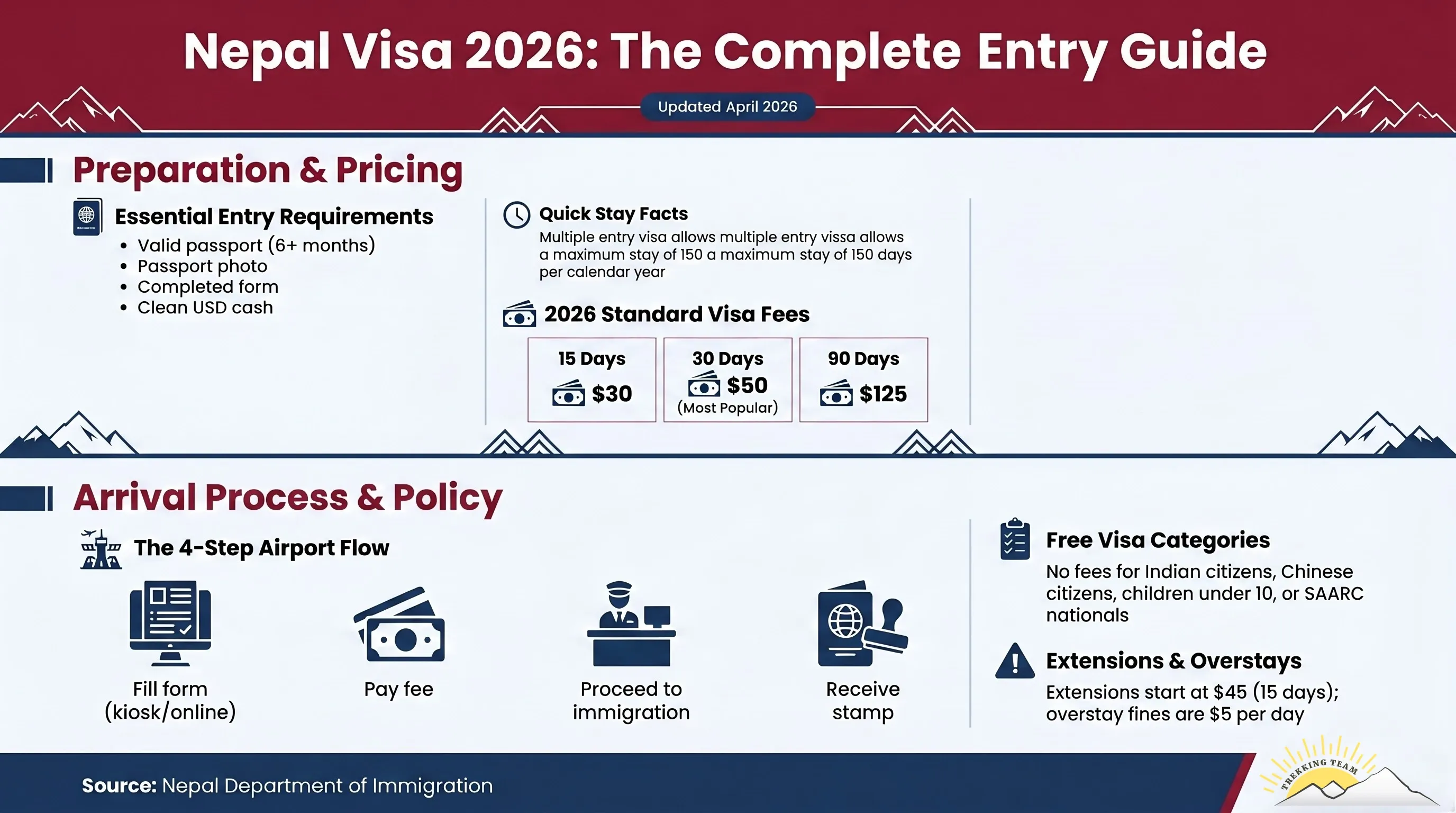
Nepal has updated its trekking rules to keep everyone safe. You’ll hear a lot about TIMS cards and local permits, but don't let the paperwork stress you out.
The biggest change? The government now requires a licensed guide for your safety. At Trekking Team, we see this as a win. Our guides aren't just "navigators"—they are your bridge to the Sherpa culture, your altitude safety net, and often, your new best friends.
The Secret to Reaching the Top: Slow and Steady
The biggest mistake people make is rushing. Altitude doesn't care how fast you are. At Trekking Team, we swear by three simple rules:
- Drink more water than you think you need. (Hydration is your best defense against headaches).
- Eat the Dal Bhat. It’s the local power food for a reason: "Dal Bhat Power, 24 Hour!"
- Listen to your body. If you feel a persistent headache or dizziness, tell your guide. There is no shame in taking an extra rest day in Namche Bazaar.
Let’s Get You to the Khumbu
Planning a trip this big can feel overwhelming. Whether you're worried about the flight into Lukla or what kind of sleeping bag to rent, we’ve spent the last 30 years answering these exact questions.
At Trekking Team, we don't just book tours; we share our home with you.
Ready to start training?
Browse our 2026 Everest Dates & Itineraries
Real Talk: FAQ
Will I be able to call home?
Mostly, yes! You can buy an "Everest Link" card for Wi-Fi. It’s great for sending a photo to your family, but we always suggest putting the phone away and just soaking in the stars at least once.
What about the Lukla flights?
In peak 2026 seasons, flights often move to Ramechhap (Manthali) to avoid Kathmandu’s air traffic. It means a bit more driving, but it’s a much more reliable way to get to the mountains. We handle all those 3:00 AM transfers so you don't have to.