Annapurna Base Camp Trek 2026: Cost, Itinerary & Permits | ABC Guide
Published by Trekking Team Nepal | Est. 1991 | TAAN Member #1106
📅 April 2026 • ✍️ Trekking Team Editorial • ⏱️ 22 min read
Last Updated: April 27, 2026 | This guide is reviewed and updated monthly.
Sources: Permit fees verified April 2026 against NTNC official e-permit portal. Altitude physiology references from Himalayan Rescue Association clinical guidelines. Regulations from Nepal Tourism Board and TAAN. Weather data reflects NTB 2020-2025 averages. Trail conditions and operational details reflect what our guides observe on the ground as of April 2026.
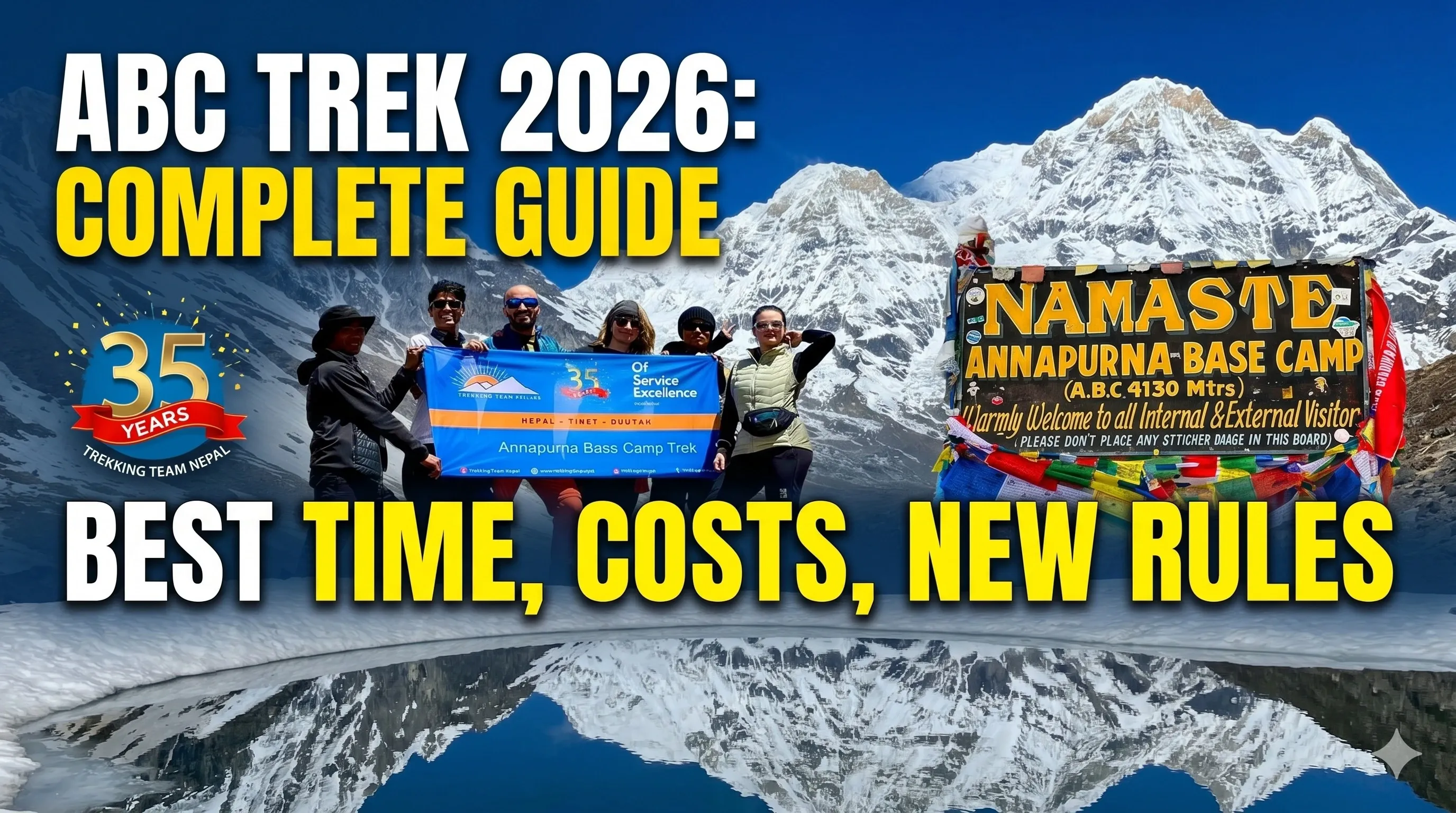
Annapurna Base Camp Trek (ABC): A 7 to 12 day trekking route in Nepal reaching 4,130 m at the foot of Annapurna I (8,091 m). Known for diverse landscapes spanning subtropical forest to glacial amphitheatre, full teahouse infrastructure, and non-technical difficulty. Considered one of the best beginner Himalayan treks. Also called the Annapurna Sanctuary trek.
What is the Annapurna Base Camp trek? The Annapurna Base Camp trek (also called the ABC trek or Annapurna Sanctuary trek) is a 7 to 12 day journey to 4,130 metres at the foot of Annapurna I (8,091 m), the world's 10th highest mountain. The trail passes through subtropical forest, terraced farmland, Gurung and Magar villages, and dense rhododendron forest before opening into a glacial amphitheatre surrounded by peaks on every side. The ABC trek is NOT a technical climb. It requires no ropes, crampons, or mountaineering experience. It is NOT recommended during monsoon (June-August). It does NOT require a Lukla flight. It is widely considered the best first Himalayan trek.
🔔 2026 Update (April): Nepal eased solo trekking rules for restricted areas in March 2026, but this does NOT affect the ABC trek. The mandatory licensed guide rule still applies to all Annapurna trekkers as of April 2026. ACAP permit fees remain NPR 3,000 (increased from NPR 2,000 in September 2024). TIMS is inconsistently enforced as of April 2026 - some checkpoints check it, others do not. Official Nepal Tourism Board guidance still lists it. Trekkers should verify current requirements before travel.
Experienced ABC guides consistently note that this trail rewards preparation more than fitness. The stepped descents between Chhomrong and Bamboo challenge even seasoned trekkers, while the altitude at 4,130 m is manageable for most healthy adults. In an April 2025 TripAdvisor review, a client described guide Bijay as "not just the best guide in Nepal, but the best I've had on any trip in my life," noting his deep knowledge of both the mountains and medical care.
This guide is written from operational experience on the ABC trail since 1991, not from other blogs or a single trip report.
In This Guide
- At a Glance
- Part 1: Why the ABC Trek?
- Part 2: Day-by-Day Itinerary (10 Days)
- Part 3: Best Time to Trek
- Part 4: Permits and Regulations 2026
- Part 5: Cost Breakdown 2026
- Part 6: Difficulty, Fitness, and Altitude
- Part 7: Training Plan
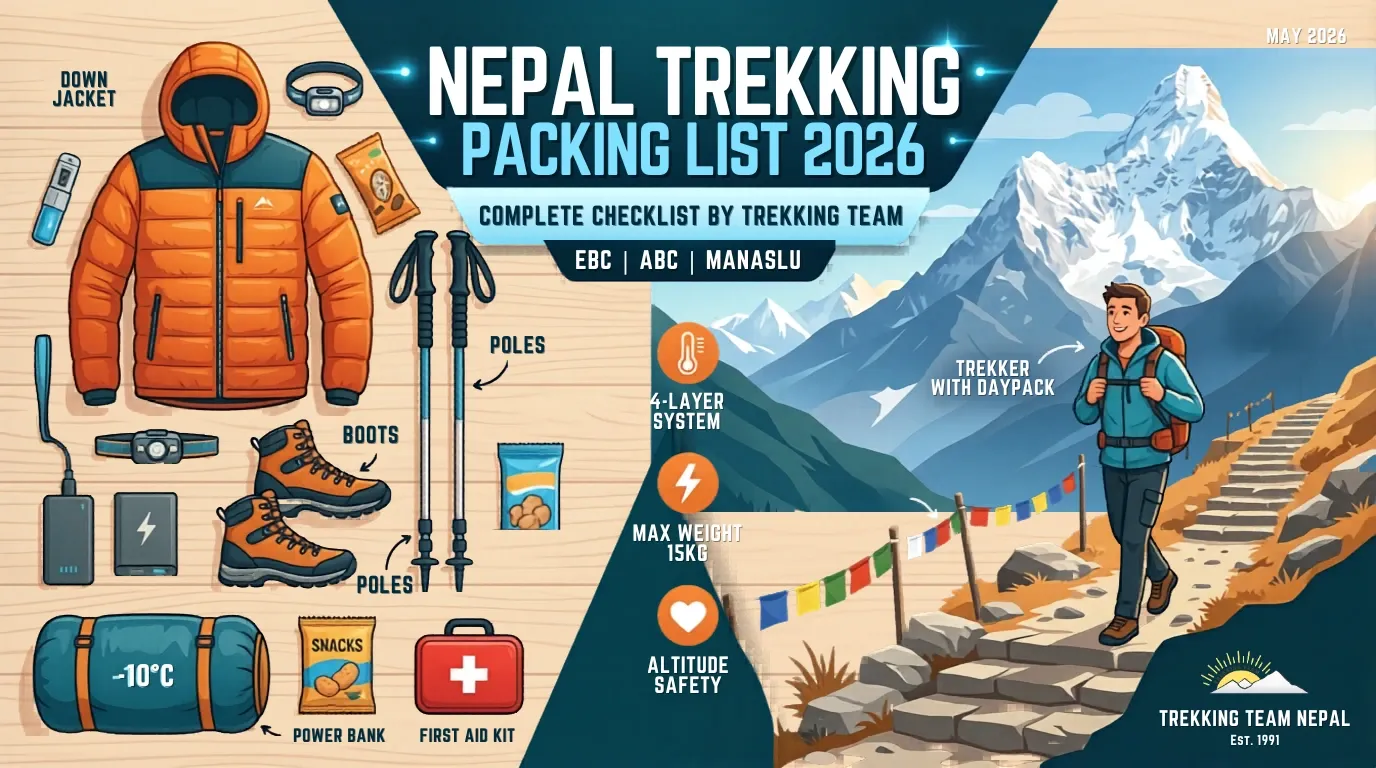
- Part 8: What to Pack
- Part 9: Teahouse Life, Food, and Practical Details
- Part 10: Porter Welfare
- Part 11: What Past Clients Say
- Part 12: Route Variations
- Part 13: Common Myths vs. Reality
- ABC vs Everest Base Camp: Quick Comparison
- Who Should NOT Do the ABC Trek
- 7 Common Mistakes on the ABC Trek
- Is the ABC Trek Right for You?
- Elevation Profile and Route Map
- Part 14: Frequently Asked Questions (25 FAQs)
Annapurna Base Camp Trek at a Glance
| Detail | Information | Source |
|---|---|---|
| Trek distance | ~110 km round trip | GPS-measured route data |
| Duration | 7-12 days trekking (10-14 days total including Pokhara/Kathmandu) | Operational itineraries |
| Max elevation | 4,130 m (Annapurna Base Camp) | NTNC |
| Starting point | Nayapul or Ghandruk (1-2 hour drive from Pokhara) | No flight required |
| Difficulty | Moderate (stepped trails are the challenge, not altitude) | 34 years of client feedback |
| Technical skills | None. No climbing, no ropes, no equipment beyond trekking gear | |
| Best months | March, April, October, November | NTB weather data 2020-2025 |
| Accommodation | Teahouses along entire route | |
| Permits (as of April 2026) | ACAP: NPR 3,000 (~USD 22). TIMS: inconsistently enforced. | NTNC |
| Mandatory guide | Yes, since April 2023 | NTB |
| Cost | USD 800 to 2,500 depending on service level | See Part 5 |
| Altitude sickness risk | Low to moderate (max 4,130 m) | HRA |
Part 1: Why the Annapurna Base Camp Trek?
You Stand Inside the Mountains, Not Just Looking at Them
The Khumbu (Everest region) gives you views of mountains from a distance. The Annapurna Sanctuary puts you inside them. When you arrive at ABC, you are standing in a natural amphitheatre at 4,130 metres. Annapurna I (8,091 m) is directly north. Annapurna South (7,219 m) rises to the east. Machapuchare/Fishtail (6,993 m) guards the entrance from the south. Hiunchuli (6,441 m), Gangapurna (7,455 m), and Annapurna III (7,555 m) complete the ring.
Experienced guides on the ABC trail consistently describe the amphitheatre effect: the mountains here are so close you feel like you could reach out and touch Machapuchare. That closeness is what makes ABC fundamentally different from EBC.
🎥 Watch our Annapurna region documentary on YouTube to see what this landscape looks like through our camera.
The Landscape Changes Every Day
Unlike the Everest Base Camp trek, which stays in a relatively consistent high-altitude environment from Namche onwards, the ABC trail moves through dramatically different ecological zones each day:
Days 1-2 (1,000-2,000 m): Subtropical farmland. Terraced rice paddies, stone villages, banana plants, and the sound of water buffalo.
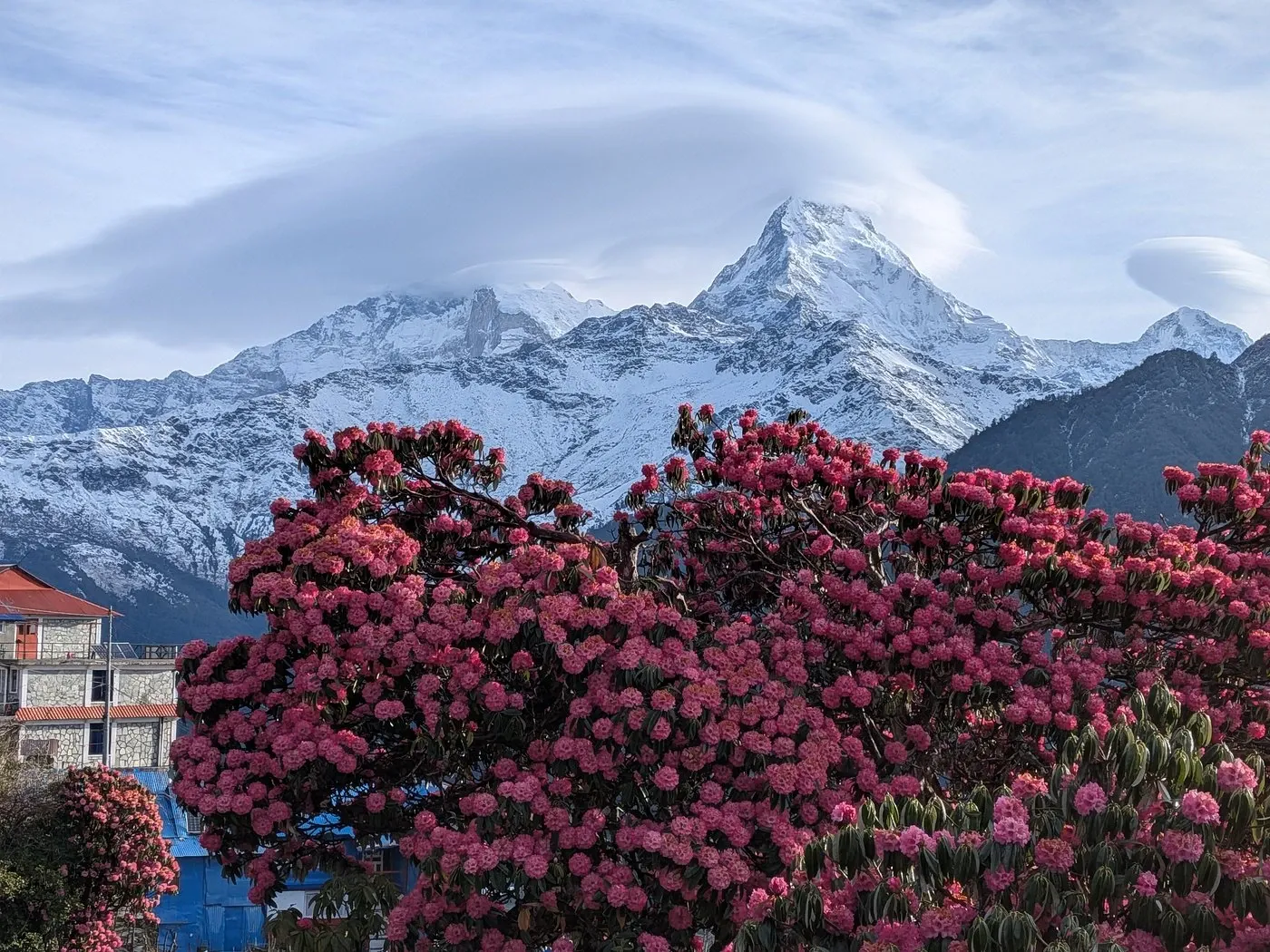
Days 3-4 (2,000-3,000 m): Rhododendron and oak forest. In March and April, the rhododendrons bloom in sheets of red, pink, and white. The forest canopy closes overhead and the trail becomes a tunnel of flowers and birdsong.
Days 5-6 (3,000-3,700 m): Bamboo groves and alpine transition. The forest thins. Waterfalls cascade from the valley walls. Machapuchare appears above the treeline, growing larger with every hour of walking.
Day 7+ (3,700-4,130 m): High alpine. Rock, ice, moraines. The amphitheatre opens. The world shrinks to just you, the trail, and the ring of peaks.
Multi-Ethnic Cultural Immersion
The ABC trail passes through the homelands of three distinct ethnic communities:
Gurung villages (Ghandruk, Chhomrong, Landruk): Stone houses with slate roofs, prayer flags, Buddhist monasteries, and the warm hospitality of a community famous for its Gurkha military tradition.
Magar settlements (lower trail sections): A distinct ethnic identity with their own shamanic traditions, cuisine, and architecture. Our shamanism in Nepal guide covers the Magar Jhankri tradition in detail.
Sherpa and Tamang teahouse operators (upper trail): Many higher teahouses are run by families who migrated from the eastern Himalayas.
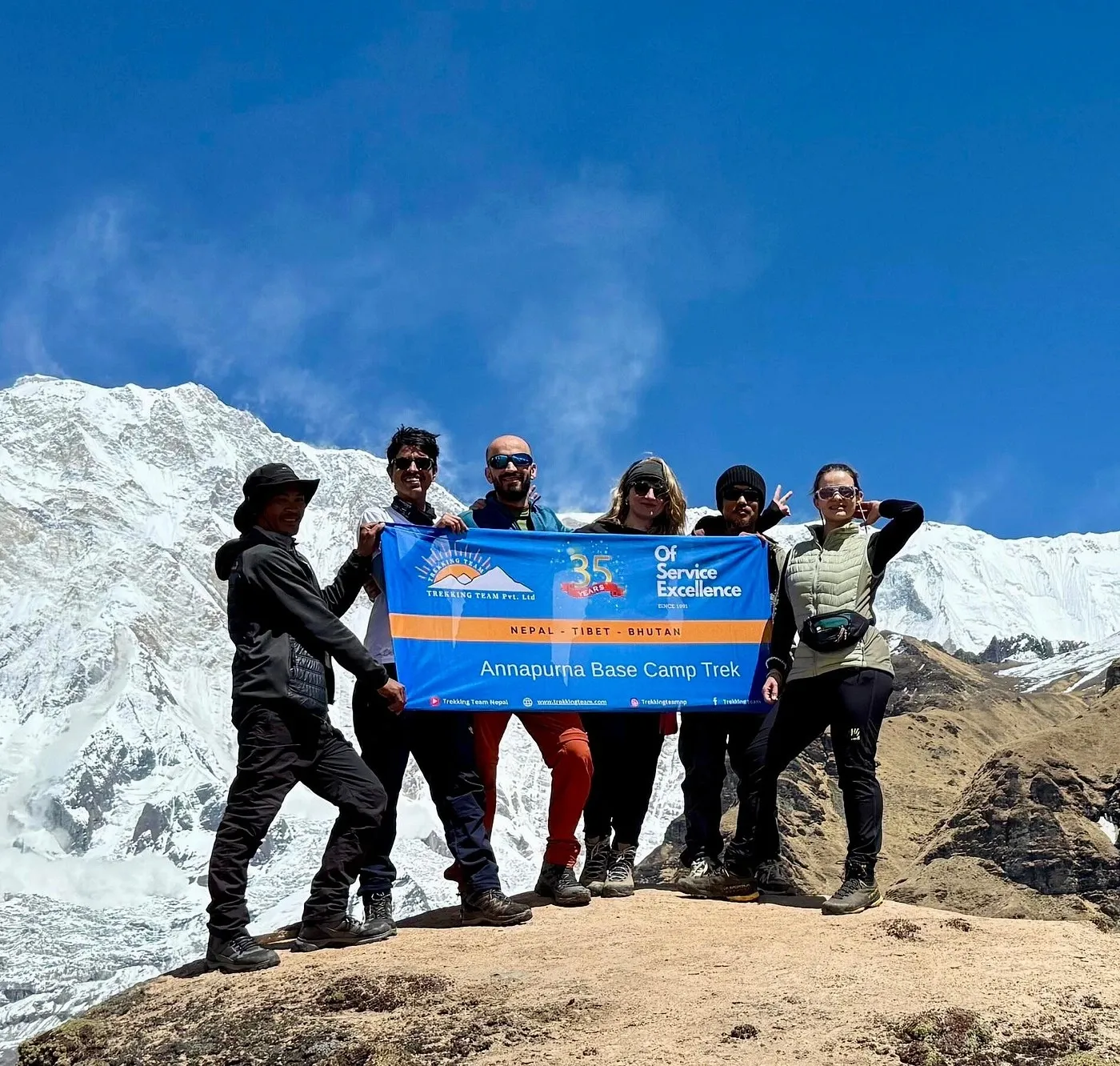
Part 2: Day-by-Day Itinerary (10 Days)
Our standard 10-day itinerary via the classic Ghandruk route, refined over 34 years. A shorter 7-day direct route and a longer 12-day Poon Hill extension also exist.
Distances and elevation figures are approximate, based on compiled trail data and our guides' experience. Actual distances vary by route variation and trail condition.
Day 1: Pokhara to Nayapul, Trek to Ghandruk (1,940 m)
Drive: 1.5 hours from Pokhara to Nayapul (1,070 m). Permits checked at Birethanti checkpoint.
Trek: 4-5 hours. The trail climbs steadily through terraced farmland and small villages. Rock-cut steps begin at Nayapul and do not stop. Morning light on the terraces is best before 9:00 AM; by 10:30, the valley haze thickens. Most groups start walking by 7:30 AM.
Ghandruk (28.38°N, 83.81°E): One of the most beautiful Gurung villages in Nepal. Stone buildings, narrow lanes, a Buddhist monastery, and sunset views of Annapurna South (7,219 m) and Machapuchare (6,993 m). The Gurung Museum is worth 30 minutes. Afternoon clouds typically build after 1:00 PM, so photograph the peaks in the morning.
~10 km | +870 m | 4-5 hours walking
Day 2: Ghandruk to Chhomrong (2,170 m)
Trek: 5-6 hours. Descend from Ghandruk to the Kimrong Khola river crossing (1,760 m), then climb steeply to Chhomrong. The descent and re-ascent involves thousands of stone steps. Your knees will know they have worked.
Chhomrong: The gateway to the Annapurna Sanctuary. Last large village with a real shop, bakery, and reliable WiFi.
Permit check: Second ACAP checkpoint. Have your permit ready.
~8 km | +410 m (with significant descent and re-ascent) | 5-6 hours walking
Day 3: Chhomrong to Bamboo (2,335 m)
Trek: 4-5 hours. Descend the famous Chhomrong staircase (thousands of stepped paths down to the river) and climb through forest to Bamboo. The trail enters the Modi Khola gorge.
Leech note: In monsoon shoulder months (early October, late May), leeches are present below 2,500 m. Tuck trousers into socks, apply DEET. Above 2,500 m, leeches are rare.
~7 km | -400 m then +565 m | 4-5 hours walking
Day 4: Bamboo to Deurali (3,230 m)
Trek: 5-6 hours. Steady climb through bamboo groves and then alpine vegetation. The valley narrows. Waterfalls appear on the cliffs above. You pass through Himalaya Hotel (2,873 m) and Hinko Cave.
Altitude note (as of April 2026): You are now above 3,000 m. Drink 3-4 litres of water daily. Walk slowly. Report any persistent headache or nausea to your guide immediately. Read about ABC trek altitude sickness symptoms and prevention.
~7 km | +895 m | 5-6 hours walking
Day 5: Deurali to Machapuchare Base Camp (3,700 m)
Trek: 3-4 hours. A shorter day to aid acclimatization. The trail crosses several avalanche-prone zones (clearly marked, your guide assesses conditions). The vegetation disappears.
MBC (28.53°N, 83.87°E): Machapuchare (6,993 m) has never been officially summited and is sacred to the Gurung community. Climbing is prohibited by the Nepal government. But at Machapuchare Base Camp, the Fishtail summit towers directly above you. The sunset view from the teahouse dining room is one of the defining images of the Annapurna region. On clear October evenings, the peak turns pink at approximately 5:45 PM.
~5 km | +470 m | 3-4 hours walking
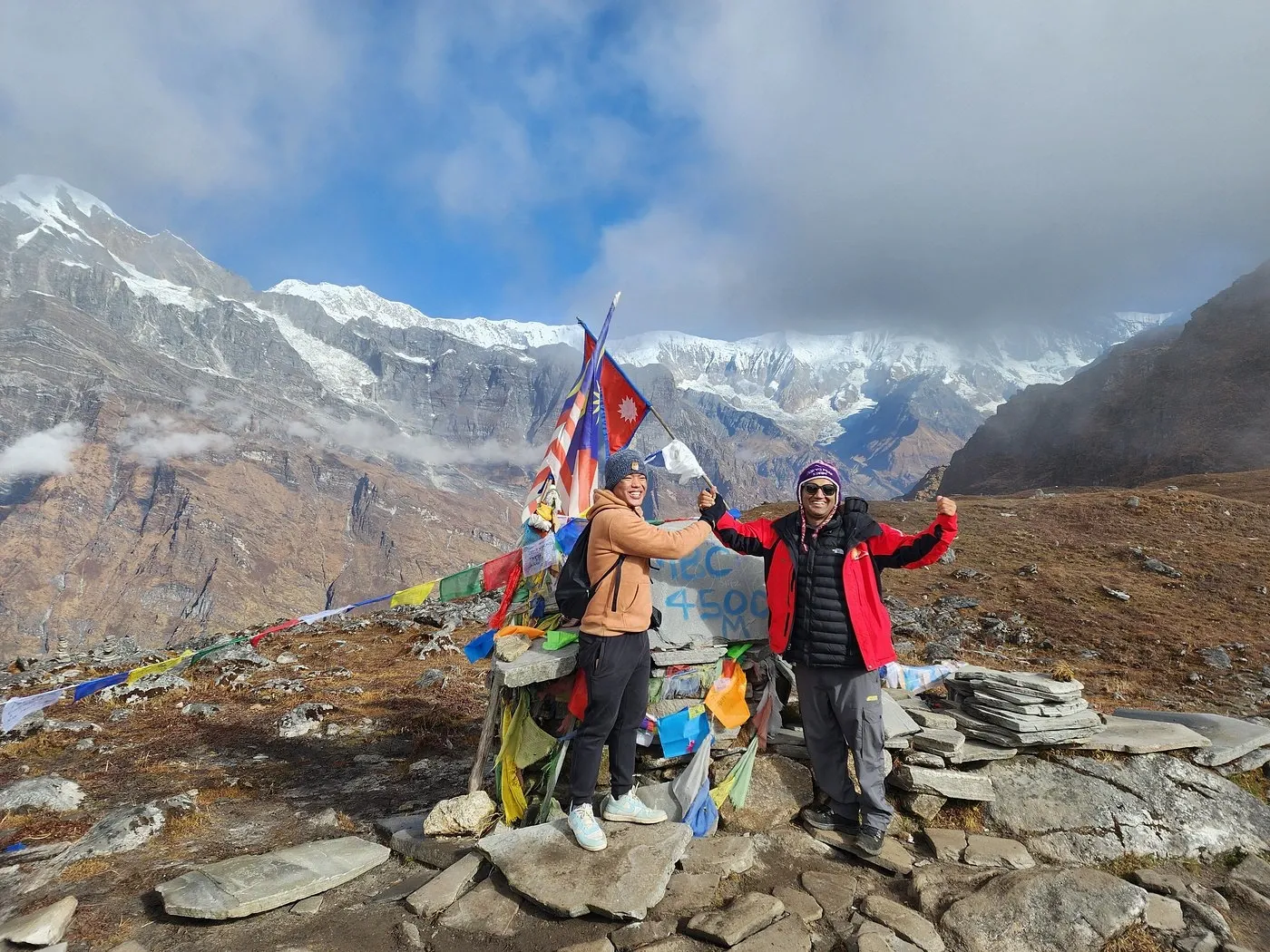
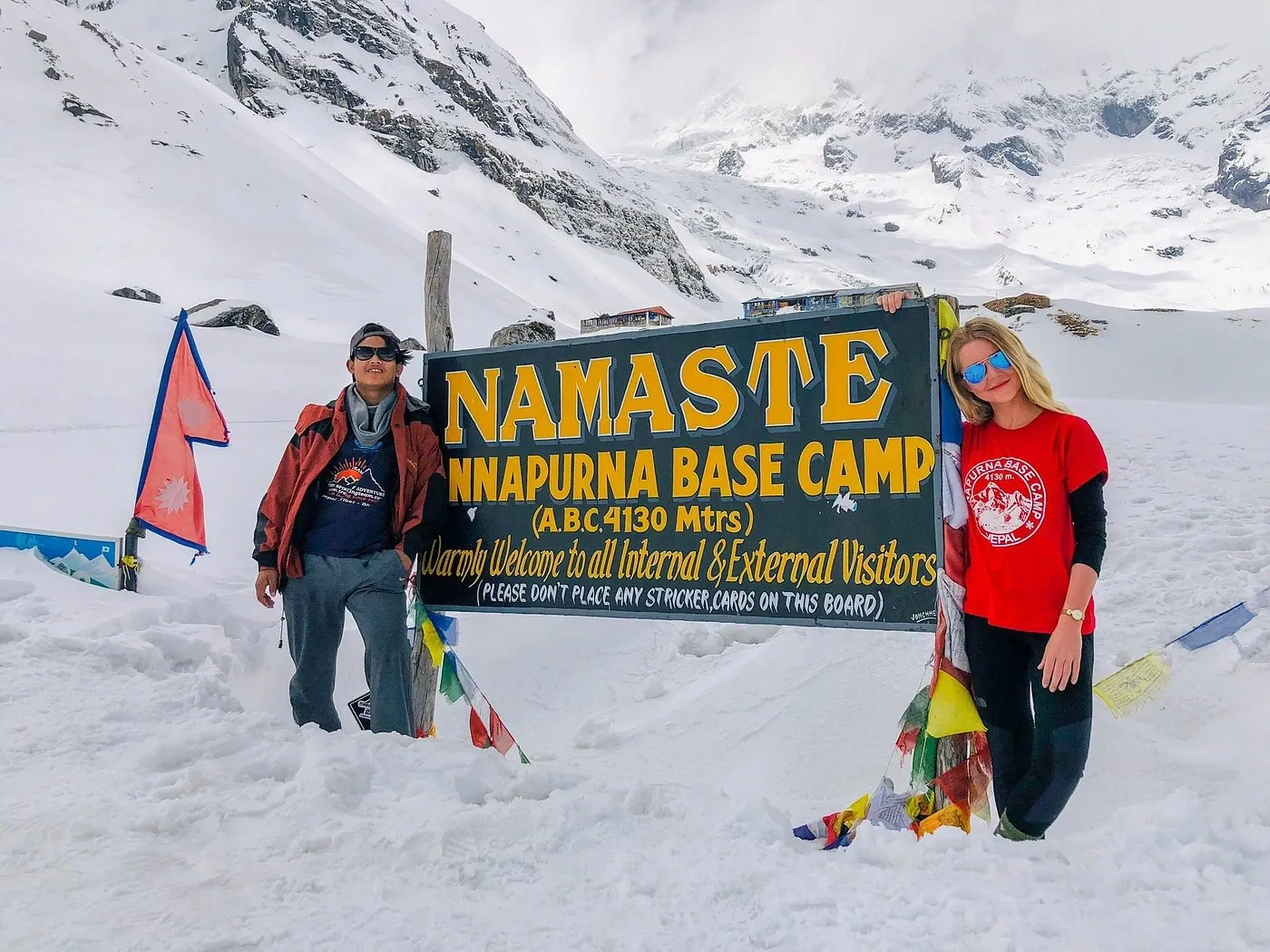
Day 6: MBC to Annapurna Base Camp (4,130 m)
Trek: 2-3 hours. The final push. Gentle, gradual trail across the moraine of the Annapurna Glacier. The amphitheatre opens wider with every step.
The arrival: A natural bowl at 4,130 metres, ringed by 8,000-metre peaks. The feeling is not conquest. It is smallness.
Sunrise: Stay overnight. Set your alarm for 5:00 AM. Watch the first light creep down Annapurna South, turning the ice from blue-grey to pink to blazing orange-gold.
~4 km | +430 m | 2-3 hours walking
Day 7: ABC to Bamboo (2,335 m)
Trek: 6-7 hours. Long descent day. Retrace your steps through MBC, Deurali, Himalaya Hotel, and down to Bamboo. Trekking poles are essential for the descent.
Bijay makes sure every group leaves ABC after sunrise: "The morning light on Annapurna I is different from the evening light. You get both if you sleep at ABC and leave after dawn."
~16 km | -1,795 m | 6-7 hours walking
Day 8: Bamboo to Jhinu Danda (1,780 m)
Trek: 4-5 hours via the alternative route to Jhinu Danda (avoids re-climbing the Chhomrong staircase).
Jhinu hot springs: Natural hot springs on the Modi Khola riverbank. Entry: NPR 100. After 6 days of trekking, this is the reward your body has earned.
~8 km | -555 m | 4-5 hours walking
Day 9: Jhinu Danda to Nayapul, Drive to Pokhara
Trek: 3-4 hours downhill to Nayapul. Vehicle for the 1.5-hour drive back to Pokhara. Lakeside hotel. Hot shower. Views of Machapuchare reflected in Phewa Lake.
~8 km | -710 m | 3-4 hours walking + 1.5 hour drive
Day 10: Pokhara to Kathmandu
Fly (25 minutes, weather permitting) or drive (6-7 hours) to Kathmandu.
Part 3: Best Time for the ABC Trek
| Month | Daytime Temp (ABC) | Trail Condition | Views | Crowds | Rating |
|---|---|---|---|---|---|
| January | -5 to 5°C | Cold, possible snow above 3,500 m | Clear | Very few | ★★☆☆☆ |
| February | -3 to 8°C | Cold, improving | Clear | Few | ★★★☆☆ |
| March | 0 to 10°C | Excellent, rhododendrons beginning | Good, some haze | Moderate | ★★★★☆ |
| April | 3 to 15°C | Excellent, peak rhododendron bloom | Good | Busy | ★★★★★ |
| May | 5 to 18°C | Warm, pre-monsoon clouds building | Variable, hazier | Fewer crowds than April | ★★★☆☆ |
| June-Aug | 8 to 15°C | Monsoon. Heavy rain, leeches, landslide risk | Poor | Almost none | ★☆☆☆☆ |
| September | 5 to 12°C | Monsoon ending, trails clearing | Improving | Few | ★★★☆☆ |
| October | 3 to 12°C | Excellent, post-monsoon clarity | Crystal clear | Peak crowds | ★★★★★ |
| November | 0 to 8°C | Excellent, cold but stable | Very clear | Moderate | ★★★★★ |
| December | -5 to 5°C | Cold, possible snow, some teahouses close | Clear | Very few | ★★☆☆☆ |
Weather data: NTB averages 2020-2025.
Our recommendation: October delivers the clearest skies and sharpest views but also the biggest crowds. April is best for rhododendron bloom. November offers October-quality visibility with fewer trekkers. March is underrated. May is a legitimate option for trekkers who prefer quiet trails and accept hazier afternoon views.
Monsoon warning: The ABC trail is NOT recommended June to August. The Annapurna region receives approximately 4,000 mm of annual rainfall, most during monsoon. For monsoon trekking, consider rain-shadow routes like Upper Mustang or Dolpo.
Part 4: Permits and Regulations 2026
ACAP (Annapurna Conservation Area Permit): NPR 3,000 (~USD 22) for foreign nationals. NPR 1,000 for SAARC nationals. Children under 10 free. Mandatory. Checked at Birethanti and Chhomrong. Obtain online at epermit.ntnc.org.np or in person in Kathmandu (NTNC, Jawalakhel) or Pokhara (Tourist Service Centre, Damside). Fee increased from NPR 2,000 to NPR 3,000 in September 2024. Verified April 2026 against NTNC e-permit portal.
TIMS: Inconsistently enforced as of April 2026. Some operators and trekkers report that trail checkpoints in the Annapurna region verify only the ACAP permit. Others report TIMS or "e-TIMS" is still checked. Official Nepal Tourism Board guidance continues to list TIMS. Nepal's permit system has been in active transition since 2023, and enforcement varies by checkpoint and date. Recommendation: obtain the ACAP permit (mandatory), carry it printed, and carry NPR 2,000 in reserve cash in case TIMS is requested. See the Annapurna permit cost and Nepal trekking regulations 2026 guide for the latest across all regions.
Licensed guide: Mandatory since April 2023. All foreign trekkers must hire a licensed guide through a TAAN-registered agency. Enforced. Source: NTB. Solo trekking update.
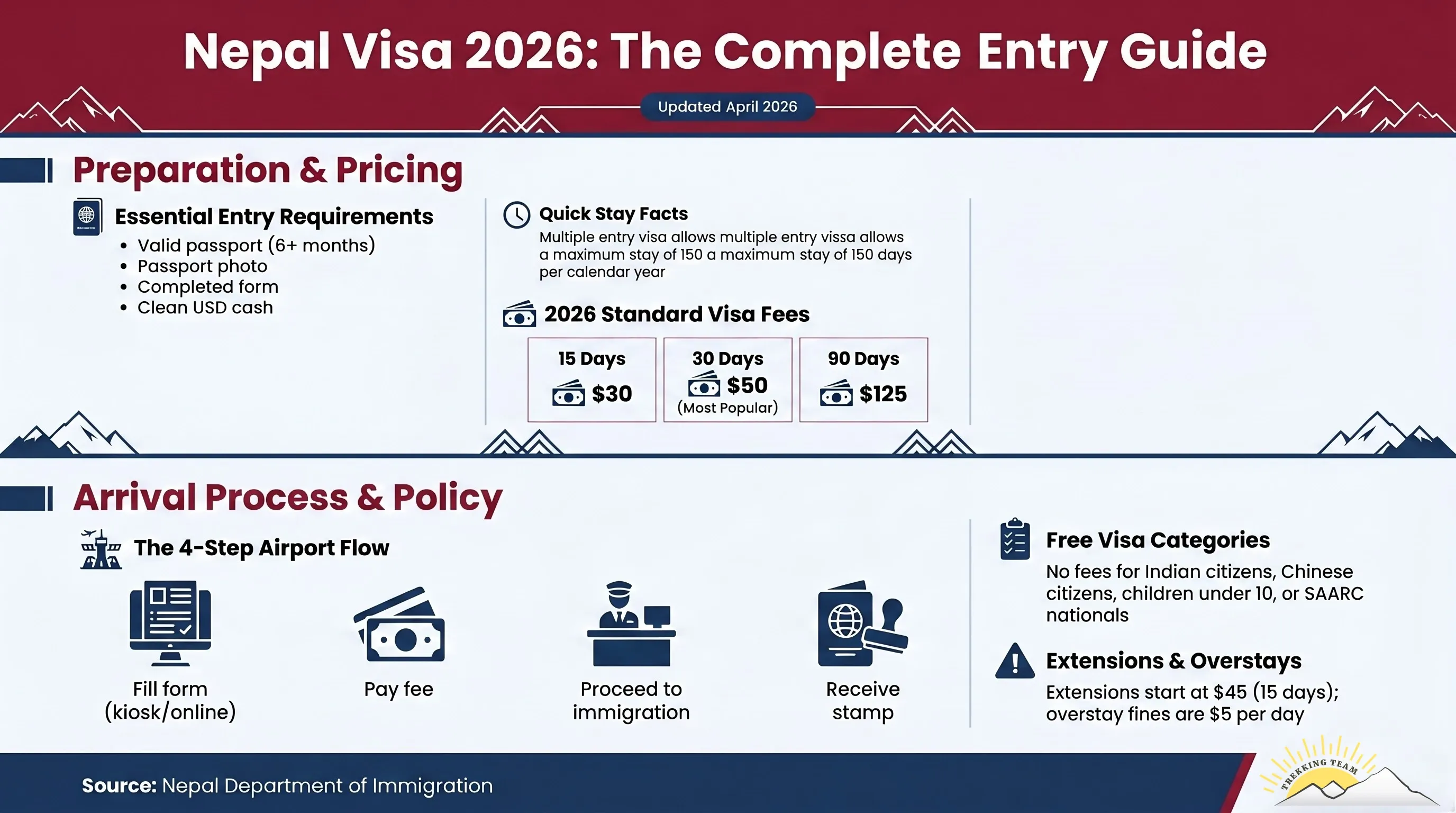
Nepal visa: Required before all of the above. See our 2026 Nepal visa guide.
Part 5: Cost Breakdown 2026
| Cost Component | Budget | Standard | Comfort |
|---|---|---|---|
| Transport (Pokhara-Nayapul return) | USD 15-20 (bus) | USD 30-50 (jeep) | USD 80-120 (private) |
| ACAP permit | USD 22 | USD 22 | USD 22 |
| Guide (10 days) | USD 300-350 | USD 300-350 | USD 300-350 |
| Porter | USD 200-250 | USD 200-250 | USD 200-250 |
| Teahouse accommodation | USD 3-5/night | USD 5-15/night | USD 20-50/night |
| Meals on trek | USD 12-20/day | USD 18-30/day | USD 25-40/day |
| Pokhara hotel (2-3 nights) | USD 10-15/night | USD 30-60/night | USD 80-150/night |
| Kathmandu hotel (2-3 nights) | USD 15-25/night | USD 40-80/night | USD 100-200/night |
| Kathmandu-Pokhara transport | USD 10 (bus) | USD 35-50 (tourist bus) | USD 100-150 (flight) |
| Gear rental (sleeping bag) | USD 20-30 | USD 20-30 | Included |
| Travel insurance | USD 80-120 | USD 80-120 | USD 80-120 |
| Tips (guide + porter) | USD 80-150 | USD 120-250 | USD 200-350 |
| Total per person | USD 800-1,200 | USD 1,200-2,000 | USD 2,000-3,500 |
Prices reflect April 2026 market data. Actual package prices vary by group size, season, and services. Contact us for exact pricing.
Why ABC is cheaper than EBC: No Lukla flight (USD 300-350 saved), shorter duration, lower food prices at lower altitude. Full EBC vs ABC cost comparison.
Part 6: Difficulty, Fitness, and Altitude
The Real Challenge: Stepped Trails, Not Thin Air
Every guide says ABC is "moderate." That is correct but incomplete. The specific challenge is not altitude (4,130 m is manageable for most people). The challenge is thousands of stone and rock-cut steps.
The trail between Nayapul and Chhomrong involves relentless stepped paths. The Chhomrong descent alone involves thousands of steps down to the river, followed by a steep climb back up. Your quadriceps and knees take a beating that altitude-focused training does not prepare you for.
One experienced guide's advice to every client before the trek: "If you can only do one thing to prepare, walk up and down real stairs with a backpack. Twenty floors up, twenty floors down. Three times a week for a month."
Altitude: Lower Risk, Not Zero Risk
The ABC trek maxes out at 4,130 m, which is 1,434 m lower than EBC (5,545 m). Most trekkers do not require a formal acclimatization day because the ascent is gradual.
But "lower risk" is not "no risk." Acute Mountain Sickness can occur above 2,500 m, according to the Himalayan Rescue Association. Reputable operators carry pulse oximeters and monitor blood oxygen from Deurali (3,230 m) onwards. Any reading of SpO2 below 80% at rest should trigger immediate descent protocol. Complete altitude sickness guide.
In Katarzyna's TripAdvisor review, she specifically noted that guide Bijay had "deep knowledge of medical care." This level of medical competence in guides is what separates professional operators from budget agencies on the ABC trail, where altitude-related illness, while uncommon, does occur.
Part 7: Training Plan
| Week | Stair Training | Cardio | Long Hike |
|---|---|---|---|
| 6 weeks out | 20 min with 5 kg pack, 2x/week | 30 min run/cycle, 2x/week | 3-hour hike |
| 4 weeks out | 30 min with 6 kg pack, 3x/week | 45 min, 3x/week | 4-hour hike with elevation |
| 2 weeks out | 45 min with 8 kg pack, 3x/week | 45 min, 3x/week | 5-hour hike, hilly terrain |
| Week of trek | Tapering, 20 min easy walks | Light only | Rest |
Key insight: Train downhill, not just uphill. Descending thousands of rock-cut steps destroys untrained knees far more than climbing them.
Part 8: What to Pack
| Item | Why It Matters on ABC Specifically |
|---|---|
| Trekking poles | Non-negotiable for the stepped descents. Your knees need them. |
| Sleeping bag (-5 to -10°C) | Teahouse blankets thin above Bamboo. Not as cold as EBC, but still cold at 4,130 m |
| Waterproof jacket + pack cover | The Annapurna region is wet. Even in October, afternoon showers happen below 3,000 m |
| Leech socks or gaiters | If trekking in shoulder months (May, early October). Not needed November-March |
| Knee support/brace | For the stepped descents. Even experienced trekkers use them on the Chhomrong section |
| Quick-dry layers | Humidity is higher than in the Everest region. Cotton stays wet |
| Trekking umbrella | Used by every Nepali porter and guide. Surprisingly effective |
| Power bank (10,000 mAh minimum) | Charging costs NPR 200-500 at teahouses and availability decreases with altitude |
| Cash (NPR 25,000-35,000) | Last ATM is in Pokhara at Lakeside. No ATMs on the trail. |
| Toilet paper + hand sanitiser | Western flush toilets below Chhomrong, squat toilets above, basic facilities at ABC |
| Water purification (SteriPen, Aquatabs, or Lifestraw) | Bottled water rises from NPR 100 (Pokhara) to NPR 400 (ABC). Purify and refill instead |
| Sandals/camp shoes | For Jhinu hot springs and teahouse evenings |
Part 9: Teahouse Life, Food, and Practical Details
Accommodation by Altitude
Ghandruk to Chhomrong (1,940-2,170 m): Comfortable rooms with twin beds, thick blankets, attached or shared bathrooms. Hot showers. WiFi. Menus include dal bhat, pasta, pizza, pancakes, baked goods.
Chhomrong to Deurali (2,170-3,230 m): Simpler. Plywood walls, foam mattresses, shared squat toilets. Hot showers available (NPR 300-500). WiFi spotty. Menus narrow to dal bhat, noodle soup, fried rice, chapati, eggs.
Deurali to ABC (3,230-4,130 m): Basic. Cold rooms, no showers. Limited solar electricity. Minimal menus. Expensive water. At ABC, the teahouse has a communal dining room where trekkers gather around a single stove.
Food tip: Eat dal bhat. Rice, lentil soup, vegetables, pickles. Unlimited refills at most teahouses. Your body needs 3,500-4,500 calories per day. Dal bhat delivers. Vegetarian options are available at every teahouse. Vegan is manageable (dal bhat without ghee, noodle soup, chapati). Gluten-free is more difficult but possible with rice-based meals.
Phone Signal and WiFi
NCELL has the best mobile coverage on the ABC trail, working reliably up to Machapuchare Base Camp (3,700 m). NTC coverage is weaker above Chhomrong. Buy a SIM in Kathmandu or Pokhara for approximately NPR 1,500 with a data package. WiFi is available at most teahouses from Ghandruk to Deurali, costing NPR 100-500 per session. Above Deurali, connectivity is unreliable. At ABC, do not count on phone signal or WiFi.
Charging
| Location | Charging Fee |
|---|---|
| Ghandruk / Chhomrong | NPR 200-300 per device |
| Bamboo / Himalaya Hotel | NPR 300-400 per device |
| Deurali | NPR 400-500 per device |
| MBC / ABC | NPR 500+ per device (when available) |
Bring a power bank. A 10,000 mAh bank will last the entire trek if you manage usage.
Drinking Water
Bottled water prices escalate with altitude: NPR 100 in Pokhara, NPR 150 at Chhomrong, NPR 250 at Deurali, NPR 400 at ABC. This adds up fast and creates plastic waste. Use purification tablets (Aquatabs), a SteriPen, or a Lifestraw. Most teahouses sell refilled boiled water for NPR 50-100 per litre.
Toilets (Honest)
Western flush toilets at teahouses below Chhomrong. Squat toilets from Chhomrong onwards. Basic hole-in-floor facilities at ABC. Carry your own toilet paper and hand sanitiser. Some teahouses charge NPR 20-50 for toilet use.
Part 10: Porter Welfare
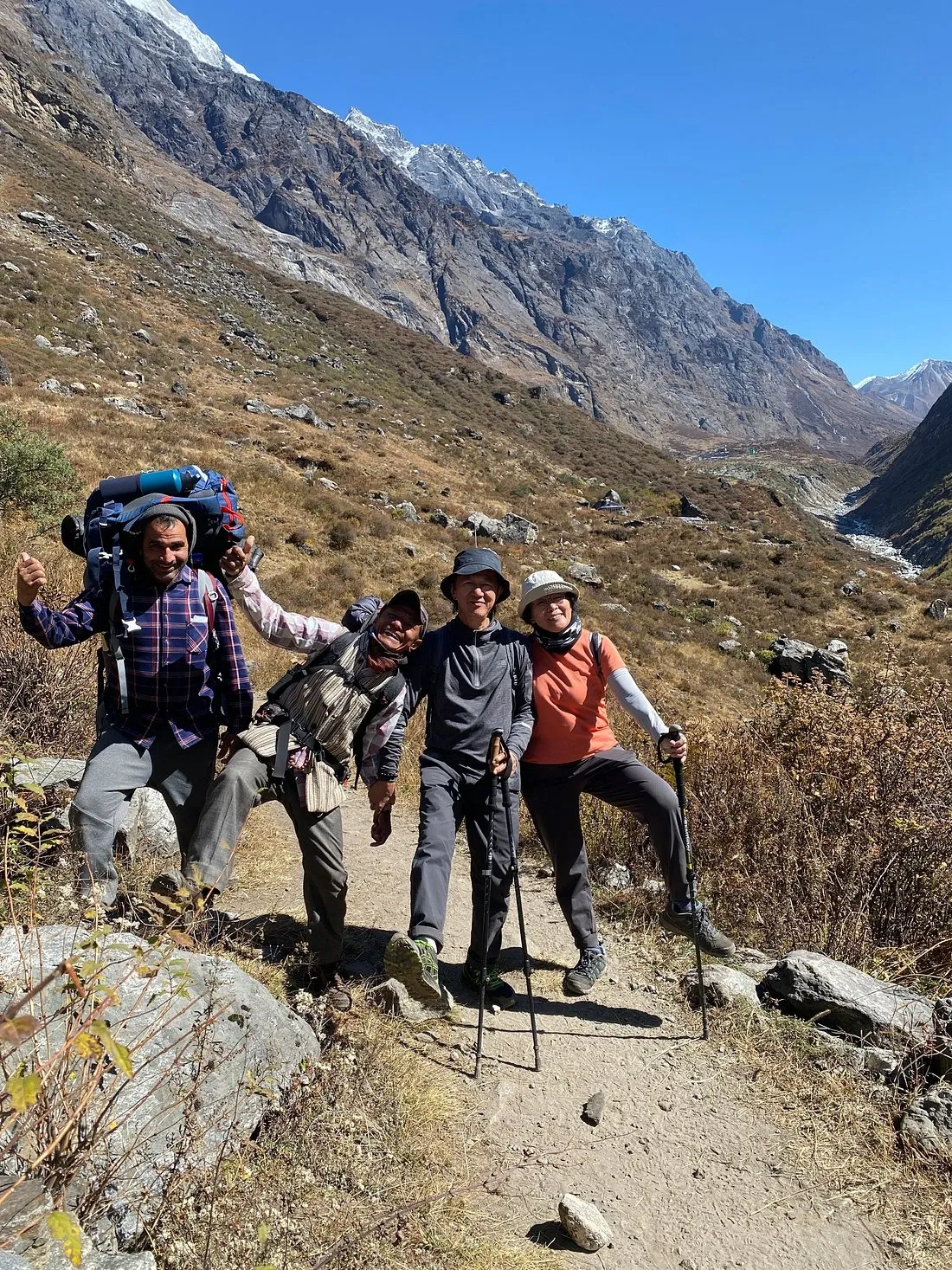
The people who carry trekkers' gear deserve the same section as the views. Responsible operators are members of PPGI and KEEP. Here is what ethical porter employment looks like:
What porters should receive on every ABC trek:
- Wages above TAAN-recommended minimums
- Comprehensive insurance covering injury, illness, and helicopter evacuation
- Proper clothing and equipment provided by the operator
- Maximum load: 25 kg, enforced
- Same quality meals as guides and clients
- Indoor accommodation always
Why this matters on the ABC trail: The stepped paths between Chhomrong and Bamboo are punishing with a heavy load. In Katarzyna's review, porters Saroj and Temba did not just carry bags. Temba led at the front while Saroj stayed at the back to ensure nobody was left behind on the steep sections. That is what professional portering looks like. When choosing an operator, ask about their porter policy. If they cannot answer specifically, choose someone else.
Great Mountain Cleanup Project launches July 2026 across the Annapurna corridor. Clients who trek with us directly support cleaner trails.
Part 11: What Past ABC Clients Say
Katarzyna B., April 2025, ABC Trek with Friends (3 trekkers, 1 guide, 2 porters):
"This trek to Annapurna Base Camp has been truly unforgettable. The trip was organized by Trekking Team, a company that provided us with excellent support. They took great care of us and treated us to delicious traditional Nepalese meals.
Our porters, Saroj and Temba, did far more than just help us with the weight of our bags. On some of the tougher trekking sections, Temba would lead at the front while Saroj stayed at the back to ensure no one was left behind.
We were also very fortunate to have Bijay as our guide. In my opinion, he's not just the best guide in Nepal, but the best I've had on any trip in my life. His deep knowledge of the mountains, trekking routes, and even medical care was invaluable."
Read the full review on TripAdvisor →
Read all Trekking Team reviews →
Part 12: Route Variations
Short Route (7 days): Nayapul direct to Chhomrong via Modi Khola valley. Skips Ghandruk. Faster but more demanding with longer daily hours.
Classic + Poon Hill (12-14 days): Adds Ghorepani-Poon Hill before joining the ABC trail at Chhomrong. Poon Hill (3,210 m) offers panoramic sunrise views of Dhaulagiri, Annapurna I, and Machapuchare. Recommended for the complete experience. This route allows a loop so you see different scenery going up and down.
ABC + Mardi Himal (14-16 days): Combine with the Mardi Himal Yoga Trek. Two valleys, two perspectives on the same range.
🎥 Watch our Mardi Himal documentary on YouTube
Part 13: Common Myths vs. Reality
Common myth: "TIMS card is required for ABC." Reality: TIMS has not been enforced at Annapurna trail checkpoints in our recent experience (as of April 2026). Only ACAP is checked. However, Nepal's permit system is in transition, so we recommend carrying ACAP and reserve cash. Full 2026 permit guide.
Common myth: "ACAP costs NPR 2,000." Reality: The fee increased to NPR 3,000 in September 2024. Verified April 2026 against NTNC e-permit portal.
Common myth: "Solo trekking is fine if you are experienced." Reality: Since April 2023, all foreign trekkers must hire a licensed guide. This is enforced. Solo trekking update.
Common myth: "The ABC trek is easy." Reality: The altitude is manageable. The stepped trails are genuinely demanding. Calling it "easy" misleads trekkers who have not trained their legs for thousands of rock-cut steps.
Common myth: "You can get permits on the trail." Reality: No. There are no permit offices at Nayapul, Ghandruk, or Chhomrong. Without a valid ACAP at Birethanti, you will be turned back.
ABC vs Everest Base Camp: Quick Comparison
| Factor | ABC Trek | EBC Trek |
|---|---|---|
| Max altitude | 4,130 m | 5,545 m (Kala Patthar) |
| Duration | 7-12 days | 12-14 days |
| Total trip days | 10-14 | 16-18 |
| Flight required? | No (drive from Pokhara) | Yes (Lukla flight) |
| Cost (standard) | USD 1,200-2,000 | USD 2,200-3,000 |
| Altitude sickness risk | Low-moderate | Significant |
| Terrain challenge | Steep stepped trails | Rocky moraine at altitude |
| Best for beginners? | Yes | With preparation |
| Cultural diversity | Multi-ethnic (Gurung, Magar, Sherpa) | Primarily Sherpa |
| Landscape variety | High (forest to glacier) | Moderate (high-altitude throughout) |
| Signature view | 360-degree amphitheatre | Kala Patthar sunrise over Everest |
For the full data-driven comparison, read the ABC vs Everest Base Camp difficulty, cost, and altitude comparison.
Who Should NOT Do the ABC Trek
Not every trek is right for every person. The ABC trek is not recommended for:
People with serious knee problems. The thousands of rock-cut steps between Chhomrong and Bamboo involve sustained impact on the knee joints, particularly during descent. If you have a diagnosed knee condition (torn meniscus, advanced arthritis, recent ACL surgery), consult your doctor before booking.
People who cannot walk 5-6 hours per day for multiple consecutive days. The itinerary requires 4-7 hours of walking on 7-9 consecutive days. There are no rest days built into the standard ABC route (unlike EBC, which has two acclimatization days). If you cannot sustain daily walking at this level, consider a shorter trek like Poon Hill (4-5 days).
People travelling during monsoon (June-August) without specific rain-shadow planning. The Annapurna region receives approximately 4,000 mm of annual rainfall, mostly during monsoon. Trails flood, landslides close paths, and leeches are heavy. For monsoon trekking, consider rain-shadow routes instead.
People expecting luxury accommodation above Chhomrong. Teahouses above Chhomrong are basic: plywood walls, squat toilets, no showers above Deurali, limited electricity. If you require hot showers and private bathrooms every night, the upper sections of this trek will not meet your expectations.
7 Common Mistakes on the ABC Trek
1. Not training for stairs. The #1 mistake. Trekkers train cardio on flat roads and arrive unprepared for thousands of rock-cut steps. Train on real stairs with a backpack for at least 4-6 weeks.
2. Choosing a 15-day Nepal visa instead of 30-day. The extra USD 20 is cheap insurance. Weather delays and itinerary adjustments happen regularly. A visa extension costs USD 45 minimum and wastes half a day at an immigration office. Nepal visa guide 2026.
3. Not carrying a printed ACAP permit. Digital copies are not accepted at most checkpoints. Birethanti and Chhomrong staff require printed originals.
4. Wearing cotton. The Annapurna region is humid between 1,000-3,000 m. Cotton absorbs moisture and does not dry. Synthetic or merino wool base layers are essential.
5. Skipping trekking poles. The stepped descents destroy untrained knees. Poles reduce knee impact by 25-40%.
6. Not bringing enough cash. Last ATM is in Pokhara at Lakeside. Bring NPR 25,000-35,000 minimum. Running out of cash at Deurali with 3 days remaining is a genuine problem.
7. Underestimating the cold above 3,000 m. Pokhara is warm. Ghandruk is comfortable. Then Deurali hits you. Night temperatures drop to -5°C at ABC even in October.
Is the ABC Trek Right for You?
| Choose ABC if... | Choose EBC if... |
|---|---|
| You want a shorter trek (7-12 days) | You want a longer expedition (12-14 days) |
| You prefer lower altitude (4,130 m max) | You want the ultimate altitude challenge (5,545 m) |
| You value diverse landscapes (forest to glacier) | You want high-altitude immersion throughout |
| You enjoy multi-ethnic culture (Gurung, Magar, Sherpa) | You want deep Sherpa Buddhist immersion |
| You want a 360-degree amphitheatre of Himalayan peaks | You want the single most famous mountain view on Earth |
| You prefer no flight (drive from Pokhara) | You want the Lukla flight experience |
| Budget matters (USD 800-2,000) | Budget is flexible (USD 2,200-3,000) |
| This is your first Himalayan trek | Everest is your bucket-list dream |
Still unsure? Read the full ABC vs Everest Base Camp difficulty, cost, and altitude comparison.
Elevation Profile and Route Map
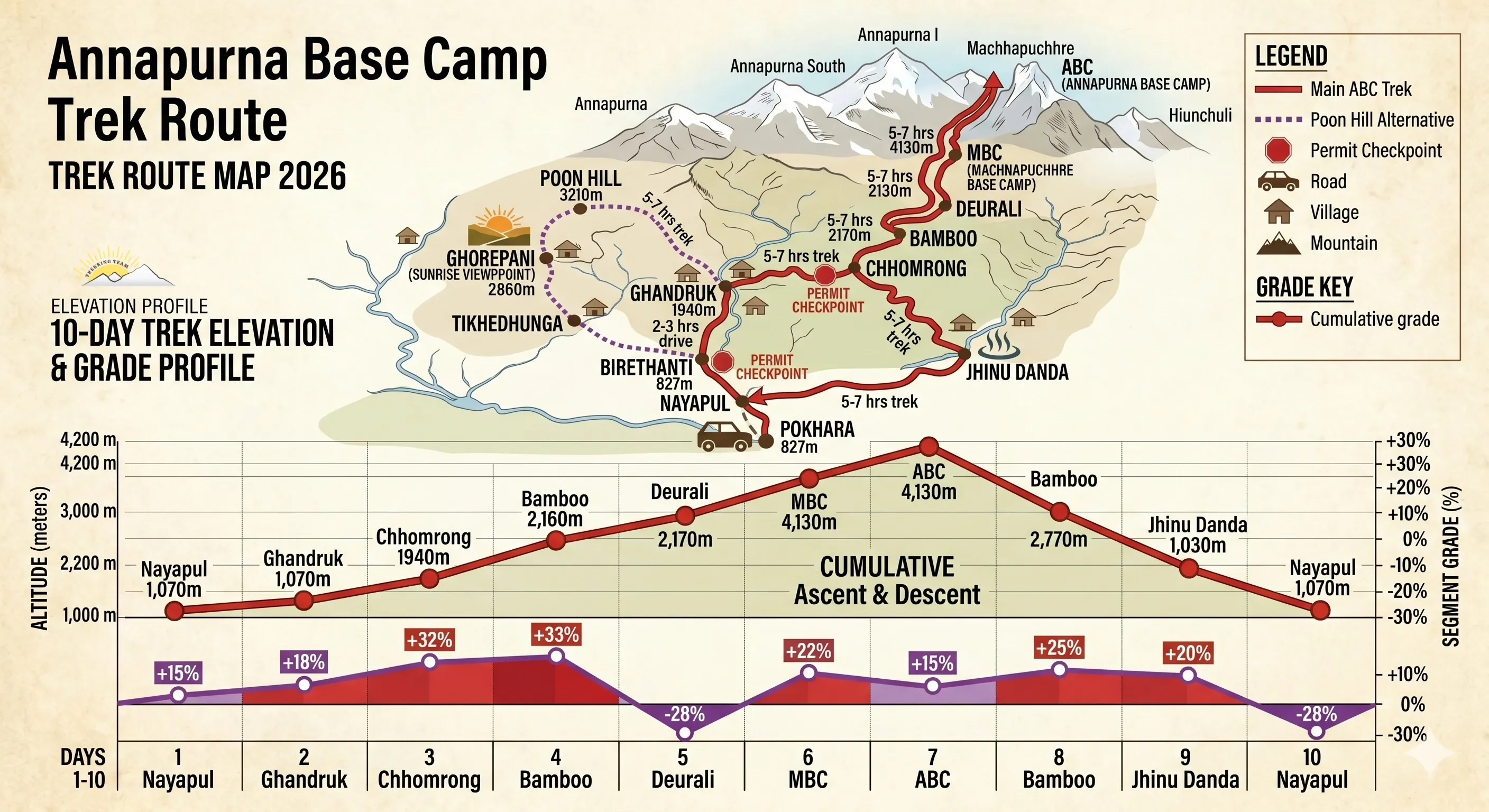
Part 14: Frequently Asked Questions
How long is the Annapurna Base Camp trek? 7 to 12 days trekking depending on route. Budget 10-14 days total including Pokhara and Kathmandu.
How difficult is the ABC trek? Moderate. Steep stepped trails challenge knees and quadriceps. Maximum altitude (4,130 m) is significantly lower than EBC (5,545 m). No technical climbing.
Can beginners do the ABC trek? Yes. With 6 weeks of stair-focused preparation and a properly paced itinerary, most healthy adults can complete it. It is widely considered the best first Himalayan trek.
Can children do the ABC trek? Yes, children aged 8 and above with reasonable fitness and proper preparation can complete the ABC trek. We have guided families with children on this route. The key is pacing, as children need more frequent rest stops. Shorter daily distances (4-5 hours maximum) are recommended. The altitude at 4,130 m is low enough that children acclimatize well with gradual ascent.
Is the ABC trek safe for solo female travellers? Yes. Many of our ABC clients are solo women. The trail is well-populated with teahouses and other trekkers during spring and autumn seasons. A licensed guide is mandatory for all trekkers (since April 2023), which provides an additional layer of safety. Teahouses offer private rooms. We can assign female guides on request.
What vaccinations do I need? No vaccinations are legally required for Nepal entry (unless arriving from a yellow-fever endemic country). Recommended by the CDC: Hepatitis A, Hepatitis B, Typhoid, Tetanus/Diphtheria. Consult your travel doctor at least 4-6 weeks before departure.
Do I need travel insurance? Yes, mandatory. Your policy must cover trekking up to 5,000 m and helicopter evacuation. Standard travel insurance does not cover high-altitude trekking. Helicopter evacuation from the Annapurna Sanctuary can cost USD 3,000-5,000 without insurance. Verify your policy specifically covers the Annapurna region.
Can I drink the water on the ABC trek? Do not drink untreated tap water. Use purification tablets (Aquatabs), a SteriPen, or a Lifestraw. Most teahouses sell boiled water for NPR 50-100 per litre. Bottled water is available but expensive at altitude (NPR 400 at ABC) and creates plastic waste.
Is there phone signal and WiFi on the ABC trek? NCELL provides the best mobile coverage, working reliably up to MBC (3,700 m). WiFi is available at most teahouses from Ghandruk to Deurali (NPR 100-500 per session). Above Deurali, connectivity is unreliable. At ABC, do not count on signal.
What happens if I get sick at ABC? Your guide initiates immediate descent. Helicopter evacuation can be coordinated through your operator's Kathmandu office, typically arriving within 2-4 hours of request. The nearest medical facility is in Pokhara (Manipal Hospital). Evacuation cost without insurance: USD 3,000-5,000. This is why travel insurance is mandatory.
Can vegetarians eat on the ABC trek? Yes. Every teahouse serves vegetarian dal bhat, vegetable noodle soup, fried rice, and chapati. Vegan is manageable (request no ghee/butter). Gluten-free is more difficult but possible with rice-based meals. Communicate dietary needs to your guide at the start of the trek.
What is the ABC trek success/completion rate? We do not publish exact statistics, but the vast majority of our clients complete the full ABC trek to 4,130 m. The lower altitude compared to EBC means altitude-related turnarounds are rare. The most common reason for not reaching ABC is knee injury from the stepped trails, which proper training prevents.
How much does the ABC trek cost in 2026? USD 800 to 2,500 per person depending on service level. See Part 5. Compare with EBC costs.
What permits do I need for ABC in 2026? ACAP permit (NPR 3,000 / ~USD 22). TIMS not enforced at trail checkpoints in our experience. Licensed guide mandatory. Full 2026 permit guide. You also need a Nepal tourist visa.
Which is better, EBC or ABC? Neither is "better." EBC is higher, longer, more expensive, focused on one iconic mountain. ABC is shorter, cheaper, more landscape variety, and places you inside an amphitheatre of peaks. Full comparison.
Are there hot springs on the ABC trek? Yes. Jhinu Danda (Day 8) has natural hot springs on the Modi Khola riverbank. Entry: NPR 100.
Do I need a sleeping bag? Yes. Rated to -5°C to -10°C. Teahouse blankets are insufficient above Bamboo. Rental in Pokhara: NPR 1,500-2,000.
When do rhododendrons bloom? March and April, between 2,000-3,000 m (Ghandruk to Chhomrong section). April is peak bloom.
Is the ABC trek safe? Yes, with a licensed guide and proper preparation. The trail is well-maintained, teahouses provide shelter at regular intervals, and the maximum altitude (4,130 m) is moderate by Himalayan standards. The primary risks are knee injury from stepped descents (preventable with training and trekking poles) and altitude sickness (manageable with gradual ascent and guide monitoring). Helicopter evacuation is available within 2-4 hours if needed.
Can you do the ABC trek without a guide? No. Since April 2023, all foreign trekkers in Nepal must hire a licensed guide through a TAAN-registered agency. This is enforced at permit checkpoints. Full solo trekking update.
How cold is ABC at night? At Annapurna Base Camp (4,130 m): -5 to 5°C in October/November, -10 to 0°C in December/January. At lower elevations (Chhomrong, 2,170 m): 5 to 15°C year-round. A sleeping bag rated to -5°C to -10°C is essential for nights above Bamboo (2,335 m).
Is the ABC trek worth it? The ABC trek consistently ranks among the world's best treks for a reason. It offers a 360-degree amphitheatre of 8,000-metre peaks, diverse landscapes from subtropical forest to glacial moraine, multi-ethnic cultural immersion, natural hot springs, and all of this at a lower altitude, shorter duration, and lower cost than EBC. For first-time Himalayan trekkers, it is hard to beat.
What are the common mistakes on the ABC trek? Not training for stairs (the #1 mistake), choosing a 15-day Nepal visa instead of 30-day, not carrying printed ACAP permit, wearing cotton (stays wet in humid forest), skipping trekking poles, not bringing enough cash (no ATMs after Pokhara), and underestimating the cold above 3,000 m.
Plan Your Annapurna Base Camp Trek
Not sure which route or package fits? Talk to a guide who has walked this trail. We can help you choose the right itinerary based on your fitness, timeline, and budget.
- Get a custom itinerary: trekkingteam.com/annapurna-base-camp-trek
- Talk to a guide: WhatsApp +977 9869400739
- Email: info@trekkingteam.com
- Compare packages: Contact us for budget, standard, and comfort tier options
- Office: Gongabu, Pragatinagar, Kathmandu, Nepal
Follow us:
Walking Nepal's trails since 1991.
ABC trek complete guide 2026. Day-by-day itinerary, real costs (USD 800-2,500), correct permits (TIMS update), difficulty, 25 FAQs, and what other guides get wrong.