The Independent Woman’s Guide to Nepal in 2026: Safety, Culture, and the High Himalayas
The magnetic pull of the Himalayas hasn’t faded with time; if anything, that crisp mountain air feels a little more urgent as we head into 2026. If you’re a woman eyeing a solo trip or a group trek to the rooftop of the world, I know exactly what’s going through your head. Your heart is racing with excitement, but there’s that nagging voice in the back of your mind asking, “Is it actually safe for me out there?” At Trekking Team, we’ve spent years walking these trails, and we’ve seen the landscape shift from tattered paper maps to the high-tech digital permits of today. We get it, safety isn’t just a checkbox; it’s the foundation of your entire experience. In 2026, Nepal is arguably more welcoming than ever, but "safety" here is a blend of cultural respect, navigating new trekking rules, and trusting your gut at 5,000 meters.
Having navigated these trails and city streets for decades at Trekking Team, we’ve seen the landscape evolve from paper maps to digital permits. Today, Nepal stands as one of the most welcoming destinations for female travelers globally, but the "safety" here isn't just about a lack of crime it’s about a deep-rooted culture of respect, a few new regulations introduced in 2026, and knowing how to navigate the altitude with ease.
The New Era of Trekking Regulations
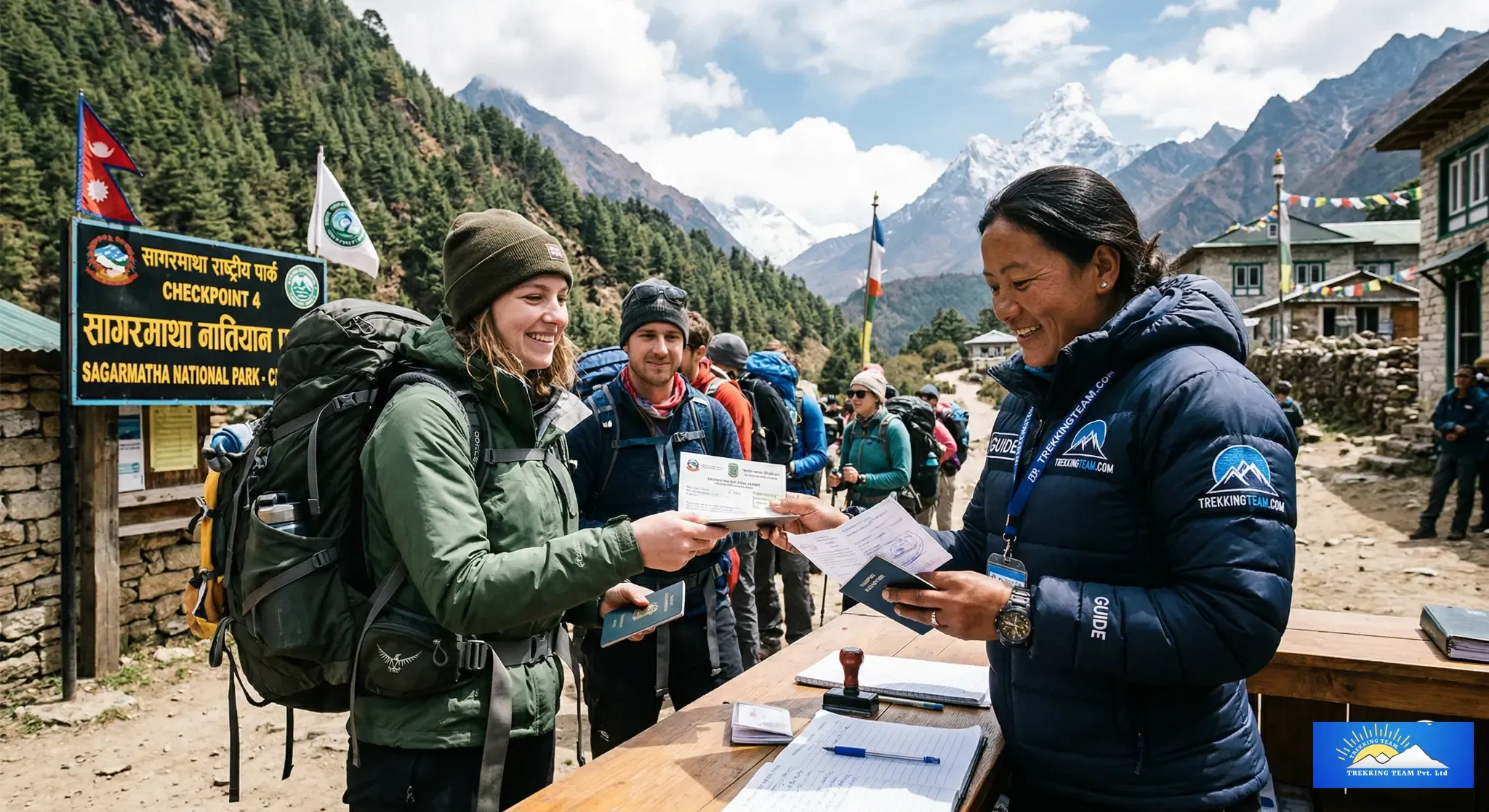
As we move through 2026, the biggest shift for any woman planning a trek is the mandatory guide policy. While the "No Solo Trekking" rule was initially met with debate, it has fundamentally transformed safety for women on the trail. You are no longer just a figure in the distance; you are accompanied by a licensed professional who acts as a cultural bridge and a first responder. This policy has nearly eliminated the risks of getting lost on diverted trails or facing isolation during a medical emergency. Whether you are trekking the Annapurna Circuit or the Manaslu Circuit, having a guide ensures that your focus remains on the peaks, while they handle the logistics of the new digital QR-checkposts that now track trekker safety in real-time across all major national parks.
Urban Navigation and the Digital Safety Net
Down in the vibrant chaos of Kathmandu and the serene shores of Pokhara, safety has taken a high-tech turn. The traditional anxiety of haggling for a taxi in a dark alley is a thing of the past. In 2026, ride-sharing apps like Pathao and InDrive are the essential digital bodyguards for women. These platforms provide GPS-tracked rides, transparent pricing, and driver identification that adds a massive layer of accountability. For solo diners and explorers, the "Lakeside" area in Pokhara remains a sanctuary where women can walk freely well into the evening, enjoying the local cafe culture without the persistent "hustle" found in other global hubs.
Mastering the Cultural Compass
Safety in Nepal is inextricably linked to cultural alignment. The Nepalese people view "The Guest as God," but they also deeply value modesty. For women, the most effective "safety gear" is often a simple pashmina shawl. In rural villages and holy sites, keeping your shoulders and knees covered isn't just about rules; it’s about signaling respect, which in turn garners a deeper level of protection and hospitality from the locals. A simple "Namaste" with pressed palms is often more powerful than a handshake, as it establishes a polite yet firm social boundary. Furthermore, understanding the "right-hand rule" using your right hand for transactions and eating integrates you into the local rhythm, marking you as a "traveler" rather than just a "tourist."
Health, Hygiene, and the Mountain Reality
Logistically, being a woman on the trail requires a specific kind of preparation that many generic blogs overlook. By 2026, Nepal will have made incredible strides in sustainability, meaning plastic water bottles will be increasingly banned in high-altitude zones. Carrying a high-quality filtration bottle or UV purifier is now a safety necessity to avoid water-borne illnesses. For menstrual health, the rugged nature of teahouse plumbing makes menstrual cups or period-proof apparel the most reliable choices, as waste management in the Everest and Langtang regions remains a delicate environmental issue. Above all, the greatest threat to any traveler remains Acute Mountain Sickness (AMS). Fitness is secondary to patience; listen to your body and your guide, and never skip an acclimatization day, regardless of how strong you feel.
2026 Essential Safety Summary
Mandatory Guides: You must hire a licensed guide for almost all trekking regions; it is your primary safety net.
Connectivity: Grab a 5G-enabled local SIM card (Ncell or NTC) at Kathmandu airport for constant GPS and communication.
Emergency Insurance: Ensure your policy specifically covers helicopter evacuation up to 6,000 meters—this is non-negotiable.
Transport Safety: Use verified ride-sharing apps for all city travel to ensure your journey is tracked and priced fairly.
Health Protocol: Stick to the "climb high, sleep low" rule and treat all water, even if it looks crystal clear.
At Trekking Team, we believe that Nepal doesn't just change your view of the world; it changes your view of yourself. Our female-led treks and experienced mountain veterans are here to ensure your 2026 journey is as secure as it is breathtaking.