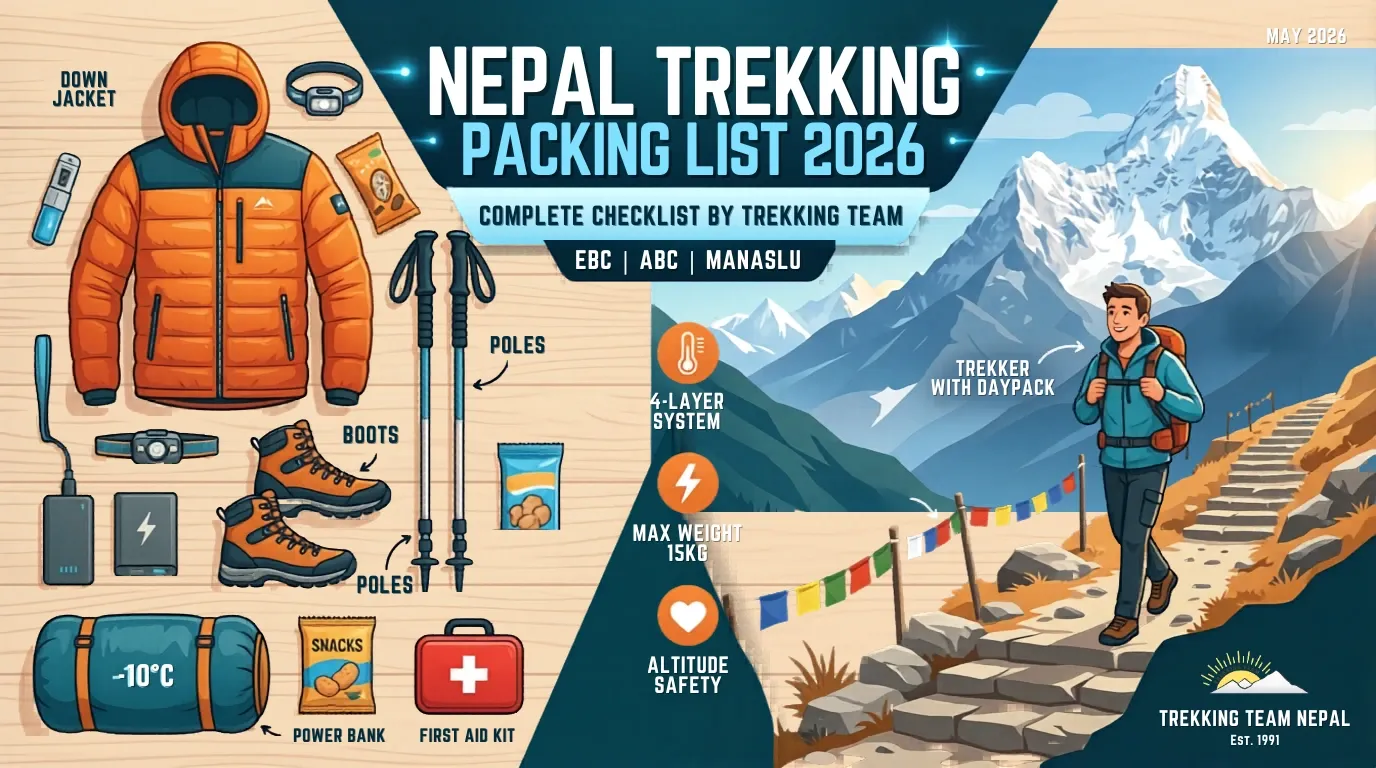
Top Acclimatization Destinations Near Kathmandu: Spend a Night Before Your Trek and Lower Your Risk of Altitude Sickness
Published by Prabish Devkota — Est. 1991 | TAAN & NTB Member Since 1991 trekkingteam.com
Every year, thousands of trekkers fly into Kathmandu and head straight to Lukla, Pokhara, or Syabrubesi the very next morning. After a long international flight, jet lag, dehydration from cabin air, and the sudden shift to 1,400 metres above sea level, their bodies have barely adjusted before being pushed even higher. The result? A significantly elevated risk of Acute Mountain Sickness (AMS) that could have been reduced or even prevented with one simple strategy.
Spend a night at a higher-altitude destination near Kathmandu before your trek begins.
Kathmandu sits at 1,324 metres (4,344 feet). The hills and ridges surrounding the valley rise to between 1,500 and 2,800 metres. That modest gain in elevation, combined with light physical activity and a night of rest at altitude, gives your body a critical head start in producing the red blood cells it needs to perform at higher elevations. It is not a substitute for proper acclimatization during your trek, but it is one of the most effective and underused preparation strategies available to any trekker arriving in Nepal.
At Trekking Team Nepal, we have been guiding clients through the Himalayas since 1991. After 34 years and more than 10,000 trekkers, we have seen first-hand the difference that a single night of pre-trek acclimatization makes fewer headaches at Namche Bazaar, better energy levels climbing to Chhomrong, and smoother crossings at Thorong La. This guide covers the best places near Kathmandu to acclimatize, what you can do at each destination, and how to build one or two extra nights into your itinerary.
Why Pre-Trek Acclimatization Matters :
Before we look at the destinations, it is worth understanding why this approach works.
When you arrive in Nepal from sea level (or near it), your body is optimized for oxygen-rich air. Every 1,000 metres of elevation gain reduces available oxygen by roughly 10 per cent. Kathmandu already has about 14 per cent less oxygen than sea level. The popular trekking destinations — Namche Bazaar at 3,440 metres, Thorong La at 5,416 metres, or Everest Base Camp at 5,364 metres have 40 to 50 per cent less oxygen than what your lungs are accustomed to.
The human body adapts to reduced oxygen through a process called acclimatization. It increases breathing rate, produces more red blood cells, and adjusts blood chemistry to carry oxygen more efficiently. This process does not happen instantly. It begins within hours of exposure to higher altitude and continues over days and weeks.
Spending even one night at 1,800 to 2,300 metres rather than staying at Kathmandu's 1,324 metres activates this adaptive process earlier. The elevation difference might seem small, but at the physiological level, it signals your body to begin preparing. Combined with the light exercise of a short hike, proper hydration, and a good night of sleep, it provides a measurable advantage when you start gaining altitude on the trek itself.
The Himalayan Rescue Association (HRA) consistently recommends gradual ascent and early exposure to moderate altitude as core prevention strategies against AMS. A night at one of the destinations below is the most practical way to apply this guidance before your trek even starts.
1. Nagarkot (2,175 metres)
Distance from Kathmandu: 32 km (approximately 1.5 hours by road) Elevation gain from Kathmandu: +851 metres Best for: Sunrise chasers, photographers, trekkers heading to Everest or Langtang
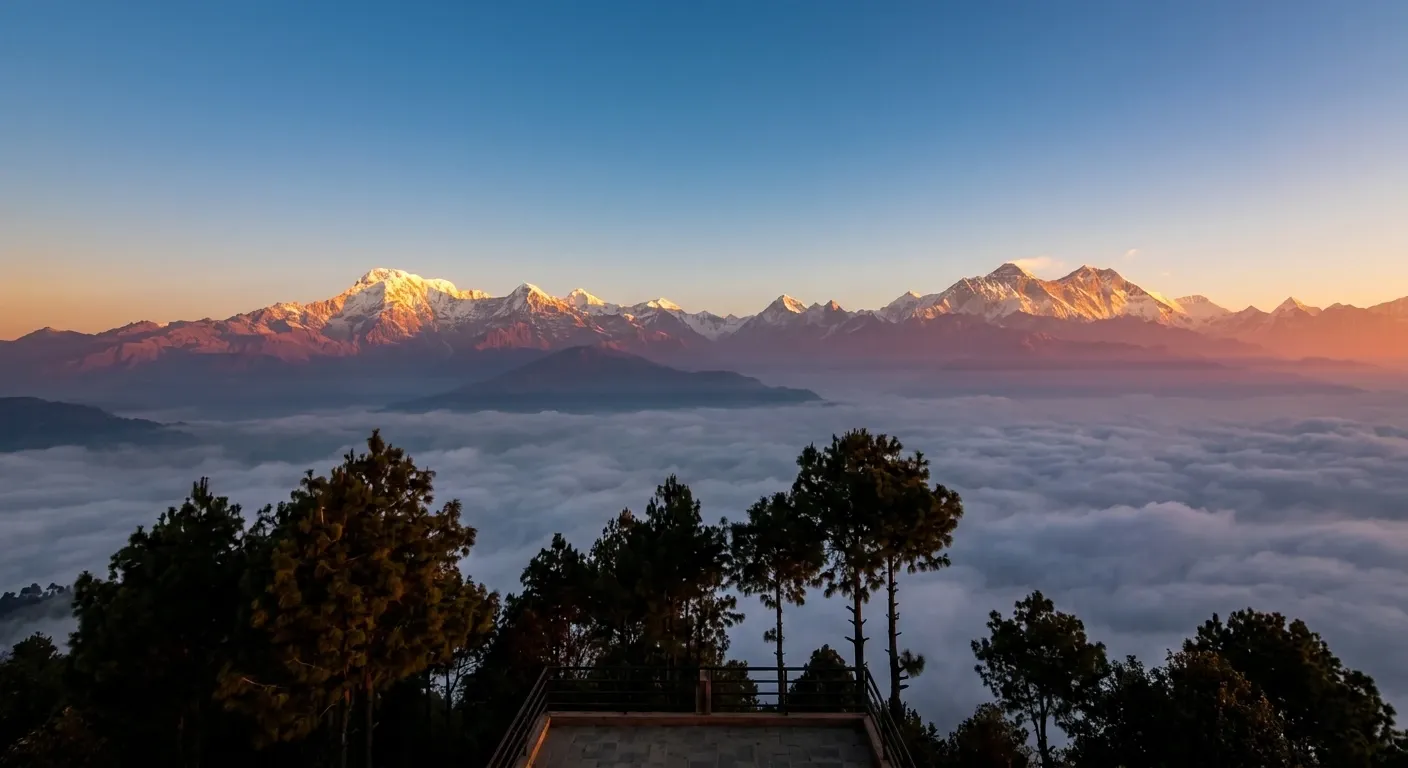
Nagarkot is the most popular hill station near Kathmandu and for good reason. Perched on the eastern rim of the Kathmandu Valley, it offers one of the widest panoramic views of the Himalayan range available from any accessible location in Nepal. On a clear morning, you can see a sweep of peaks stretching from Annapurna in the west to Everest in the east — over 300 kilometres of snow-capped skyline.
What You Can Do in Nagarkot :
Sunrise viewing is the signature Nagarkot experience. The view from the Nagarkot Tower (also called the Nagarkot View Tower) is unmatched. Arrive before dawn, watch the first light paint the Himalayas gold, and you will understand immediately why this small hill town draws visitors from around the world.
Hiking to Changunarayan Temple is a gentle downhill walk of about two to three hours that takes you through terraced farmland, small villages, and forest to one of the oldest Hindu temples in Nepal. The Changunarayan Temple dates back to the 4th century AD and is a UNESCO World Heritage Site. The stone carvings and metalwork here are among the finest surviving examples of Licchavi-era art.
Kathmandu Valley rim walks offer easy, scenic strolls along the ridgeline with continuous mountain views. Several trails of varying length are accessible directly from the hotels and guesthouses.
Cultural exploration in the surrounding villages provides insight into traditional Tamang and Newar communities. Many locals farm on terraced hillsides using methods that have remained largely unchanged for centuries.
Accommodation
Nagarkot offers the widest range of accommodation among all the destinations in this guide, from budget guesthouses starting at around USD 15 per night to luxury resorts like Club Himalaya and Hotel Mystic Mountain that provide heated rooms, spa facilities, and picture-window dining rooms facing the mountains. This makes Nagarkot particularly suitable for trekkers who want a comfortable final night before the teahouse experience begins.
Our Recommendation
Nagarkot is ideal if you are flying to Lukla the next morning for the Everest Base Camp trek or heading to Syabrubesi for the Langtang Valley trek. The elevation gain to 2,175 metres gives your body a meaningful head start, and the early morning sunrise is a spectacular way to begin your Himalayan adventure.
2. Dhulikhel (1,550 metres)
Distance from Kathmandu: 30 km (approximately 1.5 hours by road) Elevation gain from Kathmandu: +226 metres Best for: Cultural immersion, relaxation, trekkers who prefer a gentler altitude gain
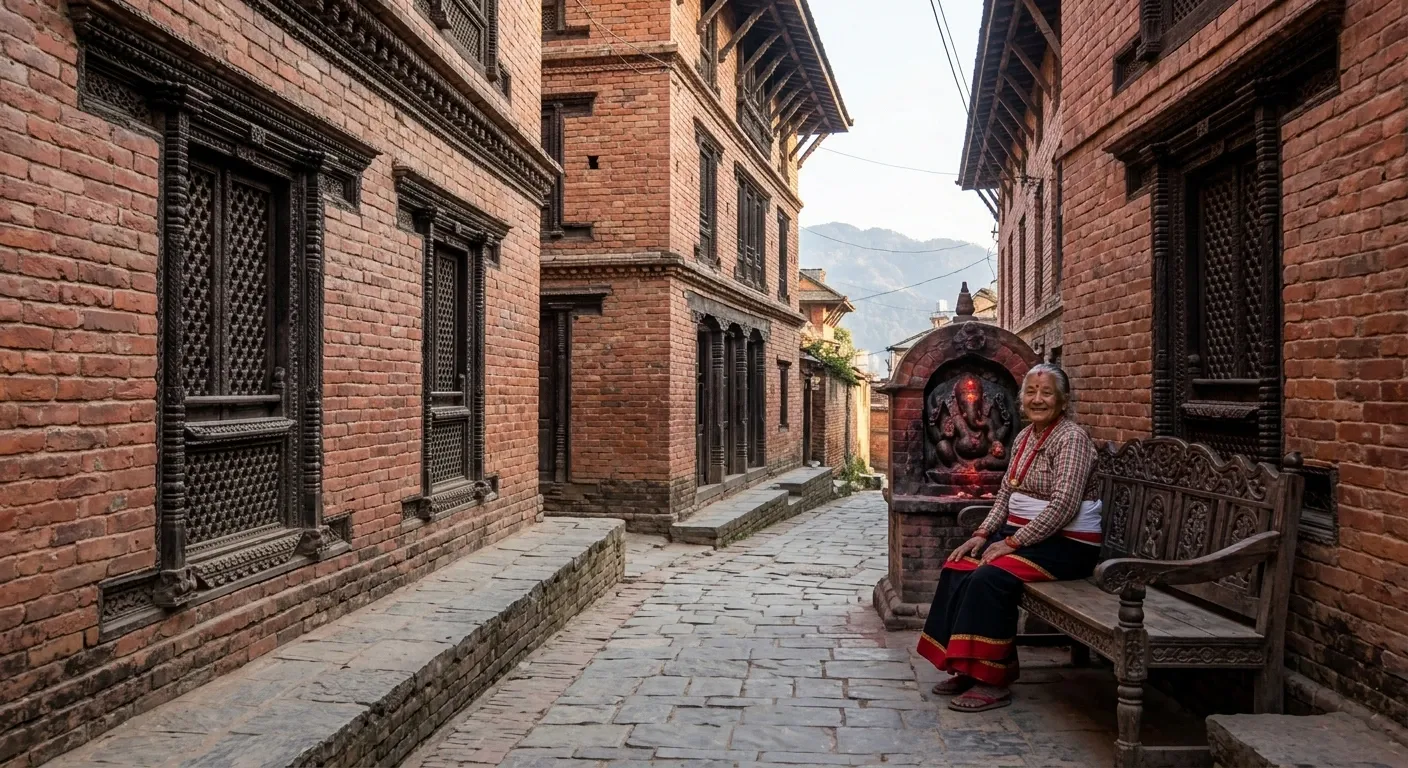
Dhulikhel is a historic Newari hill town on the eastern edge of the Kathmandu Valley. It is smaller, quieter, and more culturally authentic than Nagarkot, with a centuries-old town centre that feels largely untouched by modern development. The mountain views from Dhulikhel are excellent on a clear day, you can see from Langtang Lirung in the west to Numbur in the east, with Gauri Shankar and Dorje Lakpa prominently visible.
What You Can Do in Dhulikhel
Walk through the old town and you will find yourself surrounded by traditional Newari architecture — red brick buildings with intricately carved wooden windows, stone-paved courtyards, and temples that have stood for centuries. The Bhagwati Temple and Kali Temple on the hilltop above town offer panoramic views and a peaceful atmosphere.
Hike to Namobuddha (1,750 metres), one of the most important Buddhist pilgrimage sites in Nepal. The trail from Dhulikhel to Namobuddha is roughly three to four hours one way and passes through beautiful countryside — terraced rice paddies, pine forests, and small farming villages. The Thrangu Tashi Yangtse Monastery at Namobuddha is a major centre of Buddhist learning and welcomes visitors. The legend of Namobuddha tells of a prince who offered his body to feed a starving tigress and her cubs — a foundational story of compassion in Buddhist tradition.
Hike to Panauti, an ancient Newari town at the confluence of two rivers, is another excellent half-day walk from Dhulikhel. Panauti contains some of the oldest surviving temples in Nepal, including the Indreshwar Mahadev Temple from the 13th century. The town has been nominated for UNESCO World Heritage status and offers a fascinating window into medieval Newari urban planning.
Sunrise meditation at the Kali Temple hilltop is a quiet, reflective way to begin a morning. Several resorts in Dhulikhel also offer yoga and meditation programmes.
Accommodation
Dhulikhel has excellent accommodation options, including the Dhulikhel Lodge Resort and several boutique properties that combine mountain views with traditional Newari hospitality. The town is also home to the Kathmandu University campus, which gives it a lively but relaxed atmosphere.
Our Recommendation
Dhulikhel is the best choice for trekkers who value cultural depth alongside acclimatization. The altitude gain is more modest than Nagarkot, but the combination of a heritage walk, a hike to Namobuddha, and a night of rest at 1,550 metres provides genuine physiological benefit. It is particularly well suited for older trekkers or families who want a softer introduction to Nepal's hill country.
3. Chisapani (2,300 metres)
Distance from Kathmandu: 12 km drive to Sundarijal, then 4–5 hours trekking Elevation gain from Kathmandu: +976 metres Best for: Trekkers who want a proper warm-up hike, Langtang and Helambu-bound groups
Chisapani sits on the northern rim of the Kathmandu Valley, on a high ridge within the Shivapuri Nagarjun National Park. It is the most "trek-like" acclimatization option on this list — you cannot drive here, so reaching Chisapani requires a genuine uphill hike through dense forest, past waterfalls, and along trails shared by local communities. This makes it the strongest physical and physiological preparation for the trek ahead.
What You Can Do in Chisapani
Trek from Sundarijal through the Shivapuri National Park. The trail climbs steadily from 1,350 metres at Sundarijal through oak and rhododendron forest, past a historical water reservoir that supplies drinking water to Kathmandu, through the Tamang village of Mulkharka, and up to the Shivapuri ridge before descending slightly to Chisapani at 2,300 metres. The four to five hour hike is exactly the kind of moderate physical effort that prepares your body for what lies ahead.
Watch the sunrise from Chisapani for panoramic views of the Langtang, Ganesh Himal, and Jugal Himal ranges. On exceptionally clear days, you can spot five of the fourteen 8,000-metre peaks in the world from this ridge, including parts of Everest, Lhotse, Cho Oyu, Makalu, and Manaslu.
Birdwatching in the Shivapuri National Park is outstanding. The park is home to over 400 recorded bird species, including the Himalayan monal (Nepal's national bird), various species of laughingthrush, and several raptors. The forest is also home to leopards, Himalayan black bears, wild boar, and several species of deer, though sightings of larger mammals are uncommon.
Continue to Nagarkot the next morning if you have two nights to spare. The trail from Chisapani to Nagarkot takes six to seven hours through varied terrain — forest, farmland, and ridgeline walking with continuous mountain views. This two-day, one-night mini-trek (Sundarijal to Chisapani to Nagarkot) is one of the finest short treks in Nepal and the best possible acclimatization programme before a longer Himalayan trek.
Accommodation
Chisapani offers simple teahouse-style lodges with basic but clean rooms, hot meals, and mountain views. This is not luxury accommodation — it is authentic trekking lodge experience, which makes it excellent preparation for the teahouses you will encounter on the Everest, Annapurna, or Langtang trails.
Our Recommendation
Chisapani is our top recommendation for physically fit trekkers who want the strongest possible acclimatization before their main trek. The combination of a 950-metre elevation gain, genuine uphill effort, a night at 2,300 metres, and a sunrise over the Himalayas provides the most complete pre-trek preparation available near Kathmandu. It is especially valuable for trekkers heading to Langtang, as the Sundarijal trailhead is also the traditional start of the Helambu and Langtang trekking routes.
4. Phulchoki (2,762 metres)
Distance from Kathmandu: 20 km to the base, then 3–4 hours hiking Elevation gain from Kathmandu: +1,438 metres Best for: Serious acclimatization, experienced hikers, botanists and birdwatchers
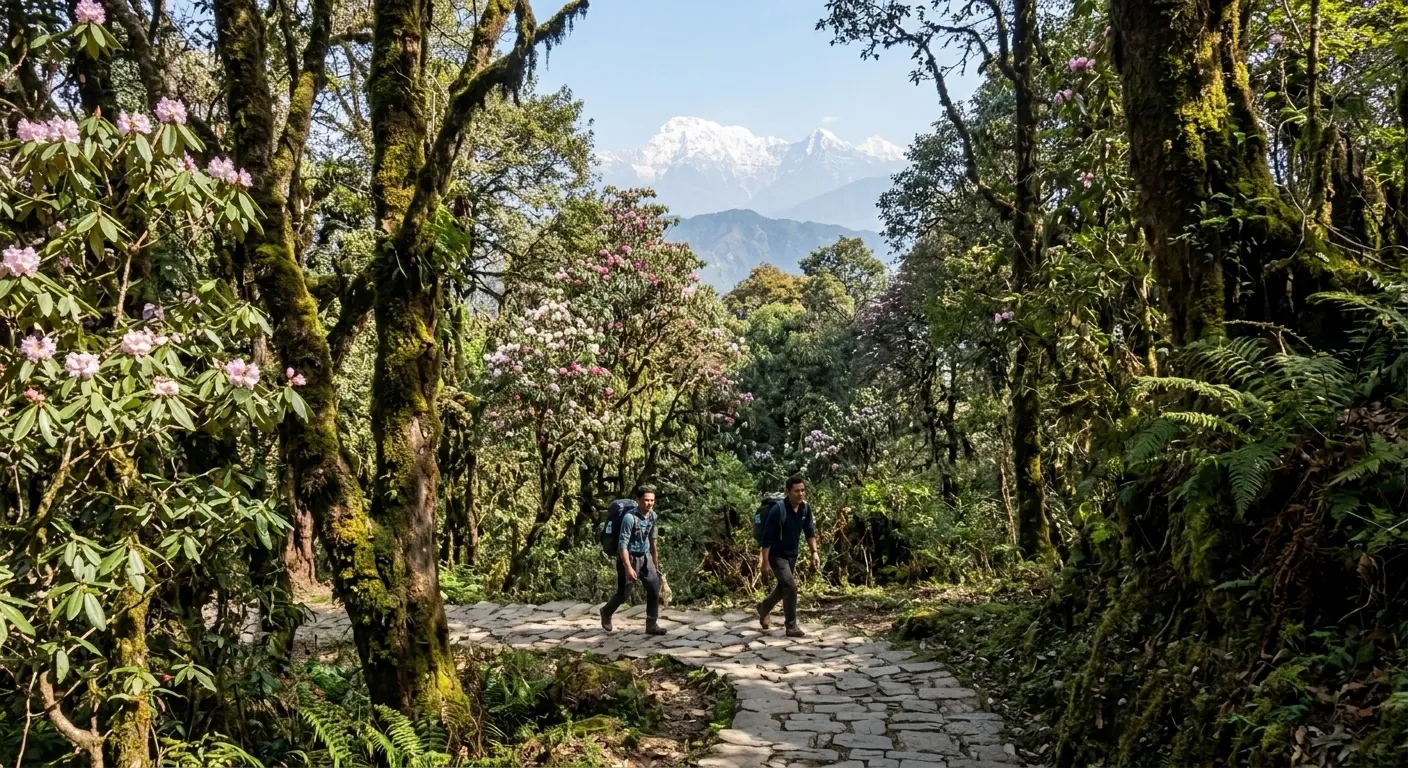
Phulchoki is the highest hill surrounding the Kathmandu Valley and the most underrated acclimatization destination near the city. Rising to 2,762 metres south of Kathmandu, it offers the greatest elevation gain of any day hike from the valley floor. The name means "Place of Flowers," and during spring (March to May), the slopes are covered with blooming rhododendrons, orchids, and other wildflowers.
What You Can Do at Phulchoki
Hike to the summit from the base at Godavari (1,500 metres). The trail climbs through one of the richest temperate forests in central Nepal — layers of oak, rhododendron, laurel, and maple that change character as you gain elevation. The upper slopes are often shrouded in mist, creating an atmospheric and almost mystical trekking environment. The summit offers views across the Kathmandu Valley and, on clear days, a panorama of Himalayan peaks to the north.
Visit the Godavari Botanical Garden at the base, which covers 82 hectares and contains a significant collection of Himalayan plant species. The gardens are peaceful, well maintained, and make an excellent starting point or finish to the Phulchoki hike.
Birdwatching on Phulchoki is world-class. The hill is considered one of the best birding sites in the Kathmandu Valley, with species including the spiny babbler (Nepal's only endemic bird), various species of sunbird, the rufous-bellied niltava, and dozens of migrant species depending on the season.
Accommodation
There are no lodges on Phulchoki itself, so this is best done as a day hike returning to Kathmandu, or combined with an overnight stay in the Godavari area at the base. Several resorts and guesthouses near Godavari offer comfortable rooms.
Our Recommendation
Phulchoki is ideal for experienced hikers who want the maximum acclimatization benefit from a single day hike near Kathmandu. The 1,400-metre elevation gain is substantial and provides an excellent cardiovascular workout alongside genuine altitude exposure. It is best done two days before your main trek departure to allow a day of rest afterward.
5. Chandragiri Hills (2,551 metres)
Distance from Kathmandu: 15 km to the cable car base station Elevation gain from Kathmandu: +1,227 metres (or minimal if you take the cable car) Best for: Families, less mobile trekkers, anyone wanting altitude exposure without strenuous hiking
Chandragiri Hills offer a unique advantage among the destinations on this list: you can reach significant altitude with minimal physical effort, thanks to a modern cable car that climbs from the base station at Thankot (1,550 metres) to the hilltop at 2,551 metres in about ten minutes.
What You Can Do at Chandragiri
Ride the cable car for sweeping views across the Kathmandu Valley on one side and the Himalayan range on the other. The Chandragiri cable car is one of the newest tourism infrastructure projects in Nepal and offers a smooth, comfortable ride.
Visit the Bhaleshwor Mahadev Temple at the summit, a centuries-old Hindu temple dedicated to Lord Shiva. The temple has significant religious importance and attracts pilgrims throughout the year.
Short hikes around the hilltop offer varied terrain and viewpoints. Several trails of 30 minutes to two hours are accessible from the cable car station, allowing you to combine altitude exposure with light exercise.
Historical significance — Chandragiri is historically important as the point from which King Prithvi Narayan Shah surveyed the Kathmandu Valley before his unification campaign in the 18th century.
Accommodation
The Chandragiri Hills Resort at the summit offers rooms with mountain views. Alternatively, you can visit as a half-day trip and stay overnight in Kathmandu or Thankot.
Our Recommendation
Chandragiri is the most accessible high-altitude option near Kathmandu and is particularly suitable for trekkers who have mobility limitations, families with children, or anyone arriving in Nepal with very limited time before their trek. Even a few hours at 2,551 metres initiates the acclimatization process.
6. Shivapuri Peak (2,732 metres)
Distance from Kathmandu: 12 km drive to the park gate, then 3–4 hours hiking Elevation gain from Kathmandu: +1,408 metres Best for: Forest lovers, trekkers wanting solitude, wildlife enthusiasts
Shivapuri Peak is the second-highest point on the Kathmandu Valley rim and sits within the Shivapuri Nagarjun National Park. The hike to the summit passes through pristine forest that serves as the primary watershed for Kathmandu's water supply. Unlike the more popular routes to Chisapani, the trail to Shivapuri Peak sees relatively few trekkers, offering a more solitary forest experience.
What You Can Do at Shivapuri
Summit hike from Budhanilkantha (the northern entrance to the national park) takes approximately three to four hours and passes through dense subtropical and temperate forest. The trail is well marked but steep in sections. The summit at 2,732 metres is marked by a white stupa and prayer flags, and offers views across the valley and toward the northern Himalayan ranges.
Visit the Budhanilkantha Temple at the base, home to the famous reclining Vishnu statue — a five-metre stone carving lying in a recessed water tank, dating to the Licchavi period (5th to 8th century). It is one of the most striking religious monuments in the Kathmandu Valley.
Nagi Gompa Monastery is located within the national park at around 2,000 metres and is a functioning Buddhist nunnery. Visitors are welcome to walk the grounds, and the monastery offers a peaceful stop on the way up or down from the peak.
Accommodation
There are no lodges on Shivapuri Peak itself. This is best done as a day hike, with accommodation in Kathmandu or Budhanilkantha.
Our Recommendation
Shivapuri is the quietest and most nature-immersive option on this list. For trekkers who enjoy forest hiking and want a serious altitude workout without crowds, it is excellent. Like Phulchoki, it is best done two days before your trek departure.
7. Namobuddha (1,750 metres)
Distance from Kathmandu: 40 km (approximately 2 hours by road) Elevation gain from Kathmandu: +426 metres Best for: Spiritual seekers, meditation enthusiasts, trekkers wanting peace before the trail
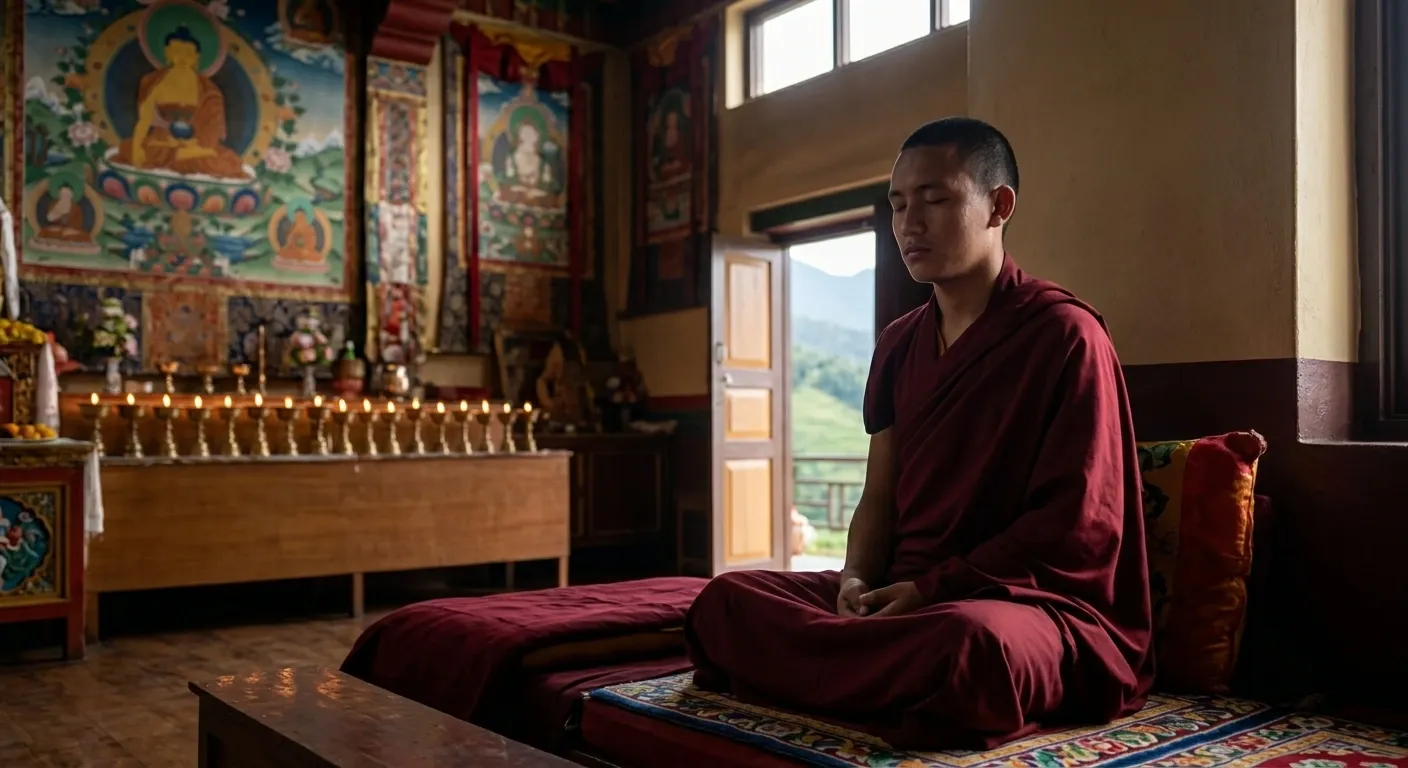
Namobuddha is one of the three most important Buddhist pilgrimage sites in Nepal, alongside Boudhanath and Swayambhunath. The hilltop Thrangu Tashi Yangtse Monastery is a major centre of the Kagyu lineage of Tibetan Buddhism and accepts visitors and retreatants throughout the year.
What You Can Do at Namobuddha
Visit the monastery and walk the grounds, which are expansive, beautifully maintained, and surrounded by forest. The main prayer hall is open for observation during certain hours, and the sound of monastic chanting resonating through the valley is profoundly calming.
Meditation retreat — the monastery offers short-stay meditation programmes for visitors. Even a single day of guided meditation at this altitude, surrounded by forest and silence, is exceptional preparation for the mental and spiritual dimensions of a Himalayan trek.
Hike to Dhulikhel (three to four hours), passing through farming communities and pine forest. This trail is one of the most scenic short walks in the Kathmandu Valley area and connects two excellent acclimatization destinations.
Learn the legend of the prince who offered his body to the starving tigress — a story depicted in stone carvings and paintings throughout the monastery grounds.
Accommodation
The monastery guesthouse offers simple, clean rooms at very low cost. Several newer resorts have opened nearby, including the Namobuddha Retreat, which offers a more upscale experience with yoga programmes and organic meals.
Our Recommendation
Namobuddha is the ideal pre-trek destination for trekkers who want mental and spiritual preparation alongside physical acclimatization. A night at 1,750 metres combined with monastery visits, meditation, and a short hike provides a remarkably grounding start to any Himalayan adventure.
8. Balthali (1,600 metres)
Distance from Kathmandu: 40 km (approximately 2 hours by road) Elevation gain from Kathmandu: +276 metres Best for: Rural retreat, off-the-beaten-path experience, couples and families
Balthali is a small farming village in the Kavre District, east of Kathmandu. It remains relatively unknown among international tourists, which is precisely its appeal. The village sits on a ridge surrounded by terraced farmland, with the snow-capped Himalayas visible to the north and the green hills of the Mahabharat range extending to the south.
What You Can Do in Balthali
Village walks through terraced fields where local farmers grow rice, millet, and mustard depending on the season. The pace of life here is slow and deeply connected to the agricultural calendar. Interactions with local families are genuine and unhurried.
Hike to Panauti (approximately three hours), the ancient Newari town at the confluence of the Roshi and Punyamati rivers. Panauti's medieval temples and traditional architecture are among the best preserved in Nepal.
Mountain views from the ridge above Balthali are stunning — a long sweep of peaks from Langtang to Everest, seen across green hills with almost no other tourists in sight.
Farming experience — some resorts in Balthali offer the opportunity to participate in traditional farming activities, from rice planting to grain harvesting, depending on the season.
Accommodation
The Balthali Mountain Resort is the primary accommodation option and offers comfortable rooms with mountain views, organic meals sourced from local farms, and a genuinely peaceful atmosphere.
Our Recommendation
Balthali is perfect for trekkers who want to decompress after a long journey before heading into the mountains. It does not offer the highest altitude exposure, but its combination of tranquility, genuine rural culture, and beautiful scenery makes it a restorative place to spend your first night in Nepal.
Suggested Pre-Trek Acclimatization Itineraries
Option A: One Night (Moderate Altitude)
Day 1: Arrive Kathmandu → Drive to Nagarkot (2,175m) → Evening walk, early sleep Day 2: Sunrise viewing → Breakfast → Drive to airport/start trek
Option B: One Night (Maximum Altitude)
Day 1: Arrive Kathmandu → Drive to Sundarijal → Trek to Chisapani (2,300m) → Overnight Day 2: Sunrise → Trek down or continue to Nagarkot → Transfer to trek start
Option C: Two Nights (Cultural + Altitude)
Day 1: Arrive Kathmandu → Drive to Dhulikhel (1,550m) → Old town walk → Overnight Day 2: Hike to Namobuddha (1,750m) → Monastery visit → Overnight Day 3: Morning meditation → Drive back to Kathmandu → Transfer to trek start
Option D: Two Nights (Full Rim Trek)
Day 1: Arrive Kathmandu → Drive to Sundarijal → Trek to Chisapani (2,300m) → Overnight Day 2: Trek to Nagarkot (2,175m) → Afternoon rest → Overnight Day 3: Sunrise → Drive to Kathmandu → Fly to Lukla or drive to Syabrubesi
General Acclimatization Tips Before Your Trek
Hydrate aggressively from the moment you board your flight to Nepal. The dry cabin air on long-haul flights causes significant dehydration. Aim for at least three to four litres of water per day once you arrive.
Avoid alcohol for the first 48 hours in Nepal. Alcohol impairs your body's ability to acclimatize and worsens dehydration.
Sleep well. Sleep deprivation is one of the most commonly underestimated risk factors for altitude sickness. If you arrive jet-lagged, spend a day adjusting before heading to altitude.
Eat well. Carbohydrate-rich meals provide the fuel your body needs for the metabolic adjustments involved in acclimatization. Dal bhat — Nepal's staple meal of lentils, rice, and vegetables — is ideal.
Walk, do not rush. Whether you are hiking to Chisapani or strolling through Dhulikhel, move at a comfortable pace. Overexertion in the first days is counterproductive.
Consider Diamox. Acetazolamide (Diamox) is a prescription medication that accelerates acclimatization. Consult your doctor before your trip if you are concerned about altitude sensitivity. It is widely available in Kathmandu pharmacies.
Listen to your body. Headache, nausea, dizziness, and unusual fatigue are early signs of altitude sickness. If you experience these symptoms at any pre-trek destination, descend and rest before continuing your plans.
Why Trekking Team Nepal Recommends Pre-Trek Acclimatization
We have been guiding trekkers through the Himalayas for 34 years. In that time, we have learned that the trekkers who arrive in the best condition — physically, mentally, and physiologically — are the ones who have the best experiences on the trail. They enjoy the views instead of enduring headaches. They connect with the culture instead of counting the hours until the next rest stop. They reach their destination strong, not spent.
A single night at Nagarkot, Dhulikhel, Chisapani, or any of the other destinations in this guide costs very little in time and money. The return on that investment — measured in comfort, safety, and enjoyment — is enormous.
At Trekking Team Nepal, we can build pre-trek acclimatization into any of our trekking itineraries. Whether you want a luxury night at a Nagarkot resort, a teahouse experience at Chisapani, or a monastery stay at Namobuddha, our team will arrange everything. We have been doing this since 1991, and we would be honoured to help you prepare for the trek of a lifetime.
Ready to plan your Himalayan adventure? Visit trekkingteam.com or message us directly. Celebrating 34 years — Your adventure partner since 1991.
This article was written by the team at Trekking Team Nepal, drawing on 34 years of guiding experience in the Himalayas. All altitude measurements, trail descriptions, and practical information have been verified against current conditions as of 2026. For the most up-to-date information on any destination mentioned in this guide, contact our team at info@trekkingteam.com.