Everest Base Camp Trek: Complete Guide 2026 | Cost, Itinerary, Permits | Trekking Team Nepal
Published by Trekking Team Nepal | Est. 1991 | TAAN Member #1106 | NTB Registered
📅 April 2026 • ✍️ Trekking Team Editorial • ⏱️ 40 min read
Last Updated: April 22, 2026 - Updated with 2026 permit changes, mandatory guide regulations, and current trail conditions.
What is the Everest Base Camp trek? The Everest Base Camp (EBC) trek is a 130 km round-trip journey through Nepal's Khumbu region to the base of Mount Everest (8,849 m) at 5,364 metres. It takes 12 to 14 days from Lukla, requires no technical climbing skills, and passes through Sherpa villages, ancient monasteries, and Sagarmatha National Park, a UNESCO World Heritage Site. It is widely considered the most iconic trek on Earth.
We have been guiding trekkers to Everest Base Camp since 1991. Not since last year. Not since 2010. Since 1991, when the trail had no helicopters, no WiFi, no luxury lodges, and no Instagram. Over 34 years, we have sent more than 10,000 trekkers through the Khumbu Valley, across the Hillary Suspension Bridge, past the monasteries of Tengboche and Pangboche, through the high desert of Lobuche, and up to the glacier moraine at Base Camp itself.
We have operated this trek in every month of every year. We have evacuated clients by helicopter at 3:00 AM. We have celebrated summit-day sunrises on Kala Patthar with 70-year-old grandmothers and 12-year-old children. We have walked these trails so many times that our senior guides know every teahouse owner by name, every shortcut through the rhododendron forest, every spot where Ama Dablam appears for the first time and takes your breath away.
This guide is not compiled from other blogs. It is written from three decades of direct experience, and it reflects the trail as it exists in April 2026, including every permit change, every new regulation, and every piece of practical knowledge that will make the difference between a good trek and the best experience of your life.
Everest Base Camp Trek at a Glance
| Detail | Information |
|---|---|
| Trek distance | ~130 km (80 miles) round trip |
| Duration | 12 to 14 days trekking (16 to 18 days total including Kathmandu) |
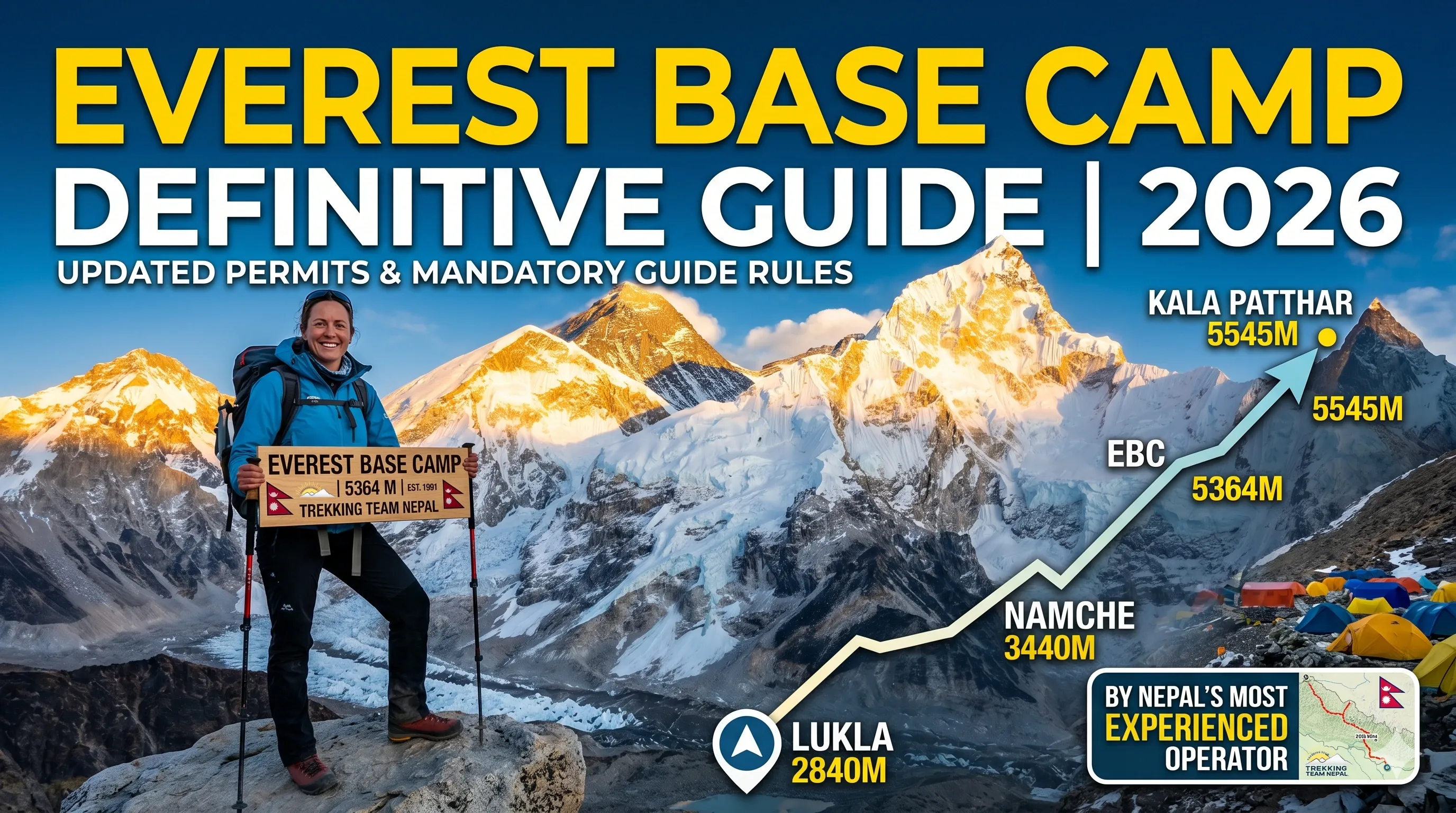
| Max elevation | 5,545 m (Kala Patthar) / 5,364 m (EBC) |
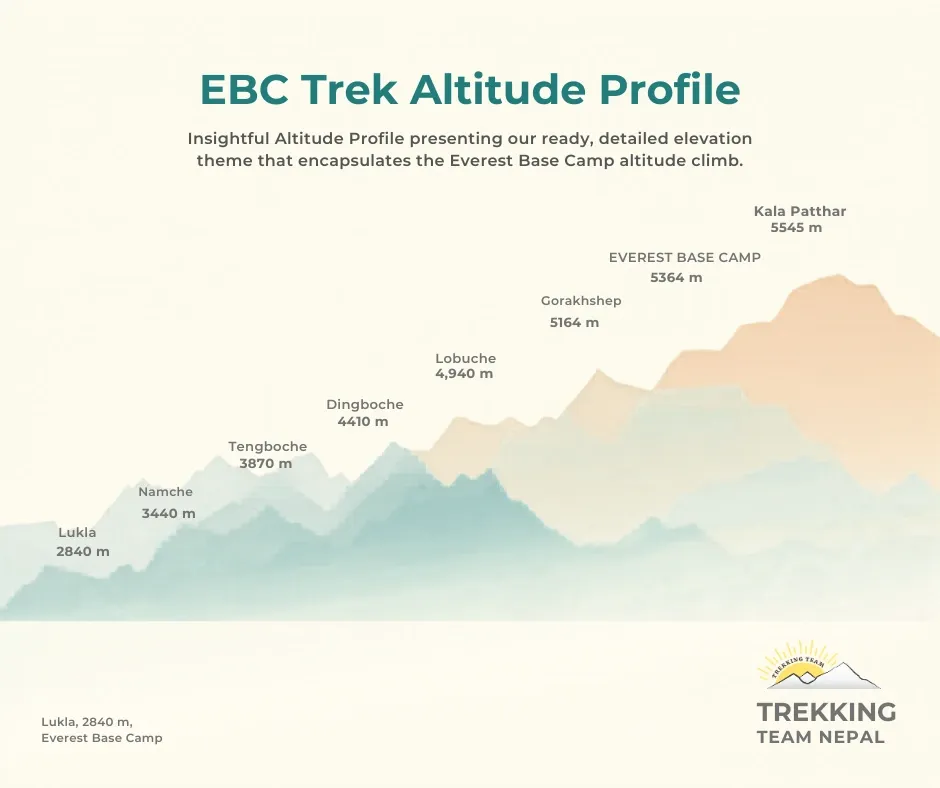
| Starting point | Lukla (2,840 m), reached by flight from Kathmandu or Ramechhap |
| Difficulty | Moderate to challenging (altitude is the main challenge, not terrain) |
| Technical skills needed | None. No climbing, no ropes, no equipment beyond trekking gear |
| Best seasons | Spring (March to May) and Autumn (September to November) |
| Accommodation | Teahouses/lodges along the entire route |
| Permits required (2026) | Sagarmatha National Park permit + Khumbu Pasang Lhamu Rural Municipality permit |
| Mandatory guide | Yes, since 2023. Licensed guide required for all foreign trekkers |
| Approximate cost | USD 1,200 to 4,000 depending on service level (full cost breakdown) |
| Success rate | ~90% with proper acclimatization and experienced operator |
Part 1: Why the Everest Base Camp Trek?
Thousands of treks exist in the Himalayas. Dozens of them are spectacular. Some are more remote, some are more challenging, some offer better mountain views. So why does Everest Base Camp remain the single most sought-after trek on Earth?
You walk where history happened. This is the trail that Sir Edmund Hillary and Tenzing Norgay Sherpa followed in 1953 before making the first confirmed ascent of Everest. Every major expedition since has passed through the same villages, crossed the same bridges, and slept in the same valleys. When you reach Base Camp, you are standing where the greatest mountaineering stories of the 20th and 21st centuries began.
Four of the six highest peaks on Earth are visible. Everest (8,849 m), Lhotse (8,516 m), Makalu (8,463 m), and Cho Oyu (8,188 m) are all visible from the Khumbu Valley and its viewpoints. Add Ama Dablam (6,812 m), Nuptse (7,861 m), Pumori (7,161 m), and Thamserku (6,623 m), and you are surrounded by more high-altitude grandeur than anywhere else on the planet.
The Sherpa culture is unlike anything else. The Khumbu Valley is the homeland of the Sherpa people, whose Buddhist traditions, monastery life, and relationship with the mountains create a cultural experience that no other trek can match. The monasteries at Tengboche and Pangboche are living spiritual centres, not tourist attractions. Prayer flags stretch across every ridgeline. Mani walls (stone walls carved with Buddhist mantras) line the trail for kilometres. The Sherpa hospitality in the teahouses is legendary.
It is achievable. Unlike technical mountaineering, the EBC trek requires no climbing skills, no ropes, and no specialized equipment. A person with reasonable fitness, proper preparation, and good acclimatization can complete it. We have guided first-time trekkers in their 20s and experienced travellers in their 70s to Base Camp and back safely.
Kala Patthar sunrise. The pre-dawn hike to Kala Patthar (5,545 m) on the morning before or after reaching Base Camp offers what many trekkers describe as the single most powerful visual experience of their lives. Watching the first light hit the summit pyramid of Everest, turning the ice from grey to gold to blazing white, while you stand higher than you have ever stood, in thin air, surrounded by giants: this is the moment that makes everything worth it.
Part 2: The Complete Day-by-Day Itinerary (14 Days)
This is our standard 14-day itinerary, the one we have refined over 34 years and more than 10,000 trekkers. It includes two acclimatization days, which are non-negotiable for safety. Faster itineraries exist but significantly increase altitude sickness risk. We do not recommend them.
Day 1: Fly Kathmandu to Lukla (2,840 m), Trek to Phakding (2,610 m)
Flight: 25 to 35 minutes from Kathmandu (or from Ramechhap during peak season, which adds a 5-hour drive). The flight into Tenzing-Hillary Airport at Lukla is one of the most dramatic in aviation. The runway is 527 metres long, carved into a mountainside, with a 700-metre drop at one end. Our guides will be waiting at the airport.
Trek: 3 to 4 hours, mostly downhill. The trail follows the Dudh Koshi river valley through pine forest and small Sherpa settlements. You cross your first suspension bridges. The pace is deliberately easy. This is not the day to push.
What our guides know: The best teahouses in Phakding book up fast during peak season. We pre-book rooms for every client. The teahouse with the best food (and the warmest dining room) is not the first one you see.
Distance: 8.5 km | Elevation change: -230 m | Walking time: 3-4 hours
Day 2: Phakding to Namche Bazaar (3,440 m)
Trek: 5 to 6 hours. The trail follows the river, crossing suspension bridges decorated with prayer flags. You enter Sagarmatha National Park at Monjo (permits checked here). After the park entrance, the trail climbs steeply for approximately 2 hours to Namche Bazaar, the Sherpa capital of the Khumbu.
The moment: About 45 minutes before Namche, the trail rounds a corner and Everest appears for the first time, framed between the valley walls with Lhotse beside it. Every trekker stops. Every trekker takes the same photo. It never gets old.
Namche Bazaar: A horseshoe-shaped town built into a steep hillside at 3,440 m. It has bakeries, coffee shops, gear stores, a Sherpa museum, and the best hot showers you will have until you return here on the way down. This is where the trek begins to feel real.
Distance: 11.5 km | Elevation gain: +830 m | Walking time: 5-6 hours
Day 3: Acclimatization Day in Namche Bazaar
Do not skip this day. This is the most important day of the entire trek. Your body needs 24 hours at 3,440 m to begin producing additional red blood cells and adjusting to reduced oxygen. Skipping this acclimatization dramatically increases your risk of altitude sickness.
Morning option: Hike to the Everest View Hotel (3,880 m) for panoramic views, then return to Namche. The "climb high, sleep low" principle is the foundation of safe acclimatization.
Afternoon option: Visit the Sherpa Culture Museum, explore Namche's market (Saturday is market day), or simply rest, hydrate, and read. Our guides check blood oxygen levels twice daily using pulse oximeters starting from today.
Elevation: 3,440 m (with excursion to 3,880 m) | Walking time: 2-4 hours (optional)
Day 4: Namche to Tengboche (3,870 m)
Trek: 5 to 6 hours. The trail traverses high above the Dudh Koshi valley with constant views of Everest, Lhotse, Nuptse, and Ama Dablam. You descend to cross the river at Phungi Thanga (3,250 m) before climbing steeply to Tengboche.
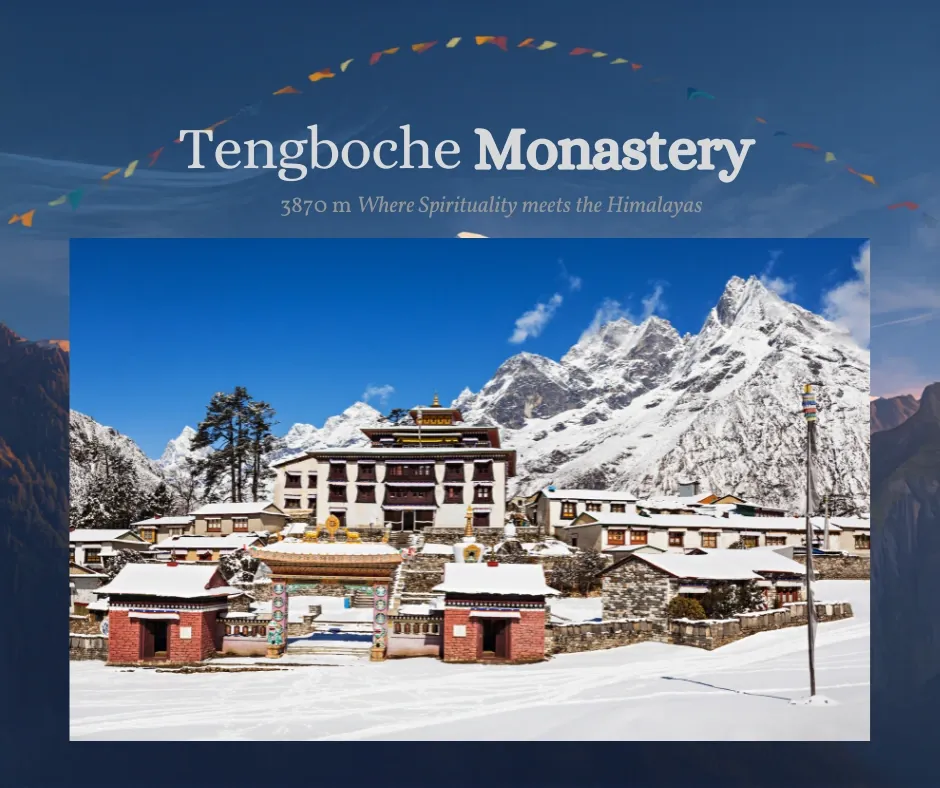
Tengboche Monastery: The largest monastery in the Khumbu, set on a forested ridge with Ama Dablam towering directly above. If you time your arrival for late afternoon, you may be able to attend the monks' evening prayer ceremony (puja). The sound of chanting and horns in a monastery at 3,870 m, with Everest visible through the window, is a moment that changes people.
Distance: 10 km | Elevation gain: +430 m (with descent and re-ascent) | Walking time: 5-6 hours
Day 5: Tengboche to Dingboche (4,410 m)
Trek: 5 to 6 hours. The trail descends through rhododendron and birch forest to Deboche, then follows the Imja Khola valley. The tree line ends. The landscape opens into a wide, high-altitude valley of brown grass, stone walls, and yak pastures. Dingboche sits at the confluence of two valleys with views of Island Peak, Ama Dablam, and Lhotse's massive south face.
Altitude note: You are now above 4,000 m. Walk slowly. Drink 3 to 4 litres of water daily. Report any headache, nausea, or unusual fatigue to your guide immediately. Read our complete altitude sickness guide.
Distance: 11 km | Elevation gain: +540 m | Walking time: 5-6 hours
Day 6: Acclimatization Day in Dingboche
Morning: Hike to Nangkartshang Peak (5,083 m) for extraordinary views of Makalu, Lhotse, and the Imja Valley. Return to Dingboche. This "climb high, sleep low" excursion is essential preparation for the days ahead.
Afternoon: Rest, eat well, hydrate. Our guides check blood oxygen and heart rate. Anyone showing signs of altitude sickness will be assessed and, if necessary, the itinerary will be adjusted. Safety always comes first.
Elevation: 4,410 m (with excursion to 5,083 m) | Walking time: 3-4 hours (optional)
Day 7: Dingboche to Lobuche (4,940 m)
Trek: 4 to 5 hours. The trail crosses the Khumbu Khola and climbs through increasingly barren, rocky terrain. You pass the memorial cairns at Thukla Pass (4,830 m), where stone monuments honour climbers who died on Everest. The memorials to Scott Fischer, Rob Hall, and dozens of others are sobering reminders of the mountain's power.
Lobuche: A small cluster of teahouses at the edge of the Khumbu Glacier. Basic facilities. Cold nights. But the views are staggering: Pumori, Nuptse, and the Khumbu Icefall are all visible.
Distance: 8 km | Elevation gain: +530 m | Walking time: 4-5 hours
Day 8: Lobuche to Gorak Shep (5,164 m), Hike to Everest Base Camp (5,364 m)
Trek to Gorak Shep: 3 hours across the Khumbu Glacier moraine. The terrain is rocky, uneven, and otherworldly. You are walking on the edge of one of the largest glaciers in the Himalayas.
Gorak Shep: The last settlement. A few teahouses on a sandy flat at 5,164 m. Drop your bags, eat lunch, and prepare for the final push.
Hike to Everest Base Camp: 2 to 3 hours each way from Gorak Shep. The trail follows the lateral moraine of the Khumbu Glacier. Base Camp itself is a rocky, icy moraine at 5,364 m. During climbing season (April/May), the camp is a city of colourful tents. Outside climbing season, it is a vast, empty expanse of glacier and rock.
The moment you arrive: There is no grand viewpoint at Base Camp itself. Everest's summit is hidden behind the Khumbu Icefall. But the Icefall is visible, creaking and groaning with the movement of ice, and the sheer scale of the amphitheatre of peaks surrounding you is overwhelming. You are standing where history's greatest mountaineering stories began.
Return to Gorak Shep for the night. Early to bed. Tomorrow is the biggest morning of the trek.
Distance: 13 km | Elevation gain: +424 m (Gorak Shep) + 200 m (EBC) | Walking time: 7-8 hours total
Day 9: Kala Patthar Sunrise (5,545 m), Descend to Pheriche (4,280 m)
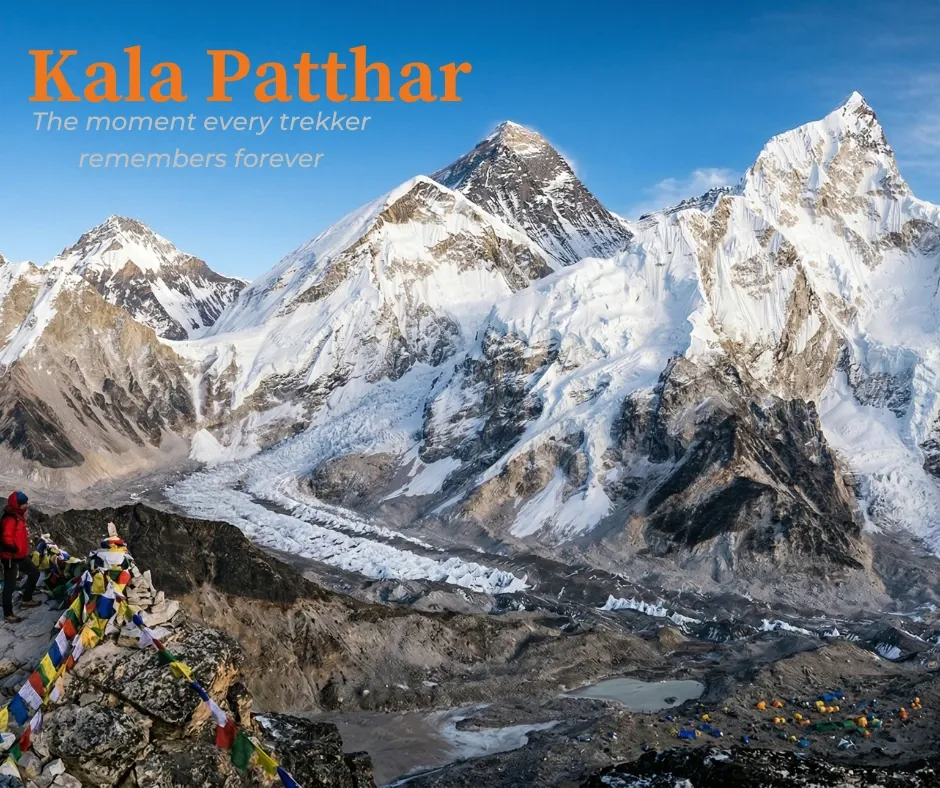
Pre-dawn: Wake at 4:00 AM. Headlamps on. Climb Kala Patthar in the dark. The ascent takes 1.5 to 2 hours. You arrive at 5,545 m, the highest point of the entire trek, just as the first light touches Everest's summit.
The Kala Patthar sunrise: This is it. The moment that every EBC trekker remembers forever. The summit pyramid of Everest turns from grey to gold to blinding white. Lhotse, Nuptse, Pumori, Changtse, and the entire Khumbu Glacier spread below you. You are higher than any mountain in Europe, Africa, or the Americas. The air is thin. The cold is real. The beauty is beyond words.
Descent: Return to Gorak Shep for breakfast. Then descend to Pheriche (4,280 m). The descent is faster and your body feels noticeably better at lower altitude. The Himalayan Rescue Association has a medical post in Pheriche.
Distance: 15 km | Elevation gain: +381 m (Kala Patthar) then descent | Walking time: 7-8 hours
Day 10: Pheriche to Namche Bazaar (3,440 m)
Trek: 6 to 7 hours. A long descent day. You retrace your steps through Pangboche, Tengboche (a quick visit to the monastery), and back down to Namche. The air thickens, the trees return, and your lungs feel powerful again.
Distance: 20 km | Elevation loss: -1,160 m | Walking time: 6-7 hours
Day 11: Namche to Lukla (2,840 m)
Trek: 6 to 7 hours. The final trekking day. Descend from Namche, retrace the river valley route, cross the suspension bridges one last time, and arrive in Lukla. Celebration dinner with your guide and porter.
Distance: 19 km | Elevation loss: -600 m | Walking time: 6-7 hours
Day 12: Fly Lukla to Kathmandu
Flight: 25 to 35 minutes. Weather dependent. We always build a buffer day into our itinerary in case of flight delays (which are common, especially during monsoon and winter). Arrive Kathmandu. Transfer to hotel. Free afternoon to explore, shop, or rest.
Day 13: Buffer Day / Kathmandu Sightseeing
If no flight delay: Full day in Kathmandu. Visit Pashupatinath Temple, Boudhanath Stupa, Swayambhunath (Monkey Temple), or Bhaktapur Durbar Square. Your guide can arrange any of these.
If flight was delayed: This is your backup flight day. This is why we include it. Agencies that do not include a buffer day are gambling with your international flight home.
Day 14: Departure
Airport transfer. Farewell.
Part 3: Best Time for the Everest Base Camp Trek
Month-by-Month Conditions
| Month | Temperature (Base Camp) | Sky/Visibility | Crowds | Rating |
|---|---|---|---|---|
| January | -15 to -25°C night, -5 to 5°C day | Clear, excellent | Almost none | ★★☆☆☆ Experienced only |
| February | -15 to -20°C night, -3 to 8°C day | Clear, improving | Very few | ★★★☆☆ Cold but feasible |
| March | -10 to -15°C night, 0 to 10°C day | Good, some haze | Building | ★★★★☆ Great |
| April | -8 to -12°C night, 5 to 12°C day | Excellent | Busy | ★★★★★ Best month |
| May | -5 to -10°C night, 5 to 15°C day | Excellent, summit season | Very busy | ★★★★★ Best month |
| June | -3 to -8°C night, 5 to 12°C day | Monsoon arriving, cloud | Very few | ★★☆☆☆ Not recommended |
| July-Aug | 0 to -5°C night, 5 to 10°C day | Monsoon, poor visibility | Almost none | ★☆☆☆☆ Not recommended |
| September | -5 to -10°C night, 3 to 10°C day | Clearing, improving | Building | ★★★★☆ Great |
| October | -8 to -15°C night, 3 to 12°C day | Crystal clear | Peak | ★★★★★ Best month |
| November | -12 to -18°C night, 0 to 8°C day | Clear, cold | Moderate | ★★★★☆ Excellent |
| December | -15 to -25°C night, -5 to 5°C day | Clear, very cold | Almost none | ★★☆☆☆ Experienced only |
Our recommendation: April, May, October, and November are the four best months. October consistently delivers the clearest skies and sharpest mountain views. April and May offer warmer temperatures and the excitement of watching Everest climbing expeditions prepare at Base Camp. November is excellent for experienced trekkers who want fewer crowds with cold but clear conditions.
For trekkers who want to avoid crowds entirely and are experienced in cold-weather hiking, March and late November offer a compelling balance of good conditions and empty trails.
Important climate note: Weather patterns have shifted in the past decade. Monsoons are arriving later and ending later. October 2023 and 2024 both had unexpected late-monsoon rain. We monitor conditions daily and adjust plans when needed. Flexibility matters more than it used to.
Part 4: Everest Base Camp Trek Cost 2026
We published a complete, itemised cost breakdown that remains the most detailed EBC cost guide online. Here is the summary:
| Cost Component | Budget | Standard | Comfort |
|---|---|---|---|
| Permits (SNP + municipality) | ~$40 | ~$40 | ~$40 |
| Lukla flights (round trip) | $300-350 | $300-350 | $300-350 |
| Guide (licensed, mandatory) | $30-35/day | $30-35/day | $30-35/day |
| Porter | $20-25/day | $20-25/day | $20-25/day |
| Teahouse accommodation | $5-10/night | $10-20/night | $50-150/night (luxury lodges) |
| Meals on trek | $15-25/day | $20-35/day | $30-50/day |
| Kathmandu hotel (4 nights) | $15-25/night | $40-80/night | $100-200/night |
| Gear rental (sleeping bag, jacket) | $30-50 | $30-50 | Included |
| Travel insurance | $100-150 | $100-150 | $100-150 |
| Tips (guide + porter) | $100-200 | $150-300 | $200-400 |
| Total per person | $1,200-1,800 | $2,200-3,000 | $3,500-5,000+ |
What most guides get wrong about cost: Many blogs list the Everest climbing permit ($15,000) alongside trekking permit costs, confusing readers. The EBC trek permit costs approximately $60 total. You are not climbing Everest. You are trekking to its base. The two are completely different activities with completely different costs.
Read the full cost breakdown with 2026 prices.
Part 5: Altitude Sickness, the Real Challenge
The terrain on the EBC trek is not technically difficult. The paths are well-maintained, the bridges are solid, and no scrambling or climbing is required. The challenge is altitude.
Above 3,000 m, your body receives progressively less oxygen with every metre of elevation gain. At Everest Base Camp (5,364 m), you are breathing approximately 50% of the oxygen available at sea level. Your body must adapt, and this process (acclimatization) cannot be rushed.
Symptoms to watch for: Headache, nausea, loss of appetite, dizziness, fatigue, difficulty sleeping. These are common above 3,500 m and usually mild. They become dangerous if ignored. Read our complete altitude sickness prevention guide.
Our protocol:
- Two mandatory acclimatization days (Namche and Dingboche) built into every itinerary
- Pulse oximeter checks twice daily from Namche onwards
- "Climb high, sleep low" excursions on both acclimatization days
- Immediate descent protocol if symptoms do not improve with rest
- Diamox (acetazolamide) available through your guide if prescribed by your doctor pre-trek
- Helicopter evacuation coordination available 24/7 through our Kathmandu operations desk
Success rate: With proper acclimatization and an experienced operator, approximately 90% of trekkers reach Everest Base Camp. The 10% who do not are almost always cases of inadequate acclimatization (rushing the itinerary) or pre-existing conditions that were not disclosed before the trek.
🎥 Watch our altitude sickness prevention video on YouTube
Part 6: Permits and Regulations 2026
Nepal's trekking regulations changed significantly in 2025 and 2026. Most competitor blogs still list outdated information. Here are the current rules:
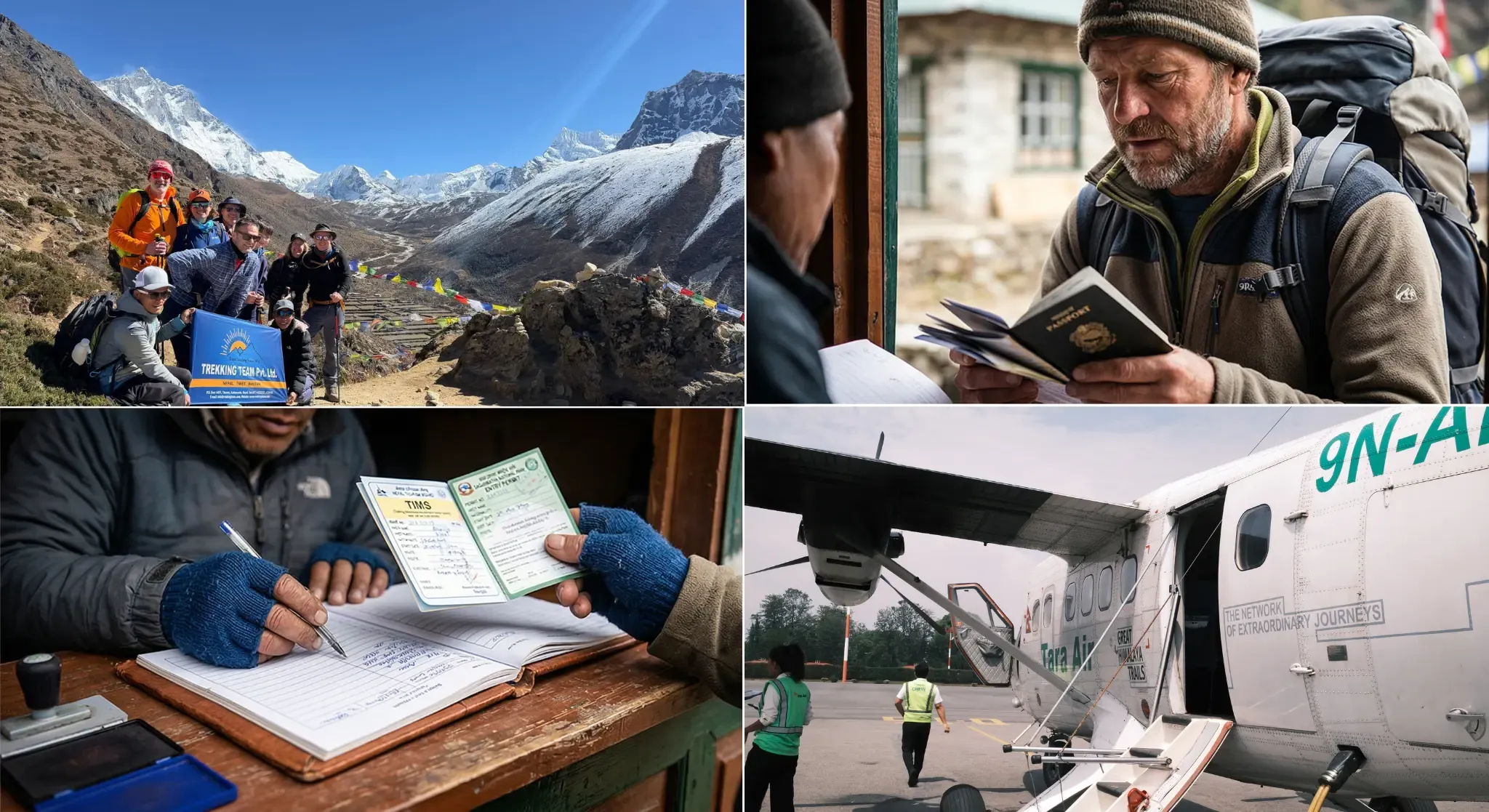
Sagarmatha National Park (SNP) Permit: NPR 3,000 (~$22) for foreign nationals. Required for all trekkers entering the Everest region. Obtained in Kathmandu or at the park entrance in Monjo.
Khumbu Pasang Lhamu Rural Municipality Permit: NPR 2,000 (~$15). A new local permit introduced to replace the old system. Obtained in Kathmandu or at checkpoints.
TIMS Card: Abolished. Many blogs still list TIMS as required. It is not. The TIMS system was replaced by local municipality permits. Full 2026 permit details in our Nepal Trekking Rules guide.
Mandatory licensed guide: Since April 2023, all foreign trekkers in Nepal must be accompanied by a licensed guide from a registered trekking agency. Solo trekking without a guide is not permitted in the Everest region. Read our complete guide to the 2026 solo trekking regulations.
What this means for you: When you book with Trekking Team, all permits are included and processed by our team. You do not visit any government office. Your guide carries all documents and presents them at checkpoints.
Part 7: Fitness and Preparation
How Fit Do You Need to Be?
You do not need to be an athlete. You do need to be able to walk 5 to 7 hours per day on uneven terrain for 12 consecutive days, at progressively higher altitude with progressively less oxygen.
Minimum preparation (8 weeks before departure):
- Walk or hike 3 to 4 times per week, building to 3 to 4 hour sessions
- Include hills and stairs in your training, carrying a 5 to 10 kg backpack
- Add cardiovascular training (running, cycling, swimming) 2 to 3 times per week
- Practice one long hike per week (5+ hours) in the final 4 weeks
Ideal preparation (12 to 16 weeks before departure):
- All of the above, plus strength training for legs and core
- At least one multi-day hike with altitude exposure if possible
- Practise walking in your actual trekking boots to break them in
Can beginners do this trek? Yes, with proper preparation. We have guided first-time trekkers to Base Camp hundreds of times. The key is honest self-assessment, consistent training, and a willingness to go slowly. The trek does not require speed. It requires patience and stamina.
Part 8: What to Pack
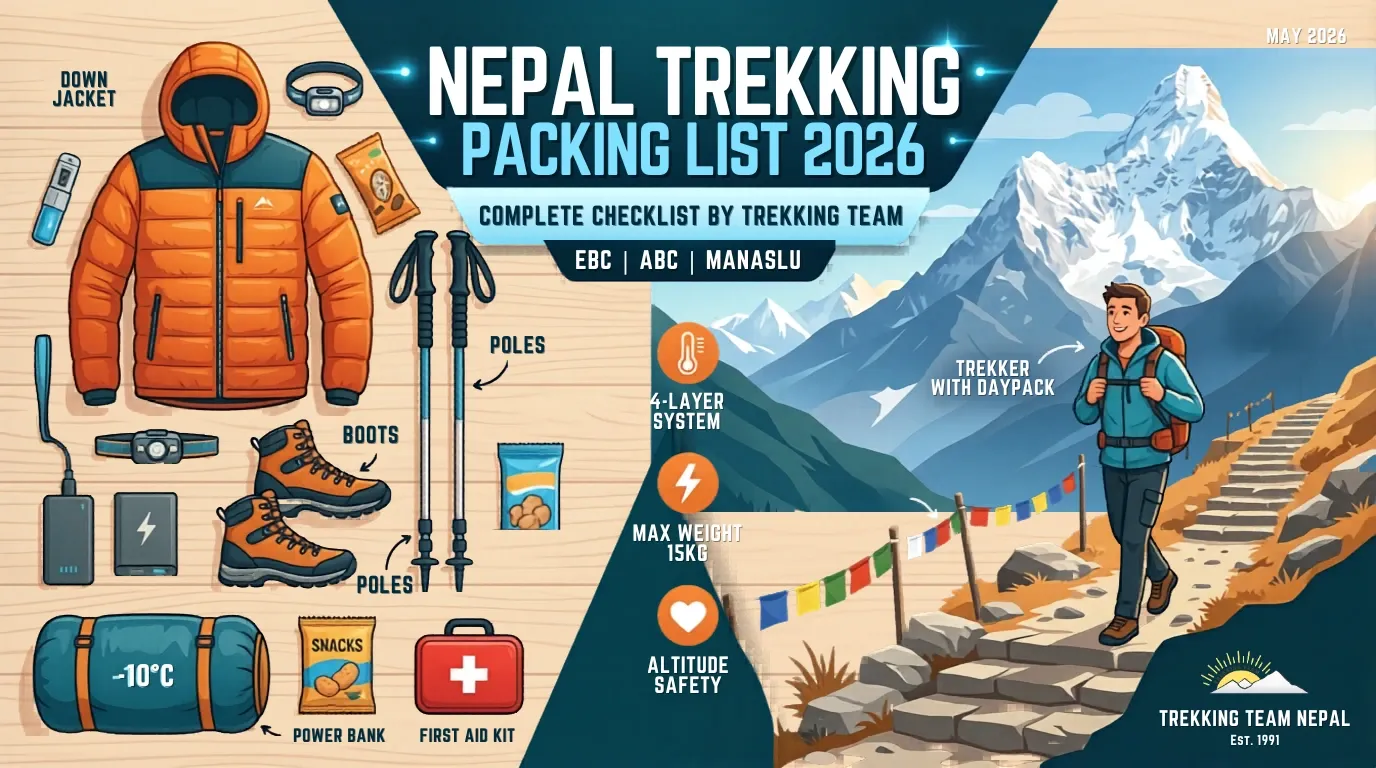
The Essentials (Do Not Leave Without These)
Footwear: Broken-in waterproof trekking boots with ankle support. This is the single most important item. Do not bring new boots.
Layers: Base layer (merino wool or synthetic), insulating mid-layer (fleece or down), waterproof outer shell. Temperatures range from +15°C at Lukla to -25°C at Gorak Shep.
Down jacket: Essential above 4,000 m. Can be rented in Kathmandu or Namche if you do not want to buy.
Sleeping bag: Rated to -15°C minimum. Teahouse blankets are not sufficient above 4,000 m. Can be rented in Kathmandu.
Sun protection: High-SPF sunscreen, UV-blocking sunglasses (category 3 or 4), wide-brimmed hat. UV radiation at 5,000 m is extreme. Snow blindness is a real risk.
Hydration: Reusable water bottle (1 litre minimum) + purification tablets or SteriPen. Buying bottled water on the trail is expensive and creates plastic waste.
First aid: Basic kit including blister plasters, painkillers, anti-diarrheal medication, hand sanitiser, personal prescriptions. Your guide carries a comprehensive first aid kit.
Documents: Passport, travel insurance policy (must cover helicopter evacuation up to 6,000 m), cash in Nepali rupees (ATMs exist only in Namche, and they frequently run out).
Power bank: There are no reliable charging points above Namche. A 20,000 mAh power bank will keep your phone and camera alive for the entire trek. Charging fees at teahouses are NPR 300 to 500 per device.
Part 9: Teahouse Life on the EBC Trek
What to Actually Expect
The EBC trek is a "teahouse trek," meaning you sleep in small lodges (teahouses) along the route rather than camping. This is one of the reasons the trek is so accessible: you do not need to carry a tent, cooking equipment, or food.
Below Namche (2,840 to 3,440 m): Comfortable rooms with twin beds, thick blankets, attached or shared bathrooms, hot showers, WiFi, and diverse menus including pizza, pasta, and baked goods. Some teahouses feel like small hotels.
Namche to Dingboche (3,440 to 4,410 m): Rooms become simpler. Plywood walls, foam mattresses, shared squat toilets. Hot showers available (NPR 300 to 500). WiFi available but slow and expensive. Menus narrow: dal bhat, noodle soup, fried rice, chapati, porridge, tea.
Above Dingboche (4,410 to 5,164 m): Basic. Thin walls, cold rooms, no showers above Lobuche. Toilets are outside. Electricity is solar and limited. Menus are minimal. Water is expensive. This is high-altitude survival hospitality, and it is part of the experience.
Luxury lodge option: For trekkers who want comfort at altitude, luxury lodges (Yeti Mountain Home, Everest Summit Lodges) operate between Lukla and Pangboche. Private rooms, hot showers, heated dining rooms, and Western-standard food. Prices are significantly higher ($100 to $200+ per night), but for those who value comfort, they transform the experience. We can arrange luxury lodge itineraries on request.
The golden rule: Eat dal bhat. It is the most nutritious, most calorie-dense, and most reliably prepared meal on the trail. Rice, lentil soup, vegetables, pickles. Unlimited refills at most teahouses. Your body needs 4,000 to 5,000 calories per day at altitude, and dal bhat delivers.
Part 10: Route Variations
The classic Lukla-to-EBC-and-back is the standard route, but several variations exist for trekkers who want more:
EBC + Gokyo Lakes (16 to 18 days)
Cross the Cho La Pass (5,420 m) to reach the turquoise Gokyo Lakes and climb Gokyo Ri (5,357 m) for a panoramic view that many consider superior to Kala Patthar. This adds 3 to 4 days and one high pass. Moderate to strenuous.
Three Passes Trek (18 to 21 days)
The ultimate Khumbu circuit. Cross Renjo La (5,360 m), Cho La (5,420 m), and Kongma La (5,535 m), visiting Gokyo Lakes, EBC, and Chukhung Valley. Requires strong fitness and high-altitude experience. Strenuous.
EBC + Island Peak (18 to 20 days)
Combine the EBC trek with a summit attempt on Island Peak (6,189 m), a trekking peak requiring basic mountaineering skills (crampons, rope, ice axe). NMA climbing permit required. This is for trekkers who want to add a genuine summit to their experience.
Helicopter Return
Trek to EBC and Kala Patthar, then fly by helicopter from Gorak Shep or Pheriche back to Lukla or directly to Kathmandu. Saves 3 to 4 days of descent trekking. Popular with time-limited trekkers. We can arrange helicopter returns on any itinerary.
Everest Base Camp via Jiri (21 to 25 days)
The original approach route, used by Hillary and Tenzing in 1953 before Lukla airport existed. Trek from Jiri (1,905 m) through the lower Solu Khumbu hills to Lukla, then continue to EBC. This adds 7 to 10 days of beautiful, uncrowded lower-altitude trekking through terraced farmland and forest. The quietest and most culturally immersive way to approach Everest.
Part 11: What Every Other Guide Gets Wrong
We have read every major EBC guide online. Here is what they consistently get wrong:
Wrong: "You need a TIMS card." Right: The TIMS system has been abolished. Local municipality permits have replaced it. Current 2026 permit details.
Wrong: "Solo trekking is possible if you are experienced." Right: Since April 2023, all foreign trekkers must be accompanied by a licensed guide. Solo trekking without a guide is not legal in the Everest region. Full solo trekking update.
Wrong: "The trek is easy. Anyone can do it." Right: The trek is achievable with proper preparation, but "easy" is dishonest. Altitude sickness can affect anyone regardless of fitness. The cold above 4,500 m is severe. The terrain in the final days is rough. Calling it "easy" sets wrong expectations and puts people at risk.
Wrong: "You can save money by going without a guide." Right: A guide is legally mandatory. Beyond legality, a good guide is the difference between a safe, culturally rich experience and an uninformed, potentially dangerous walk. Our guides carry satellite phones, pulse oximeters, first aid kits, and decades of trail knowledge. The cost of a guide ($30 to 35/day) is the best investment on the entire trek.
Wrong: "Book everything when you arrive in Kathmandu." Right: During peak season (October, April), flights to Lukla sell out weeks in advance. Teahouses at popular stops (Namche, Tengboche, Gorak Shep) fill up. Pre-booking through a registered agency ensures you have confirmed flights, confirmed rooms, and a guide waiting for you. Walk-in booking works in shoulder season but is risky during peak.
Wrong: "EBC altitude is 5,545 m." Right: Everest Base Camp is at 5,364 m. Kala Patthar, the viewpoint, is at 5,545 m. These are different locations. Most trekkers visit both, but the confusion in many guides creates unnecessary anxiety about altitude.
Part 12: Why Trek with Trekking Team Nepal
We do not ask you to trust marketing. We ask you to verify facts.
| Credential | Verification |
|---|---|
| Operating since 1991 (34 years) | TAAN Member #1106 |
| 10,000+ trekkers guided | Company records |
| TAAN, NTB, NMA, PPGI, KEEP member | TAAN registry, NTB directory, KEEP registry |
| International partnerships | Trekking Team AG Switzerland, Trampingi Poland |
| TripAdvisor reviewed | Read our reviews |
| CSR: Medical camps since 2011 | Amici del Dolpo partnership |
| CSR: Trail cleanup launching 2026 | Great Mountain Cleanup Project (drone-based, July 2026) |
| Porter welfare | PPGI member, above-minimum wages, full insurance, equipment provided |
What we include in every EBC package:
- All permits (SNP, municipality)
- Licensed, English-speaking guide (long-term team member, not freelancer)
- Porter for luggage (one porter per two trekkers standard, one-to-one available)
- Lukla flights (including buffer day)
- Kathmandu hotel with breakfast
- All teahouse accommodation on trek
- All meals on trek
- Airport transfers
- 24/7 Kathmandu operations desk support
- Pulse oximeter health monitoring
- Emergency evacuation coordination
Frequently Asked Questions
How long is the Everest Base Camp trek? The standard trek takes 12 to 14 days from Lukla to EBC and back. Including travel days in Kathmandu and a buffer day for flight delays, budget 16 to 18 days total.
How difficult is the Everest Base Camp trek? Moderate to challenging. The terrain is not technical, but the altitude is demanding. You walk 5 to 7 hours per day for 12 consecutive days, reaching a maximum of 5,545 m. Proper fitness preparation and acclimatization are essential.
Can beginners do the EBC trek? Yes, with 8 to 12 weeks of dedicated fitness preparation and a properly acclimatized itinerary. We have guided hundreds of first-time trekkers to Base Camp successfully.
How much does the Everest Base Camp trek cost? Approximately USD 1,200 to 4,000 per person depending on service level. Read our complete cost breakdown.
What permits do I need for the EBC trek in 2026? Sagarmatha National Park permit and Khumbu Pasang Lhamu Rural Municipality permit. TIMS is no longer required. A licensed guide is mandatory. Full 2026 permit guide.
What is the best month for the EBC trek? October (clearest skies, stable weather, peak crowds) and April (warmer, summit season activity at Base Camp, rhododendrons in bloom). November and March are excellent quieter alternatives.
Do I need travel insurance? Yes, mandatory. Your policy must cover trekking up to 6,000 m and helicopter evacuation. Standard travel insurance does not cover high-altitude trekking. Verify your policy specifically covers the Everest region.
How do I avoid altitude sickness? Acclimatize properly (two rest days minimum), hydrate aggressively (3 to 4 litres daily), ascend gradually, and report symptoms immediately. Read our complete altitude sickness guide.
Can I trek to EBC during monsoon? Not recommended. Heavy rain, poor visibility, slippery trails, and frequent Lukla flight cancellations make June to August unsuitable for EBC. For monsoon trekking, consider rain-shadow routes like Upper Mustang or Dolpo.
Is WiFi available on the trek? Yes, in most teahouses up to Lobuche. Speed decreases and cost increases with altitude. A power bank is essential. Charging fees apply at most teahouses above Namche.
What food is available on the trek? Teahouses serve dal bhat (rice and lentils), noodle soups, fried rice, pancakes, porridge, chapati, and basic Western dishes. Quality and variety decrease above Dingboche. Dal bhat is the best choice: nutritious, filling, and consistently well-prepared.
Do I need a sleeping bag? Yes. Teahouse blankets are insufficient above 4,000 m. Bring or rent a sleeping bag rated to -15°C minimum.
How do I get to Lukla? By flight from Kathmandu (25 to 35 minutes) or from Ramechhap (15 to 20 minutes, plus a 5-hour drive from Kathmandu). Helicopter charter is also available.
Can I do the EBC trek in December or January? Yes, but only for experienced cold-weather trekkers. Night temperatures at Gorak Shep drop to -25°C. Some teahouses close. Trails are generally clear of snow but ice can form. Stunning views and zero crowds are the reward.
Start Planning Your Everest Base Camp Trek
We have 2026 departures open for spring (March to May) and autumn (September to November) seasons. Solo trekkers, couples, families, and groups are all welcome. Every package includes all permits, licensed guide, porter, flights, accommodation, meals, and 24/7 operational support.
Not sure if EBC is right for you? Read our Everest Base Camp vs Annapurna Base Camp comparison to decide.
Get in touch:
- Website: trekkingteam.com/everest-base-camp-trek
- Email: info@trekkingteam.com
- WhatsApp: +977 9869400739
- Office: Gongabu, Pragatinagar, Kathmandu, Nepal
Follow us:
Walking Nepal's trails since 1991. Your Everest journey starts here.
The definitive EBC trek guide by Nepal's most experienced operator (since 1991, 10,000+ trekkers). Day-by-day itinerary, 2026 costs, permits, altitude tips, and what every other guide gets wrong.